Why Prenatal Yoga Matters in the First Trimester
The first trimester is often a whirlwind—exciting, emotional, and for many women, physically challenging. It’s the time when your body is rapidly adjusting to pregnancy, even before your belly begins to show. Prenatal yoga in this stage isn’t about perfect poses or deep stretches; it’s about grounding your body, supporting your changing physiology, and creating mental space during a time when many moms feel great. What makes yoga especially important right now is its ability to connect breath, movement, and awareness in a gentle, nurturing way.
Many women wonder whether it’s even safe to do yoga in the first trimester. The answer is yes—with the right modifications. In fact, gentle yoga can help ease early pregnancy discomforts like fatigue, nausea, and anxiety. It can also support circulation, which becomes increasingly important as your body starts producing more blood to nourish both you and your baby. However, the first trimester also carries the highest sensitivity in fetal development, so a mindful and modified approach is essential.
Prenatal yoga helps you build a foundation of strength and mobility that will support you through the rest of your pregnancy. Think of it as preparing the soil before the plant grows—a metaphor for nurturing your body before it begins expanding. The right approach can reduce tension in your shoulders, hips, and lower back—even before these areas start bearing the load of your growing uterus. This early head-start makes the second and third trimesters far more comfortable.
Finally, yoga gives mothers a safe, calming space to process the internal changes happening on emotional and mental levels. If you’ve been feeling a mix of joy, worry, or mood swings (thank you, hormones), yoga helps regulate those feelings through breathwork and grounding poses. Your practice doesn’t need to be intense. It just needs to be intentional.
What Your Body Is Really Going Through
The first trimester is a remarkable and sometimes confusing phase, because although very little may appear different externally, internally, your body is changing at an unbelievable pace. Hormones surge immediately after conception, and these hormonal shifts are responsible for the majority of early pregnancy symptoms—fatigue, nausea, mood swings, and sometimes even dizziness. Many women say they feel “different” before they even see a positive test, and that’s because the body begins adjusting almost instantly to support early fetal development. Understanding these internal changes is key to understanding why prenatal yoga needs careful modification during this time.
One of the biggest hormonal players is progesterone. This hormone increases rapidly and works to relax smooth muscle in the body. Its job is essential: it thickens the uterine lining and helps maintain a healthy environment for implantation. But progesterone also makes you feel unusually tired, sometimes to the point of exhaustion. This explains why many women suddenly struggle with their usual fitness routine. Instead of forcing your body through high-intensity workouts or deep yoga stretches, the first trimester is a time to welcome a slower, softer approach.
Relaxin is another hormone that deserves attention. Most women associate it with later pregnancy because it helps prepare the pelvis for birth, but it actually begins rising during the first trimester. Relaxin softens the joints and connective tissues, meaning the risk of overstretching is much higher—even if your belly isn’t showing. This is one of the biggest reasons first-trimester yoga requires modifications. Stretching deeply or pushing your flexibility can lead to joint instability or injury without you even realizing it until later.
Emotionally, the first trimester is its own adventure. Many women experience excitement mixed with anxiety, especially if it’s a first pregnancy or if they’re waiting until the second trimester to share the news. Shifting hormones can heighten emotions, and a lack of energy can make even simple tasks feel great. This is why yoga becomes more than just movement—it becomes emotional grounding. The breathwork and mindful pacing help stabilize your mood, giving you a safe space to reconnect with yourself amid a period of uncertainty.
First-trimester prenatal yoga isn’t about intensity; it’s about adaptation. It honors your body’s early changes and helps you move with awareness rather than force. As your pregnancy progresses, the foundation built here will make everything else feel more supported and sustainable.
Benefits of Practicing Yoga During the First Trimester
Practicing yoga during the first trimester offers a surprising number of benefits—not just physically, but mentally and emotionally as well. One of the biggest advantages is increased circulation. As early as week four, your body begins increasing blood volume, and yoga helps improve blood flow to essential organs and muscles, which can significantly reduce fatigue. Gentle movement also encourages lymphatic drainage, helping decrease early bloating and fluid retention that many women don’t expect this early in pregnancy.
Another key benefit is nausea management. While yoga can’t magically cure morning sickness, certain breathing techniques and slow, grounding postures help calm the nervous system, which can ease the intensity of nausea and dizziness. Women who practice prenatal yoga regularly often report feeling more balanced and less great by hormonal shifts. Even five to ten minutes of mindful breathing can bring noticeable relief.
Stress reduction is perhaps the most underrated benefit. Early pregnancy often comes with uncertainty—questions about the baby’s health, your changing body, or even how life will look after the birth. Yoga activates the parasympathetic nervous system, also known as the “rest and digest” system. This counters the stress response and lowers cortisol levels, helping you feel calmer, more focused, and emotionally steadier. Many women describe their yoga time as the only moment in the day when they feel fully present and connected to their body.
Physically, yoga supports the areas that will soon carry more weight: the hips, lower back, and pelvic floor. Gentle strengthening now can help prevent pain later. Prenatal-friendly poses help stabilize the pelvis, reduce early lower-back tightness, and improve posture—important because breast tenderness and breast growth often begin early, pulling the shoulders forward.
Yoga also helps build awareness of your core and pelvic floor without straining these areas. Contrary to popular belief, pregnancy doesn’t mean you should stop engaging your core—you just need to do it safely. First-trimester yoga teaches you how to activate deep core muscles (like the transverse abdominis) without putting pressure on the abdomen.
Yoga helps you establish a mind–body connection with your pregnancy from the very beginning. Even when the baby is just the size of a seed, movement and breathwork help you form a relationship with your changing body—and that connection will support you all the way to delivery.
Essential Modifications for Safe Prenatal Yoga
Prenatal yoga in the first trimester isn’t about restricting your practice—it’s about reshaping it to support your changing body. One of the most important modifications is adjusting your alignment. Because relaxin begins softening your joints and ligaments early, you’ll want to focus more on stability than depth. This means keeping slight bends in the knees during standing poses, grounding through all four corners of the feet, and engaging your legs to maintain safe alignment. Small adjustments like these create a protective structure around your joints and prevent injury.
Another major modification is reducing intensity. This doesn’t mean your practice becomes too easy or boring—it simply becomes more mindful. Instead of flowing quickly from pose to pose, allow more time to transition, breathe, and really feel what’s happening in your body. Slow, intentional movement helps you stay connected and prevents accidental overstretching or breathlessness. Even strong poses like Warrior II can remain challenging without forcing extreme depth or wide stances.
Your breath also becomes a tool of modification. Focus on diaphragmatic breathing—where the belly, ribs, and chest expand naturally with each inhale. Avoid breath retention altogether, including techniques like kumbhaka, which may decrease oxygen supply. Instead, embrace slow exhalations that help regulate your nervous system and reduce stress. Learning to lengthen your exhale now will benefit you throughout pregnancy and even during labor.
You should also modify how you engage your core and pelvic floor. Traditional abdominal exercises don’t apply here, but it doesn’t mean these muscles stop being used. Instead of crunches or boat pose, shift to gentle core activation: imagine hugging your baby in with a soft, supportive contraction. This builds strength without pressure. Similarly, pelvic floor engagement should be subtle—not forceful. Think of lifting the pelvic floor gently on the exhale rather than clenching hard.
Lastly, embrace props—they’re not a sign of weakness, but a sign of wisdom. Blocks under hands, bolsters under hips, or even a wall behind you can transform a pose into something safer and more grounding. Modifications ensure your practice evolves with your pregnancy, keeping it both supportive and deeply nourishing.
Safe Standing Poses and Their Modifications
Standing poses provide strength, stability, and grounding—three things every pregnant body needs. But even though they appear simple, they require mindful adjustments during the first trimester. Take Warrior I, for example. Instead of forcing the hips to square completely forward, allow them to rotate slightly to maintain natural alignment. Narrow your stance to maintain pelvic stability and avoid sinking too far into the front knee. The goal is energetic lift, not depth.
In Warrior II, focus on strength rather than flexibility. Many yogis turn this pose into a deep stretch, but during pregnancy, it’s better treated as a strengthening posture. Keep your front knee aligned directly over the ankle, avoid letting the back hip collapse forward, and keep the pelvis neutral. This helps stabilize the sacroiliac joints, which are more vulnerable now due to relaxin.
The Triangle Pose is safe with modifications. The traditional version encourages deep hamstring stretching, which isn’t ideal in the first trimester. To modify, shorten your stance and place your bottom hand on a block instead of reaching for the floor. Keep a micro-bend in the front knee and focus on lengthening the spine. Avoid collapsing sideways; instead, think of expanding your chest toward the sky while keeping the belly open and spacious.
For Side Angle Pose, the modification is similar. Place your forearm lightly on your thigh or use a block under your hand. This prevents downward pressure on the belly and keeps the pose stabilizing rather than stretching. Lengthen through the side body without crunching the ribs into the abdomen.
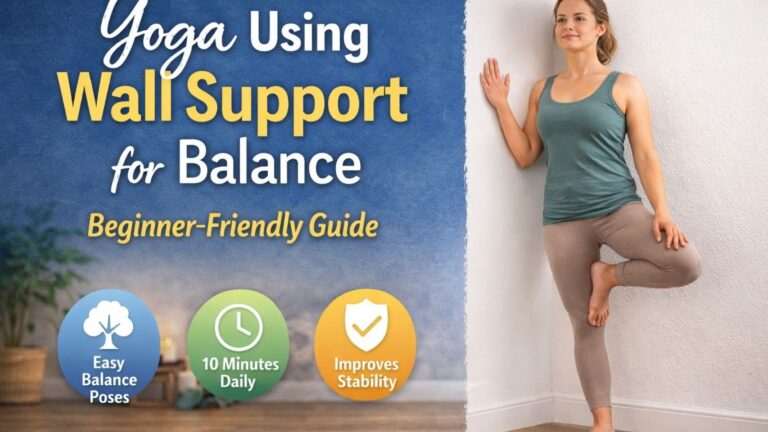
Also consider using a wall for support. Standing poses can be performed with the back heel, hand, or even hips touching the wall for extra grounding. This subtle adjustment builds confidence, prevents wobbling, and gives your growing body the stability it needs.
By embracing modified standing poses, you build strength in your legs, hips, and back muscles that will support you throughout pregnancy and into postpartum recovery.