Yoga for Eyesight Improvement: Proven Exercises to Strengthen Vision Naturally
In today’s digital-driven lifestyle, prolonged screen exposure, artificial lighting, and constant visual strain have made eye-related issues increasingly common. Yoga for eyesight improvement offers a natural, structured, and time-tested approach to maintaining and enhancing visual efficiency. Through specific yogic eye exercises, breathing techniques, and relaxation practices, it is possible to reduce eye strain, improve focus, and support overall ocular health without dependency on invasive methods.
This article presents a comprehensive guide to yoga exercises for eyesight improvement, structured to deliver practical value, clarity, and depth. Each section focuses on direct application, precise technique, and consistent practice.
Understanding How Yoga Supports Vision
Yoga does not treat eyesight in isolation. It works on the nervous system, blood circulation, muscular balance, and mental relaxation, all of which are directly connected to eye performance. The eyes are controlled by six extraocular muscles, and regular yogic movement helps maintain their flexibility and coordination.
Additionally, yogic breathing improves oxygen delivery to ocular tissues, while meditation reduces mental fatigue that often manifests as blurred or strained vision.
Benefits of Yoga for Eyesight Improvement
- Reduced eye strain and fatigue
- Improved focus and visual endurance
- Enhanced blood flow to the optic nerves
- Better coordination of eye muscles
- Support for age-related vision decline
- Relief from headaches linked to eye stress
These benefits become noticeable with disciplined, daily practice.
Essential Yoga Eye Exercises for Vision Enhancement
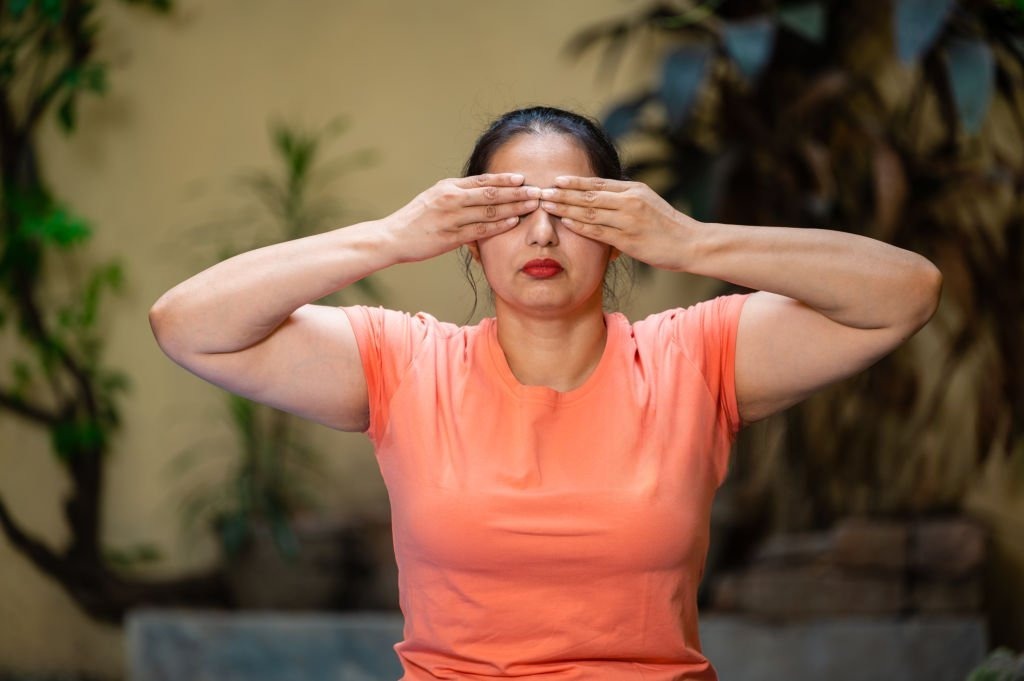
1. Palming Exercise for Eye Relaxation
Palming is one of the most effective techniques to relax overstimulated eyes.
How to Practice:
- Sit comfortably with a straight spine
- Rub both palms together until warm
- Gently cup palms over closed eyes without pressure
- Ensure complete darkness
- Breathe slowly for 2–3 minutes
Impact:
This exercise calms optic nerves, reduces dryness, and restores visual comfort after prolonged screen use.
2. Trataka (Focused Gazing Technique)
Trataka yoga for eyesight is widely practiced for improving concentration and eye strength.
How to Practice:
- Place a candle at eye level, one arm’s distance away
- Sit steadily and gaze at the flame without blinking
- Continue until the eyes water slightly
- Close your eyes and visualize the flame at the eyebrow center
Impact:
Trataka strengthens eye muscles, improves focus, and supports clarity of vision.
3. Eye Rotation Yoga Exercise
Eye rotations maintain muscle flexibility and reduce stiffness.
How to Practice:
- Sit upright, head still
- Slowly rotate eyes clockwise 5 times
- Repeat anti-clockwise 5 times
- Blink gently after each round
Impact:
This exercise enhances muscle coordination and reduces strain caused by fixed gaze patterns.
4. Blinking Exercise for Eye Lubrication
Blinking consciously restores natural moisture balance.
How to Practice:
- Blink rapidly for 10 seconds
- Close your eyes and relax for 10 seconds
- Repeat 3–5 rounds
Impact:
Improves tear distribution and reduces dryness, especially for screen users.
5. Near and Far Focus Shifting
This exercise improves accommodative flexibility.
How to Practice:
- Hold thumb 10 inches from face
- Focus on the thumb for 5 seconds
- Shift gaze to a distant object for 5 seconds
- Repeat 10 rounds
Impact:
Supports sharper focusing ability and reduces stress on the eye lens.
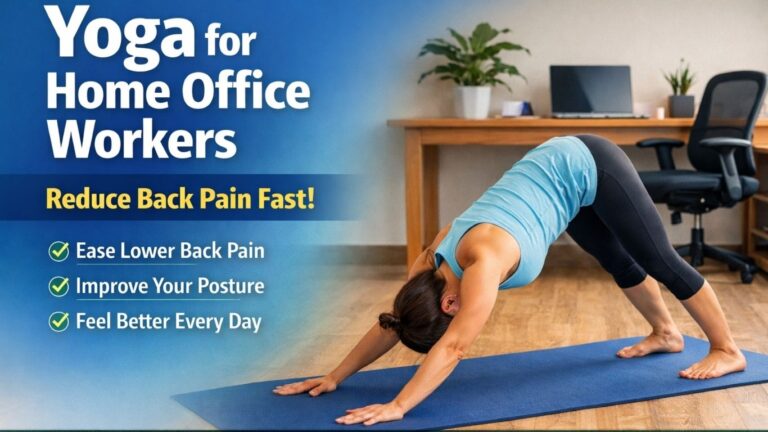
6. Downward-Facing Dog Pose
This pose improves blood circulation to the head and eyes.
How to Practice:
- Form an inverted V-shape with the body
- Keep your head relaxed between your arms
- Hold for 30–60 seconds
Impact:
Increases oxygen flow to ocular tissues and reduces eye fatigue.
7. Legs-Up-the-Wall Pose
A restorative posture ideal for visual relaxation.
How to Practice:
- Lie on your back with legs elevated against a wall
- Arms relaxed by the sides
- Close your eyes and breathe slowly for 5 minutes
Impact:
Relieves pressure in the eyes and calms the nervous system.
8. Alternate Nostril Breathing
Controlled breathing improves nerve coordination.
How to Practice:
- Inhale through the left nostril
- Exhale through the right nostril
- Reverse and continue for 5 minutes
Impact:
Balances neural pathways connected to vision and reduces mental strain.
9. Bhramari Pranayama (Humming Bee Breath)
This breathing method deeply relaxes eye-related nerves.
How to Practice:
- Inhale deeply
- Exhale slowly with a humming sound
- Keep eyes closed and facial muscles relaxed
Impact:
Reduces tension headaches and improves visual calmness.
Lifestyle Integration for Maximum Results
Yoga for eyesight improvement is most effective when paired with supportive habits:
- Limit screen exposure and follow the 20-20-20 rule
- Maintain proper lighting while reading
- Practice yoga in the early morning or evening
- Ensure adequate hydration
- Sleep consistently to allow optic nerve recovery
Consistency is the defining factor in long-term visual benefits.
Common Mistakes to Avoid
- Practicing eye exercises with tension
- Forcing focus beyond comfort
- Skipping relaxation between techniques
- Expecting instant results without consistency
Gentle, patient practice yields sustainable improvement.
Who Can Practice Yoga for Eyesight Improvement
These exercises are suitable for:
- Students
- Office professionals
- Seniors
- Individuals with screen-induced eye strain
Those with existing eye conditions should practice under guidance.
Conclusion
Yoga for eyesight improvement exercises provide a structured, natural, and effective pathway to better visual health. Through regular practice of palming, Trataka, eye rotations, pranayama, and supportive asanas, it is possible to reduce strain, enhance clarity, and maintain long-term eye function. Yoga does not replace medical care but serves as a powerful preventive and supportive system for visual well-being.