At-Home Yoga Workouts Without Equipment
Staying active at home can feel difficult when you don’t have gym machines, dumbbells, or special fitness tools. This is why many people search for at-home yoga workouts without equipment—a simple, effective way to stay fit using only body movement and breathing.
The best part about yoga is that it was never designed to rely on equipment. Your body, breath, and awareness are more than enough. With regular practice, yoga at home can improve strength, flexibility, balance, and mental calm—without spending money or needing extra space.
Why Yoga Works Without Any Equipment
Yoga uses body weight, controlled movement, and breath to create physical and mental benefits. Unlike gym workouts that rely on resistance tools, yoga builds strength by holding poses and engaging muscles naturally.
This makes yoga perfect for:
- Small living spaces
- Busy schedules
- Beginners
- People with joint issues
- Anyone avoiding gyms
You only need a quiet corner and comfortable clothing.
Benefits of At-Home Yoga Without Equipment
Practicing yoga at home without equipment offers several long-term benefits:
- Improves flexibility and joint mobility
- Builds core and body strength
- Reduces stress and mental fatigue
- Improves posture and balance
- Supports weight management naturally
Because yoga is low-impact, it is easier to stay consistent compared to intense workouts.
Best At-Home Yoga Workouts Without Equipment
1. Mountain Pose (Tadasana)
This simple standing pose improves posture and body awareness.
Why it works:
Strengthens legs, improves balance, and trains proper alignment.
Hold for: 30–60 seconds
2. Downward-Facing Dog
This is a full-body pose that stretches and strengthens at the same time.
Why it works:
Engages arms, legs, and core while improving circulation.
Hold for: 30–45 seconds
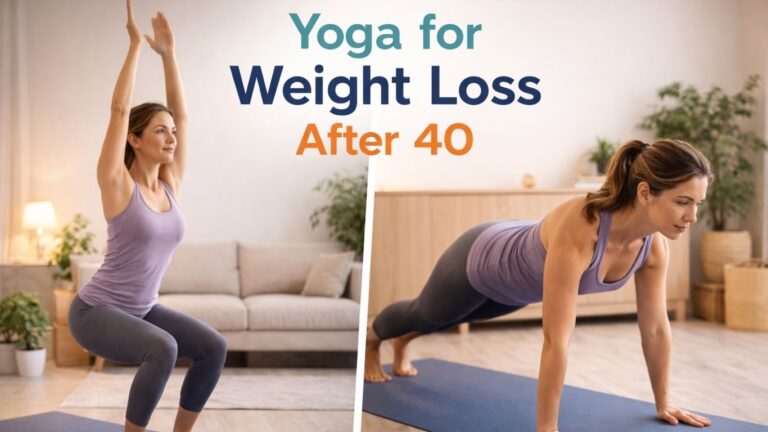
3. Plank Pose
Plank is one of the best body-weight poses for strength.
Why it works:
Strengthens the core, shoulders, arms, and back without equipment.
Hold for: 20–40 seconds
4. Cobra Pose (Bhujangasana)
This pose counteracts the effects of sitting and slouching.
Why it works:
Strengthens the lower back, opens the chest, and supports digestion.
Hold for: 15–30 seconds
5. Chair Pose
This pose mimics a squat and builds lower-body strength.
Why it works:
Tone thighs, hips, and glutes using body weight only.
Hold for: 20–30 seconds
6. Child’s Pose
A resting pose that relaxes both body and mind.
Why it works:
Releases tension, reduces stress, and allows recovery between poses.
Hold for: 1 minute
How Long Should You Practice?
For beginners, 20–30 minutes a day is enough.
You can split your practice into:
- 5 minutes warm-up
- 15–20 minutes poses
- 5 minutes of relaxation or breathing
Consistency matters more than intensity.
Common Mistakes to Avoid
- Skipping breathing during poses
- Rushing through movements
- Practicing irregularly
- Forcing the body into discomfort
Yoga should feel supportive, not painful.
Is Yoga Enough Without Equipment?
Yes—if your goal is overall fitness, flexibility, stress relief, and healthy movement, yoga without equipment is more than enough. While it may not replace heavy weight training for muscle size, it builds functional strength and long-term health.
For many people, yoga becomes a sustainable habit because it feels achievable and calming.
Final Thoughts
At-home yoga workouts without equipment prove that fitness doesn’t need machines or expensive tools. With simple body-weight poses and mindful breathing, yoga supports physical strength, mental clarity, and daily energy.
If you want a workout that fits your lifestyle, protects your joints, and keeps you consistent, yoga at home—without equipment—is one of the smartest choices you can make.