
Yoga for Shift Workers to Improve Sleep (Simple Routine That Fits Any Schedule)
If you work night shifts, rotating shifts, or early morning shifts, you already know the truth: sleep becomes a struggle.
One week, you’re sleeping at 10 PM. The next week, you’re trying to fall asleep at 9 AM. Your body feels confused, your brain stays active, and even when you do sleep, it often feels light and unrefreshing.
Shift work doesn’t just mess with your schedule. It disrupts your hormones, digestion, mood, and energy levels. That’s why many shift workers deal with fatigue, headaches, anxiety, and burnout.
The good news is you don’t need sleeping pills or complicated routines to improve your sleep. One of the easiest natural tools is yoga, because it helps your body relax, release physical tension, and reset your nervous system.
This article will show you how yoga helps shift workers sleep better, what poses work best, and a realistic routine you can follow—even on the busiest workdays.
Why Shift Workers Struggle With Sleep
Your internal clock controls sleep, also called the circadian rhythm. This rhythm is designed to keep you awake during daylight and sleepy at night.
Shift work forces your body to do the opposite.
When your circadian rhythm gets disrupted, your body may struggle with:
- falling asleep quickly
- staying asleep without waking up
- deep sleep and recovery
- waking up feeling refreshed
- daytime sleepiness at work
You might feel tired but still unable to sleep because your nervous system stays in “alert mode.”
This is where yoga becomes helpful.
How Yoga Improves Sleep for Shift Workers
Yoga supports better sleep by working on the two biggest problems shift workers face: stress and physical tension.
Yoga calms your nervous system
When you work unusual hours, your body stays in fight-or-flight mode. Gentle yoga activates the parasympathetic nervous system, which helps the body slow down.
Yoga relaxes tight muscles
Long shifts often involve standing, walking, lifting, or sitting for hours. This creates tension in the hips, lower back, shoulders, and neck. Yoga helps release that tension so your body feels safe enough to rest.
Yoga improves breathing patterns
Stress leads to shallow breathing. Shallow breathing keeps the brain active. Yoga trains deep breathing, which signals the body that it’s time to relax.
Yoga improves mental focus
Shift workers often deal with racing thoughts after work. Yoga brings attention back to the body, making it easier to disconnect from stress.
Best Time for Shift Workers to Do Yoga
The best part about yoga is that you can practice it based on your schedule.
After your shift (best for sleep)
A short yoga session after work helps your body release tension and prepare for rest.
Before your shift (best for energy)
Gentle movement before work improves circulation and reduces stiffness.
During a break (quick reset)
Even 3 minutes of breathing and stretching can reduce stress and fatigue.
If your main goal is sleep, focus on slow yoga after work.
Best Yoga Poses for Shift Workers to Improve Sleep
These poses are safe, simple, and designed to relax your body quickly.
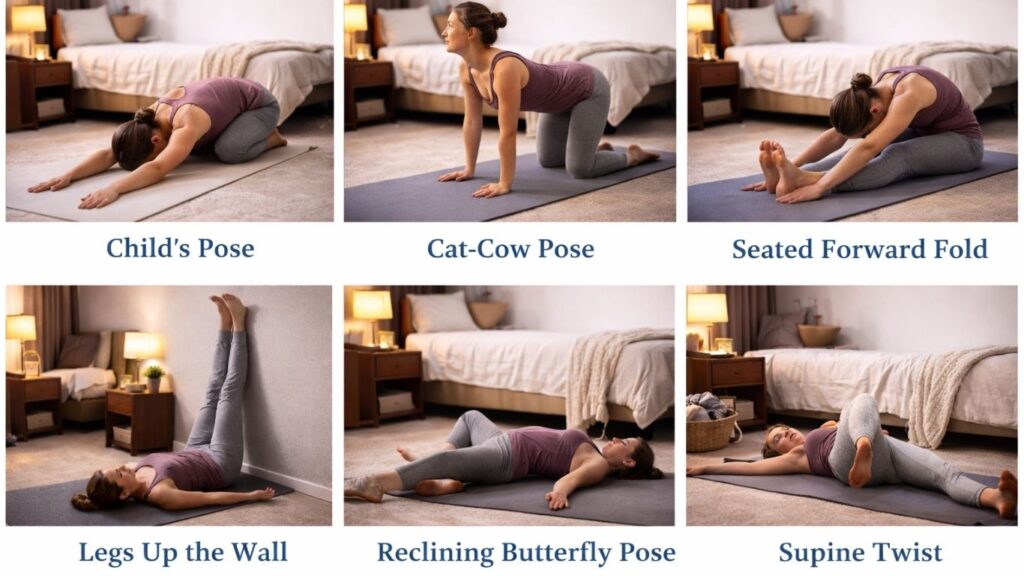
1. Child’s Pose
This pose is one of the fastest ways to calm the nervous system.
It relaxes the spine, hips, and shoulders, and naturally slows down breathing.
Hold for 1–2 minutes and focus on slow exhalation.
2. Cat-Cow Pose
Shift work often causes back stiffness. Cat-cow gently moves the spine and releases tension without effort.
Do 8–10 slow rounds while breathing deeply.
3. Seated Forward Fold
Forward folds calm the brain and help reduce overstimulation.
Sit on the floor or bed, keep your knees slightly bent, and fold forward gently. Do not force the stretch.
Hold for 30–60 seconds.
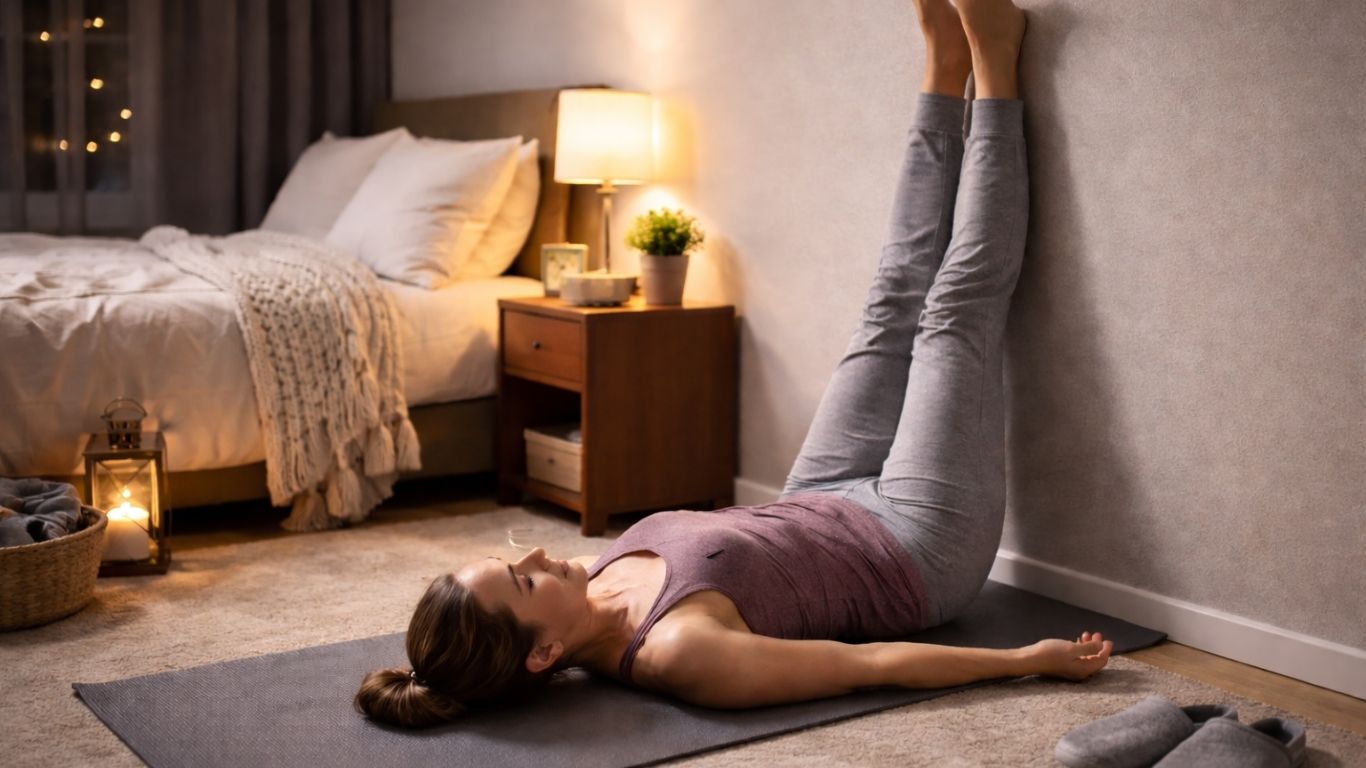
4. Legs Up the Wall
This is one of the best yoga poses for sleep improvement.
It reduces swelling, calms the heart rate, and improves circulation after long shifts.
Stay here for 3–5 minutes and breathe slowly.
5. Reclining Butterfly Pose
This pose relaxes the hips and opens the chest.
Lie down, bring the soles of your feet together, let your knees fall open, and place pillows under your knees if needed.
Hold for 2 minutes.
6. Supine Twist
Twists release tension in the spine and help digestion, which is often affected by shift work and eating habits.
Keep the twist gentle. Hold 30 seconds on each side.
7. Savasana
Savasana is where your body truly resets.
Lie down, close your eyes, relax your jaw and shoulders, and breathe slowly for 2–5 minutes.
15-Minute Yoga Routine for Shift Workers (Sleep-Focused)
This routine is designed for after-work recovery. It works whether you sleep at night or during the day.
Step 1: Deep Breathing (2 Minutes)
- Inhale through the nose for 4 seconds,
- exhale for 6 seconds, and
- repeat slowly
Step 2: Cat-Cow (2 Minutes)
Move slowly, match breath with movement.
Step 3: Child’s Pose (2 Minutes)
Relax, forehead down, and breathe deeply.
Step 4: Reclining Butterfly Pose (3 Minutes)
Use pillows for support.
Step 5: Supine Twist (2 Minutes)
1 minute each side.
Step 6: Legs Up the Wall (3 Minutes)
Let your body fully relax.
Step 7: Savasana (1 Minute)
Close your eyes and release everything.
This routine is gentle, beginner-friendly, and effective for calming your nervous system.
Common Mistakes Shift Workers Make With Yoga
Doing intense yoga before sleep
Fast yoga can increase energy. Keep it slow and gentle after work.
Skipping relaxation poses
Many people stretch but skip Savasana. Don’t skip it—this is where the nervous system resets.
Holding poses too aggressively
Sleep yoga should feel calming, not painful.
Final Thoughts
Shift work is hard on the body. It disrupts your natural rhythm and makes restful sleep feel impossible.
But yoga gives you something powerful: control.
Even 10–15 minutes of gentle yoga can help you release tension, calm your mind, and prepare your body for real rest.
If you want better sleep as a shift worker, keep it simple:
- slow stretches
- deep breathing
- calming poses
- consistent practice
Your schedule may be unusual, but your body still deserves quality recovery.