Face Yoga Routines for Beginners at Home
If you’ve ever looked in the mirror after a long day and noticed puffiness, tired eyes, or a dull face, you’re not alone. Stress, lack of sleep, screen time, and poor posture can all show up on your face faster than we expect.
That’s where face yoga comes in.
Face yoga is a natural method that uses facial exercises, massage, and controlled breathing to activate and relax the muscles of the face. It’s simple, beginner-friendly, and can be done at home in just a few minutes a day.
This guide will walk you through easy face yoga routines for beginners, step-by-step, so you can start safely and confidently.
What Is Face Yoga?
Face yoga is a set of exercises designed to strengthen and relax facial muscles. Your face has more than 40 muscles, and just like your body, these muscles can become weak or tight over time.
Face yoga focuses on:
- improving circulation
- reducing facial tension
- supporting lymphatic drainage
- encouraging better muscle tone
- relaxing stress stored in the jaw and forehead
Many people use face yoga to help with:
- puffy cheeks
- double chin appearance
- forehead tension
- tired eyes
- jaw tightness (TMJ-related tension)
- stress lines
Face yoga is not a miracle cure, but it can support facial relaxation and a healthier skin glow over time.
Benefits of Face Yoga for Beginners
When practiced regularly, face yoga may help you:
Reduce Puffiness
Facial massage and movements can support lymph drainage, which may reduce morning puffiness.
Relax Facial Tension
Many people unknowingly hold stress in their jaw, eyebrows, and forehead.
Improve Blood Circulation
Better blood flow can make the face look fresher and more awake.
Support Natural Skin Glow
Improved circulation and muscle activity may enhance the appearance of skin tone.
Improve Posture Awareness
Face yoga often connects to neck posture and breathing, which also affects how your face looks.
Is Face Yoga Safe?
Yes, face yoga is generally safe if done gently. But beginners should avoid:
- pulling harshly on the skin
- stretching too aggressively
- repeating movements too fast
- using too much pressure around the eyes
Your goal is control, not force.
If you have recent Botox, fillers, skin surgery, or severe skin irritation, consult a professional before doing facial exercises.
Face Yoga Routine for Beginners at Home (10 Minutes)

This routine is simple, relaxing, and effective for daily practice.
Before You Start:
- Wash your hands
- Clean your face
- Apply a light moisturizer or facial oil (optional but helpful)
- Sit in a relaxed position with your spine straight
Let’s begin.
1. Face Relaxation (1 Minute)
Why it helps: Calms the nervous system and relaxes facial muscles.
How to do it:
- Close your eyes
- Inhale through your nose for 4 seconds
- Exhale slowly for 6 seconds
- Relax your jaw and forehead
Repeat 5–6 breaths.
2. Forehead Smoother (30 Seconds)
Targets: forehead lines and tension
How to do it:
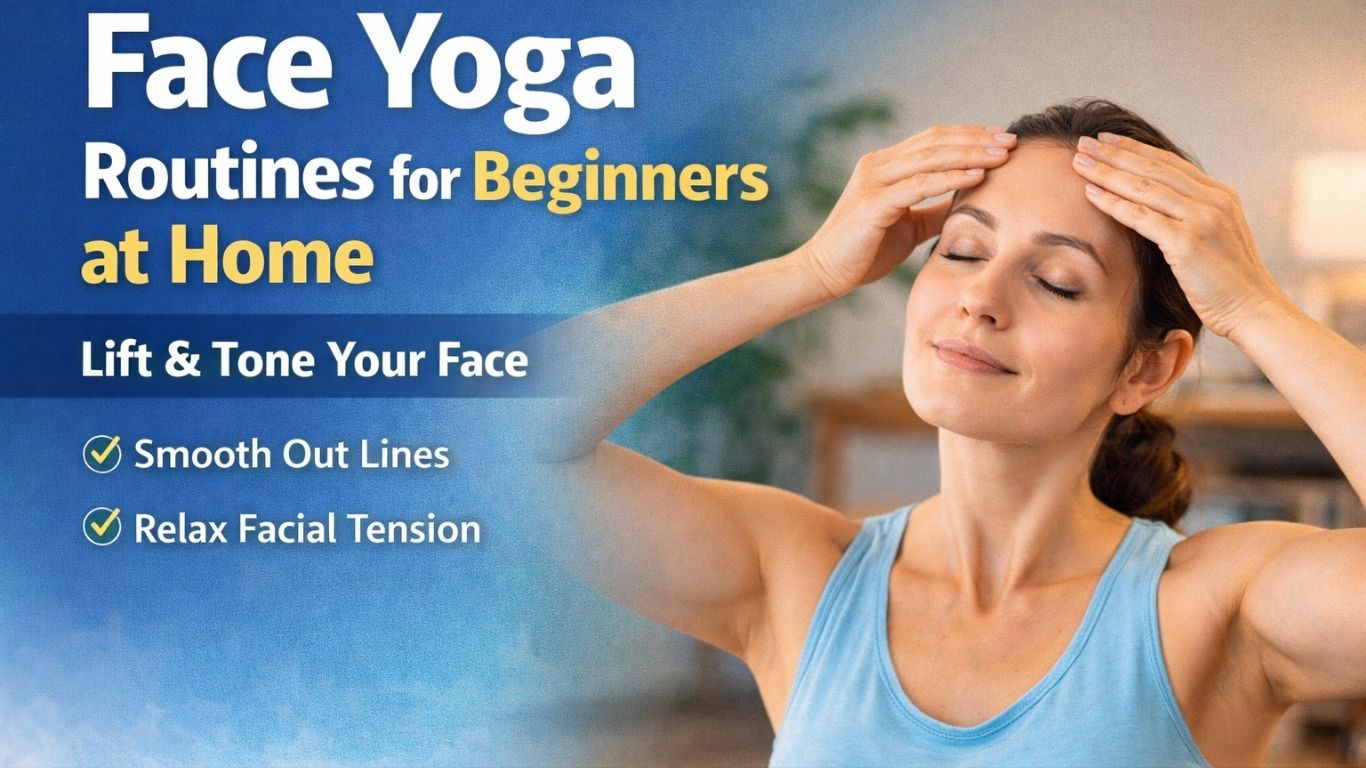
- Place both palms on your forehead
- Gently sweep outward toward the temples
- Repeat slowly 10 times
Tip: Do not press hard. Light pressure works best.
3. Eyebrow Lift Exercise (30 Seconds)
Targets: forehead muscles and eyebrow area
How to do it:
- Place fingertips above eyebrows
- Try to raise eyebrows while gently resisting with your fingers
- Hold for 5 seconds
- Relax
Repeat 5 times.
This exercise strengthens forehead muscles and improves awareness of eyebrow tension.
4. Eye De-Puff Massage (1 Minute)
Targets: under-eye puffiness and tired eyes
How to do it:
- Use your ring fingers (gentlest pressure)
- Tap lightly under your eyes from the inner corner to the outer corner
- Continue for 30 seconds
- Then gently massage around the eye socket in a circle
Important: Never press directly on the eyeball.
5. Cheek Lifter Smile (1 Minute)
Targets: cheeks and smile lines
How to do it:
- Smile softly with lips closed
- Lift cheeks upward like you’re smiling with your eyes
- Hold for 5 seconds
- Relax
Repeat 8–10 times.
This activates cheek muscles without wrinkling the nose.
6. Fish Face (30 Seconds)
Targets: cheeks and jaw area
How to do it:
- Suck cheeks inward like a fish
- Hold for 5 seconds
- Relax
Repeat 5 times.
This is a quick exercise to activate the cheek area and reduce tension.
7. Jaw Release Stretch (1 Minute)
Targets: jaw tightness and TMJ tension
How to do it:
- Place fingertips on jaw muscles (near the ears)
- Open your mouth slowly
- Massage gently in circles
- Close your mouth slowly
Repeat for 1 minute.
This is one of the best face yoga techniques for stress relief.
8. Double Chin Exercise (1 Minute)
Targets: neck and chin area
How to do it:
- Sit tall
- Tilt your head slightly back
- Press your tongue to the roof of your mouth
- Hold for 5 seconds
- Relax
Repeat 8–10 times.
This strengthens the neck and under-chin muscles without harsh strain.
9. “O” Mouth Stretch (30 Seconds)
Targets: mouth and cheek area
How to do it:
- Make an “O” shape with your mouth
- Hold for 5 seconds
- Then smile widely (without showing teeth)
- Hold for 5 seconds
Repeat 5 times.
This stretches the face and improves flexibility around the lips.
10. Lymphatic Drainage Face Massage (2 Minutes)
Targets: puffiness, jawline, face glow
How to do it:
- Use gentle upward strokes from the chin to the cheeks
- Massage from the nose outward toward the ears
- Then stroke downward along the sides of the neck toward the collarbone
Do this slowly for 2 minutes.
This helps the face feel lighter and more relaxed.
How Often Should Beginners Do Face Yoga?
For best results:
- 5–6 days per week
- 5–15 minutes daily
- Results may appear after 3–6 weeks of consistent practice
Face yoga works slowly, but consistency makes a real difference.
Common Mistakes Beginners Should Avoid
Pulling the Skin Too Hard
Face yoga is about muscle control, not stretching the skin aggressively.
Overdoing Reps
Too many reps can cause tension or headaches.
Using Dirty Hands
Always wash your hands before touching your face.
Holding Stress in the Forehead
Some people wrinkle their foreheads during exercises. Stay relaxed.
Skipping Neck Posture
Your neck posture affects your jawline and face tension. Sit tall.
Extra Tips to Improve Face Yoga Results
To get better results, combine face yoga with simple habits:
Drink Enough Water
Dehydration increases puffiness and dullness.
Sleep Better
Face yoga helps, but sleep is still the biggest “natural glow” tool.
Reduce Screen Stress
Too much screen time causes eye strain and facial tension.
Relax the Jaw
Jaw clenching is one of the main causes of facial tightness and tension lines.
Use Sunscreen
If you want long-term skin health, sunscreen matters more than exercise.
Final Thoughts
Face yoga is one of the easiest and most natural ways to relax your face, improve circulation, and reduce stress tension.
It won’t replace skincare, sleep, or hydration—but it can become a powerful daily routine that makes your face feel lighter and fresher.
Start with just 5 minutes a day.
Be gentle. Be consistent.
And treat face yoga like a calm workout for your facial muscles.
Because when your face relaxes, your whole body feels better, too.