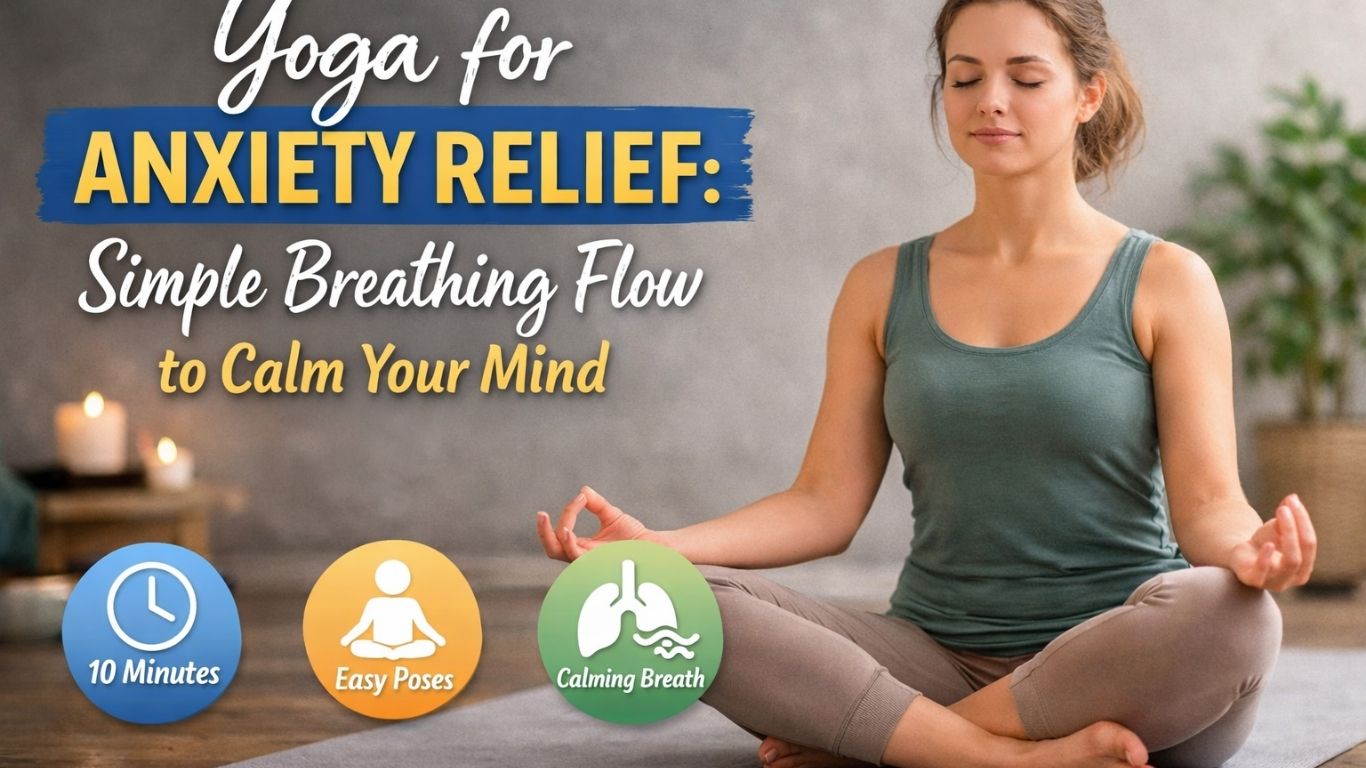
Yoga for Anxiety Relief: Simple Breathing Flow to Calm Your Mind
Anxiety can feel like your mind is running too fast. Your chest feels tight, your breathing becomes shallow, and even small things start feeling heavy. In that moment, your body is not relaxed—it’s in stress mode.
The easiest way to calm anxiety is to slow down your breath. When your breathing becomes deep and steady, your brain starts getting the signal that everything is okay. That’s why yoga breathing works so well for anxiety relief.
This simple yoga breathing flow is perfect for beginners. You don’t need flexibility or experience. You only need 10 minutes and a quiet space.
Why Yoga Helps With Anxiety
Anxiety usually triggers the body’s fight-or-flight response. This makes your heart beat faster, your muscles tighten, and your breathing becomes shallow.
Yoga helps because it slows your breath and activates the parasympathetic nervous system, which is responsible for calmness and recovery.
When you combine gentle movement with controlled breathing, your body starts feeling safe again.
How Breathing Controls Anxiety
Breathing is directly connected to your brain and nervous system.
If you breathe fast, your body thinks something is wrong.
If you breathe slowly, your body relaxes automatically.
That’s why yoga breathing techniques are so powerful for anxiety relief.
The Key Rule for Anxiety Relief Breathing
The best breathing pattern for anxiety is simple:
Inhale shorter, exhale longer.
This reduces stress signals in the brain.
Simple Yoga Breathing Flow for Anxiety Relief (10–15 Minutes)
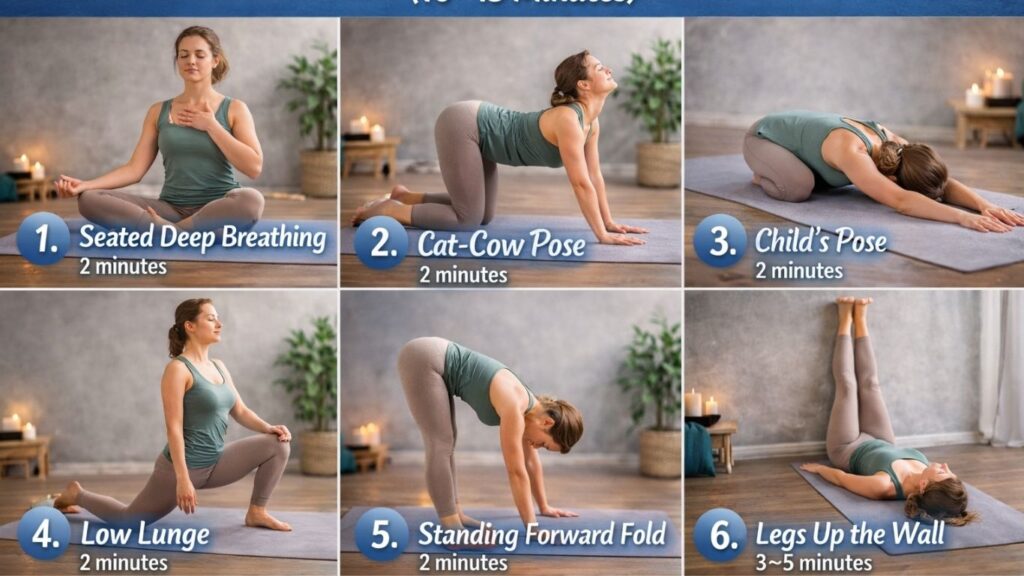
This flow is beginner-friendly and can be done at home. You don’t need any equipment, just a mat or soft surface.
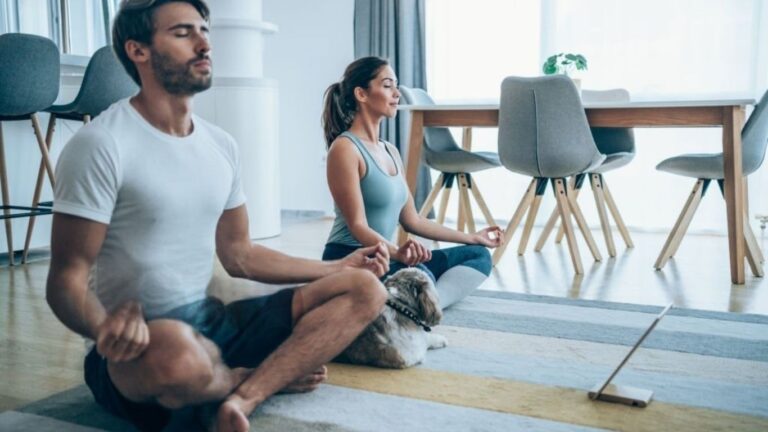
Step 1: Seated Deep Breathing (2 Minutes)
Sit comfortably on the floor or chair.
- Keep your back straight
- Relax your shoulders
- Close your eyes
Now breathe slowly:
- Inhale for 4 seconds
- Exhale for 6 seconds
Repeat this for 2 minutes.
This helps slow down your heart rate and relax your mind.
Step 2: Cat-Cow Pose With Slow Breath (2 Minutes)
Come onto your hands and knees.
- Inhale and lift your chest (Cow Pose)
- Exhale and round your spine (Cat Pose)
Move slowly and match your breath with movement.
Cat-Cow is helpful because it releases tension from the spine, shoulders, and neck—areas where stress often builds.
Step 3: Child’s Pose With Relaxing Breath (2 Minutes)
Now sit back into Child’s Pose.
- Stretch your arms forward
- Rest your forehead on the mat
- Relax your hips and shoulders
Breathe slowly and deeply.
Try to feel your belly expand with each inhale and soften with each exhale.
Child’s Pose is one of the best poses for anxiety because it creates a safe, calming feeling in the body.
Step 4: Low Lunge With Chest Opening (2 Minutes)
Step your right foot forward into a low lunge.
- Keep your left knee on the mat
- Place your hands on your thigh
- Inhale and lift your chest
- Exhale and relax your shoulders
Hold for 5 slow breaths.
Switch sides and repeat.
Low Lunge opens the chest, and chest-opening poses are important because anxiety often causes tight breathing.
Step 5: Standing Forward Fold (2 Minutes)
Slowly stand up.
Now bend forward gently and relax your head and neck.
- Keep knees slightly bent
- Let your arms hang naturally
Take slow breaths here.
Forward Fold is calming because it reduces mental pressure and relaxes the nervous system.
Step 6: Seated Twist to Release Stress (2 Minutes)
Sit down again and extend your legs.
Bend your right knee and place it over your left leg.
Twist gently toward the right side.
- Inhale and lengthen your spine
- Exhale and twist a little deeper
Hold for 5 breaths.
Repeat on the other side.
Twists help release tension stored in the lower back and abdomen, which is common in anxiety.
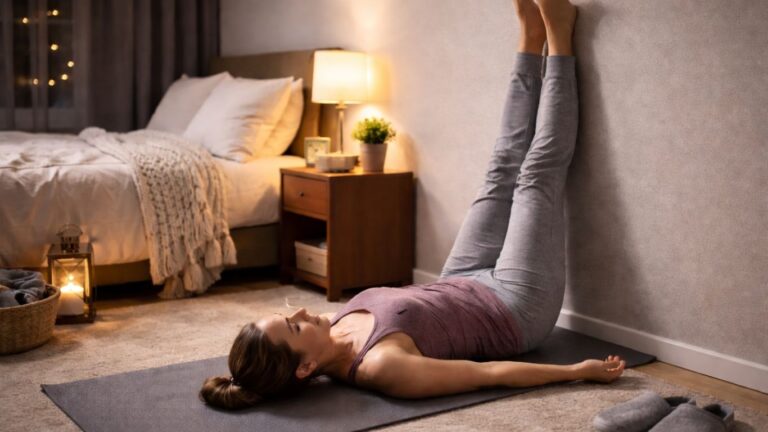
Step 7: Legs Up the Wall Pose (3–5 Minutes)
Lie down and place your legs up against a wall.
- Keep your arms relaxed
- Close your eyes
- Breathe slowly
This pose is extremely calming and helps reduce stress quickly.
Best Breathing Technique Here
Use this breathing pattern:
- Inhale for 4 seconds
- Exhale for 8 seconds
Repeat slowly.
This helps your nervous system relax deeply.
Best Yoga Breathing Techniques for Anxiety
If you want faster results, focus on breathing methods that calm the brain.
Extended Exhale Breathing
This is the easiest and best method.
- Inhale 4 seconds
- Exhale 6–8 seconds
This works because long exhales reduce stress response.
Box Breathing (For Overthinking)
- Inhale 4 seconds
- Hold 4 seconds
- Exhale 4 seconds
- Hold 4 seconds
This is good for mental focus and anxiety control.
Breathing (For Night Anxiety)
- Inhale 4 seconds
- Hold 7 seconds
- Exhale 8 seconds
This is best before sleep.
How Often Should You Do Yoga for Anxiety Relief?
Consistency matters more than long sessions.
A good schedule is:
- 10 minutes daily
- or 15 minutes 3–4 times a week
Many people notice improvement in mood and calmness within 1–2 weeks.
Common Mistakes People Make in Anxiety Yoga
Many people do yoga the wrong way when they feel anxious.
Here are common mistakes:
Doing Fast Yoga Flows
Fast yoga can increase heart rate and may worsen anxiety.
Holding Breath Too Much
Breath-holding is not for everyone. If you feel dizzy, stop and return to normal breathing.
Forcing Deep Stretching
Anxiety yoga is about relaxation, not flexibility.
Final Thoughts
Anxiety may feel strong, but your breath is stronger.
When you practice this simple yoga breathing flow, your body learns how to relax naturally. Your mind becomes quieter, your chest feels lighter, and your stress level reduces.
Even if you only have 10 minutes, this routine can help you feel calm and in control again.
FAQs
Can yoga reduce anxiety quickly?
Yes, gentle yoga and slow breathing can calm the nervous system in minutes, especially if you focus on long exhales.
Which yoga pose is best for anxiety?
Child’s Pose and Legs Up the Wall are two of the best poses for anxiety relief.
Is yoga safe for beginners with anxiety?
Yes, this breathing flow is beginner-friendly and safe for most people.
Can I do this routine every day?
Yes, daily practice is recommended for better long-term anxiety control.