
Yoga for Chronic Fatigue Syndrome: Gentle and Safe Practice Guide
Living with chronic fatigue syndrome (CFS), also known as myalgic encephalomyelitis (ME/CFS), is different from simply “feeling tired.” It is persistent, deep exhaustion that doesn’t improve with rest and often worsens after physical or mental exertion.
For many people, even light exercise can trigger symptom flare-ups — a phenomenon known as post-exertional malaise (PEM).
So where does yoga fit in?
When practiced carefully, gently, and intentionally, yoga can support circulation, nervous system balance, and emotional well-being — without pushing the body beyond its limits.
This guide focuses on safe, low-intensity, restorative yoga for chronic fatigue syndrome.
Understanding Chronic Fatigue Syndrome
According to the Centers for Disease Control and Prevention, ME/CFS is a complex condition characterized by:
- Severe fatigue lasting more than six months
- Post-exertional malaise (symptoms worsen after activity)
- Sleep disturbances
- Brain fog
- Dizziness or orthostatic intolerance
- Muscle and joint pain
The key challenge: energy is limited and unpredictable.
Yoga for CFS must be:
- Low intensity
- Short duration
- Rest-focused
- Breath-centered
- Fully adaptable
Important Safety Principles
Before starting yoga with chronic fatigue syndrome:
1. Pace Yourself
Stop before you feel tired — not after.
2. Avoid Overstretching
Aggressive stretching can worsen symptoms.
3. Stay Mostly Reclined or Seated
Standing sequences may increase dizziness.
4. Keep Sessions Short
Start with 5–10 minutes and gradually adjust.
5. Rest Frequently
Include pauses between movements.
The National Institute of Neurological Disorders and Stroke emphasizes that energy management and symptom pacing are essential for ME/CFS management.
10–15 Minute Gentle Yoga Flow for CFS
This sequence focuses on restoring, not strengthening.
Move slowly. If symptoms increase, stop.
1. Supported Resting Pose (3–5 Minutes)

Lie on your back.
Place pillows under knees.
Support head and neck.
Focus on slow breathing.
Benefits:
- Calms the nervous system
- Reduces stress
- Conserves energy
This alone is beneficial.
2. Gentle Diaphragmatic Breathing (2 Minutes)
One hand on the chest.
One on the belly.
Inhale gently through the nose.
Exhale longer than inhale.
Longer exhales encourage parasympathetic activation.
No force. No deep breathing strain.
3. Supine Knee-to-Chest (2 Minutes)
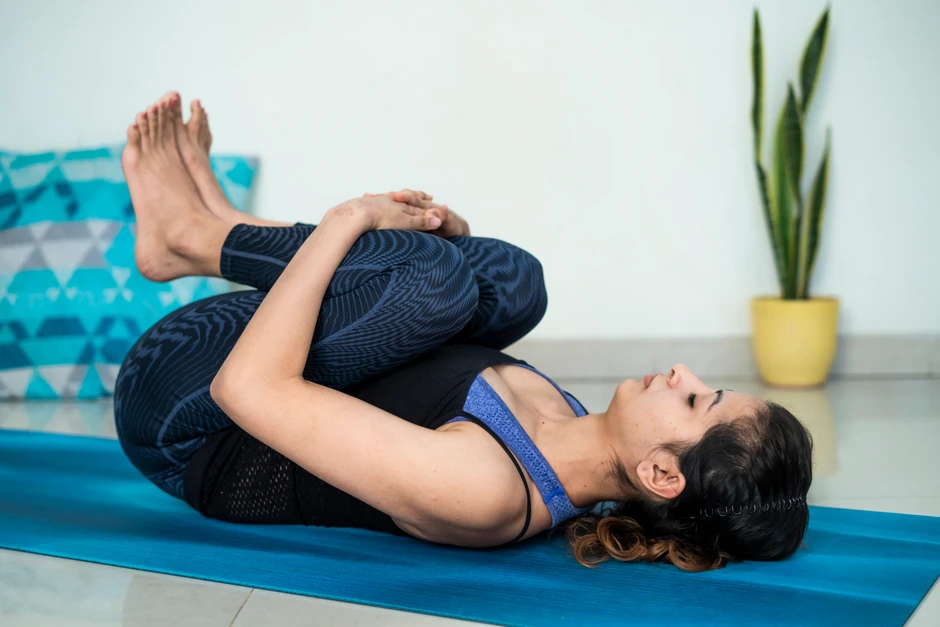
Bring one knee toward your chest.
Switch sides.
Then both knees are comfortable.
Benefits:
- Relieves lower back tension
- Encourages digestion
- Gentle spinal movement
Move slowly.
4. Supine Spinal Twist (2 Minutes Each Side)
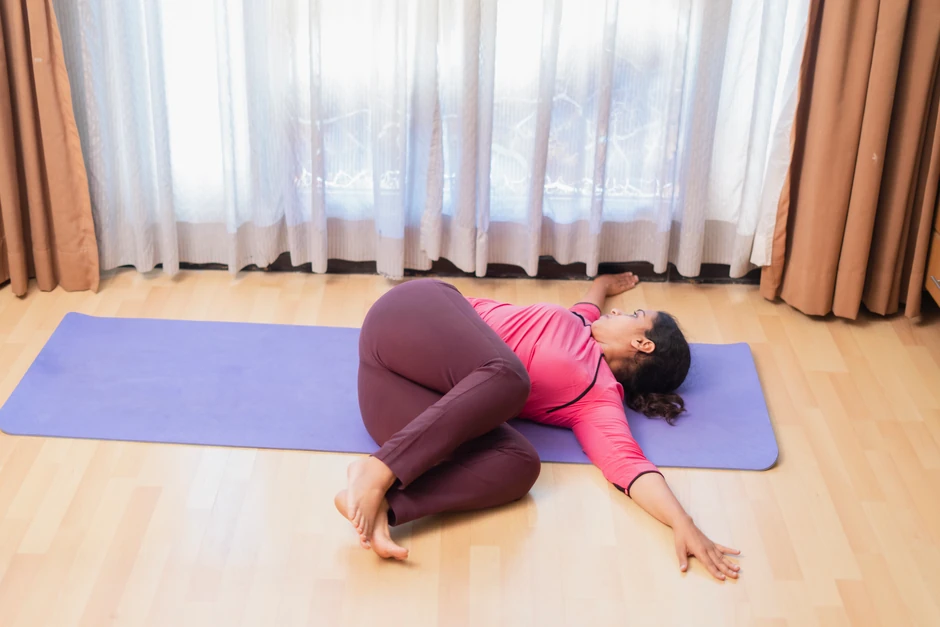
Drop knees gently to one side.
Support knees with a pillow if needed.
Benefits:
- Reduces stiffness
- Promotes relaxation
- Encourages circulation
Keep movement small.
5. Seated Neck & Shoulder Rolls (2 Minutes)
Sit upright with your back supported.
Slow shoulder circles.
Gentle neck tilts.
Avoid full circles if dizzy.
Benefits:
- Releases tension
- Improves circulation
- Reduces headache triggers
What to Avoid with Chronic Fatigue
Avoid:
- Fast flows
- Heated yoga
- Long-standing sequences
- Intense breathwork
- Competitive mindset
Yoga should leave you feeling slightly better — not exhausted.
If symptoms worsen the next day, reduce duration.
How Gentle Yoga Supports CFS
While yoga does not cure ME/CFS, gentle restorative movement may:
- Support nervous system balance
- Improve sleep quality
- Reduce muscle stiffness
- Enhance mood stability
- Improve body awareness
The goal is regulation — not fitness improvement.
Signs You Did Too Much
- Increased fatigue within 24 hours
- Brain fog worsening
- Muscle pain flare-up
- Flu-like symptoms
If this happens, reduce future sessions by 50%.
Practical Tips for Success
- Practice at the same time daily
- Use soft lighting
- Keep the room temperature neutral
- Stay hydrated
- Track symptoms in a journal
Consistency and patience are essential.
Final Thoughts
Yoga for chronic fatigue syndrome must be gentle, safe, and restorative.
Less is more.
A five-minute supported rest with mindful breathing is better than a 30-minute session that triggers fatigue.
Honor your limits.
Move slowly.
Prioritize recovery over intensity.
Your energy is valuable — protect it.