
Yoga for Digestive Health: Gentle Twists to Reduce Bloating and Support a Happier Gut
If your stomach feels heavy, bloated, or uncomfortable after meals, you’re not alone. Digestive problems are extremely common today—especially for people who sit long hours, eat fast, feel stressed, or don’t move enough during the day.
The good news? You don’t always need intense workouts or complicated routines.
Gentle yoga twists are one of the easiest ways to support digestive health naturally. These poses create light pressure in the abdomen, improve circulation around the gut, and help the body shift into “rest-and-digest” mode.
Why Yoga Twists Are Good for Digestion
Yoga twists are popular for digestive health because they may help:
- Stimulate the intestines naturally
- Support smoother bowel movement
- Reduce gas and bloating
- Improve blood flow to digestive organs
- Relax the belly muscles
- Ease lower back tightness (which often comes with constipation)
When you twist, your abdominal area experiences mild compression. When you release the twist, the belly relaxes again—this can encourage movement and circulation.
Twists also reduce stress, which is a major hidden cause of digestive issues.
The Gut-Stress Connection
Many people notice that digestion gets worse during stress.
That’s because the digestive system works best when your body is calm. Stress activates the “fight-or-flight” system, which slows digestion and increases bloating.
Yoga helps by activating the parasympathetic nervous system—also called the rest-and-digest response.
So even if your food is healthy, yoga can help your body process it better.
Best Time to Practice Twists for Digestive Health
Timing matters.
Best times:
Morning (to support bowel movement)
Evening (to reduce stress and gut tension)
Avoid:
Right after eating
Wait at least:
- 2–3 hours after a full meal
- 60 minutes after a light snack
Twisting too soon after eating may feel uncomfortable.
7 Gentle Yoga Twists That Support Digestive Health
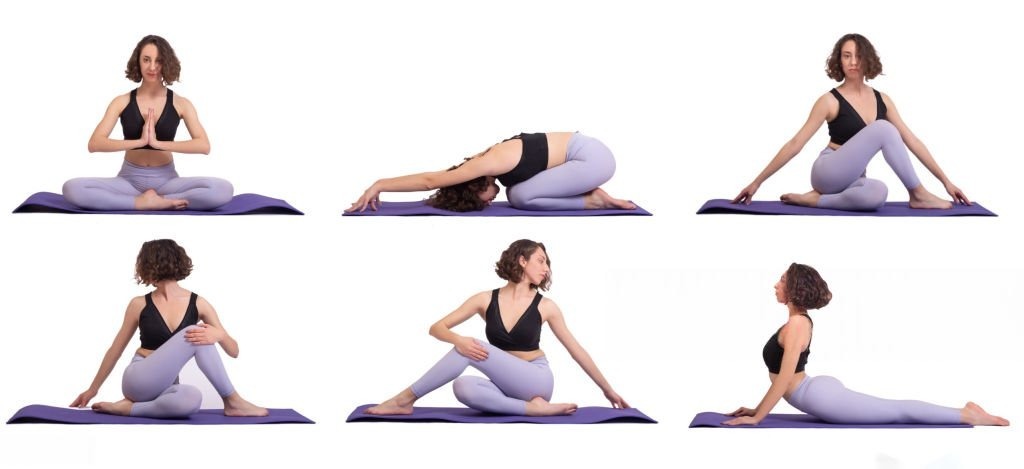
These poses are beginner-friendly, calming, and safe for most people.
1. Supine Spinal Twist (Best Twist for Bloating)
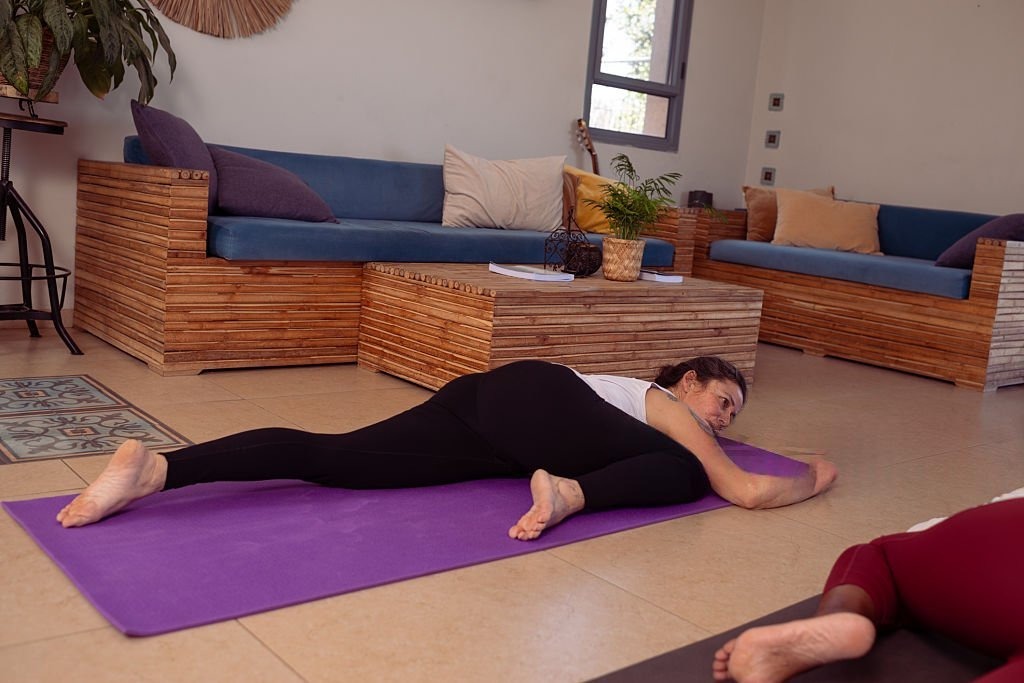
This is one of the easiest and most effective poses for digestion.
How to do it:
- Lie on your back.
- Hug your knees toward your chest.
- Drop both knees gently to the right.
- Keep your shoulders relaxed on the mat.
- Extend arms wide.
- Turn your head to the left if comfortable.
Hold:
30–60 seconds each side.
Why it helps:
This pose relaxes the belly and supports natural gas release.
2. Wind-Relieving Twist (Gas Relief Pose)
If you feel trapped, gas, or pressure, this twist is very helpful.
Steps:
- Lie on your back.
- Hug both knees close to your chest.
- Slowly move your knees to one side.
- Take deep breaths.
Hold:
30–45 seconds each side.
Benefits:
- Helps release gas
- Reduces abdominal tightness
- Supports gut movement
3. Seated Gentle Spinal Twist (Classic Digestive Twist)
This twist is commonly used in yoga routines for digestion.
How to do it:
- Sit with legs straight.
- Bend your right knee and place your foot outside your left thigh.
- Place your right hand behind you.
- Bring the left arm across the right knee.
- Inhale to lengthen spine, exhale to twist gently.
Hold:
20–40 seconds each side.
Benefits:
- Stimulates digestion
- Improves spinal flexibility
- Helps relieve constipation
4. Cat-Cow Twist Variation (Best for Morning Digestion)
Cat-Cow is already great for the gut. Adding a gentle twist makes it even better.
Steps:
- Start on hands and knees.
- Inhale: drop belly, lift chest (Cow).
- Exhale: round spine (Cat).
- Add twist: move the shoulder slightly toward the opposite wrist.
- Return to the center and switch sides.
Repeat:
6–8 rounds.
Benefits:
- Supports gut circulation
- Helps bowel movement
- Reduces stiffness from sitting
5. Thread the Needle Pose (Twist + Relaxation)

This is a calming twist that also opens the shoulders and upper back.
Steps:
- Start in tabletop position.
- Slide right arm under left arm.
- Rest your shoulder and ear on the mat.
- Keep hips steady.
Hold:
30–45 seconds each side.
Benefits:
- Improves breathing
- Reduces stress tension
- Supports digestion through relaxation
6. Child’s Pose Side Stretch Twist (Best for Sensitive Stomach)
This is perfect if your belly feels tight or you have mild discomfort.
Steps:
- Sit in Child’s Pose.
- Walk hands to the right side.
- Feel a stretch in the left side of the abdomen.
- Breathe deeply.
- Switch sides.
Hold:
30–50 seconds each side.
Benefits:
- Calms the gut
- Reduces bloating discomfort
- Helps relax abdominal muscles
7. Standing Gentle Twist (Best Twist for Work or Travel)
This is an easy twist you can do anywhere.
Steps:
- Stand tall with feet hip-width apart.
- Place your hands on your waist.
- Inhale to lengthen spine.
- Exhale and twist gently to the right.
- Keep hips facing forward.
Repeat:
5–6 times each side.
Benefits:
- Improves digestion during the day
- Supports posture
- Helps relieve heaviness after long sitting
10-Minute Yoga Routine for Digestive Health (Daily Flow)
If you want an easy plan, follow this simple sequence:
Quick Digestive Twist Routine:
Cat-Cow – 1 minute
Cat-Cow Twist Variation – 1 minute
Child’s Pose Side Stretch – 1 minute each side
Thread the Needle – 1 minute each side
Supine Spinal Twist – 1 minute each side
Wind-Relieving Pose – 1 minute
This entire routine takes about 10 minutes and is great for morning or evening practice.
Breathing Technique to Boost Digestive Benefits
Breathing is a hidden part of digestion.
During twists, use this simple method:
- Inhale through the nose for 4 seconds
- Exhale slowly for 6 seconds
A longer exhale tells your body it is safe to relax, which supports gut function.
Common Mistakes People Make with Twists
To stay safe and get the best digestive results, avoid these mistakes:
Twisting too aggressively
Gentle is better for digestion. Force can create strain.
Holding your breath
Breathing deeply improves the effect of twists.
Twisting right after eating
This can cause discomfort and nausea.
Rounding the spine
Always lengthen the spine first, then twist.
Who Should Avoid Twisting Yoga?
Avoid or modify twisting poses if you have:
- Recent abdominal surgery
- Hernia
- Severe acid reflux flare-ups
- Serious spinal injury
- Pregnancy (unless guided by a prenatal yoga expert)
If any pose causes sharp pain, stop immediately.
Extra Tips to Improve Digestion Along with Yoga
Yoga works best when combined with basic habits:
Drink warm water in the morning
Warm water can support gut movement.
Take a 10-minute walk after meals
Walking is one of the best natural digestion boosters.
Eat slowly
Fast eating increases gas and bloating.
Reduce late-night heavy meals
Heavy meals before sleep increase acidity and constipation.
Final Thoughts
Digestive discomfort can ruin your mood and energy. But small daily changes make a big difference.
Gentle yoga twists help by supporting circulation, easing abdominal tension, and calming the nervous system. You don’t need advanced flexibility—just consistency.
If you only pick two poses to start with, choose:
Supine Spinal Twist
Child’s Pose Side Stretch
Do them daily for 7–10 minutes, and your digestion may start feeling smoother within a week.
FAQ
Can yoga twists help constipation?
Yes, gentle twisting movements may support bowel movement by stimulating gut activity and reducing stress tension.
How often should I do these poses?
4–6 days per week is ideal. Even 5 minutes daily can help.
Is yoga good for gas and bloating?
Yes. Supine twists and knees-to-chest variations are especially useful for gas relief.