Yoga for Hip Injury: An Injury-Friendly Practice to Heal, Strengthen, and Move Better
A hip injury can make everyday life uncomfortable. Walking, sitting, climbing stairs, or even sleeping on one side may feel painful. Many people assume they should stop moving completely, but in most cases, gentle and controlled movement is one of the best ways to support hip recovery.
That’s where yoga can help.
Yoga is not about forcing flexibility. A smart yoga routine focuses on stability, controlled stretching, and muscle activation, which can reduce hip tightness and improve mobility without aggravating the injury.
This guide explains how to practice yoga safely with a hip injury, which poses help, which poses to avoid, and a simple injury-friendly yoga sequence.
Can Yoga Help a Hip Injury?
Yes, yoga can support recovery from many common hip injuries, especially when the goal is to:
- reduce stiffness
- improve blood circulation
- strengthen hip-support muscles
- restore range of motion
- improve posture and gait
However, yoga is not a replacement for medical treatment. If you have severe pain, swelling, or difficulty walking, you should consult a doctor or physical therapist first.
Yoga works best when used as a support tool, not as a “quick fix.”
Common Hip Injuries Yoga May Help With
Yoga can be helpful for mild-to-moderate hip issues, such as:
- hip flexor strain
- tight hip flexors from sitting
- IT band tightness
- glute weakness
- piriformis tightness
- mild labral irritation (only under professional guidance)
- hip bursitis (gentle only)
- post-workout hip inflammation
- Lower back tightness is causing hip discomfort
If your hip pain comes from arthritis or structural damage, yoga can still help, but the approach must be slower and more supportive.
Important Rule: Pain Is Not Progress
One of the biggest mistakes people make is pushing through pain during yoga.
With a hip injury, pain is a warning sign.
Stop or modify if you feel:
- Sharp pain in the hip joint
- pinching sensation in the groin
- numbness or tingling down the leg
- deep pain when rotating the hip
- instability or clicking with pain
Yoga should feel gentle and controlled, not aggressive.
Safety Tips Before Doing Yoga with a Hip Injury
Before starting, follow these injury-friendly rules:
Warm Up First
Never stretch a cold hip. Do light walking or gentle movements for 3–5 minutes.
Use Props
Yoga blocks, pillows, folded blankets, and straps reduce strain and improve alignment.
Avoid Deep Hip Rotation
Deep external rotation can aggravate injuries, especially labral issues.
Focus on Controlled Movement
Slow, stable movements are safer than long holds.
Don’t Force Hip Opening Poses
A tight hip does not mean you should push harder.
Best Yoga Poses for Hip Injury
These poses support hip healing by improving mobility and strengthening the muscles around the hip joint.
1. Supported Child’s Pose (Balasana)
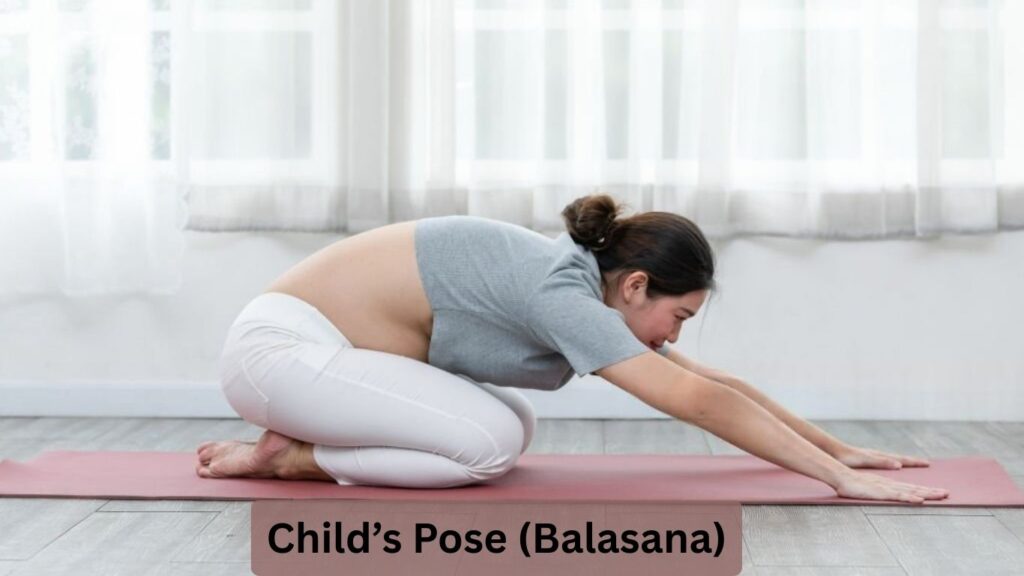
This pose reduces tension in the hips and lower back.
How to do it:
- Kneel and sit back on your heels
- Place a pillow under your chest
- Rest your forehead down and breathe slowly
Why it helps:
- relaxes hip muscles
- reduces lower back tension
2. Cat-Cow Pose (Marjaryasana-Bitilasana)
A gentle movement that improves spinal mobility and reduces hip stiffness.
How to do it:
- Start on hands and knees
- Inhale: drop belly slightly (Cow)
- Exhale: round back (Cat)
- Repeat for 8–10 rounds
Why it helps:
- improves hip and spine coordination
- reduces stiffness without pressure
3. Bridge Pose (Setu Bandhasana)
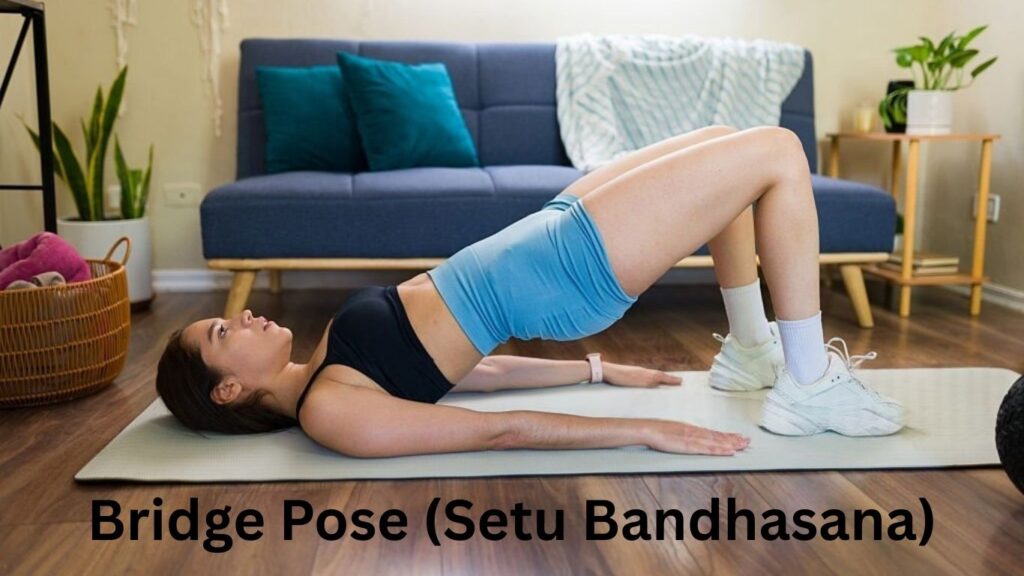
The bridge pose strengthens glutes, which support hip recovery.
How to do it:
- Lie on your back with knees bent
- Feet hip-width apart
- Lift hips slowly and hold for 10–20 seconds
- Lower down with control
Why it helps:
- strengthens glutes and hamstrings
- improves pelvic stability
Tip: Don’t lift too high if you feel pressure in the hip joint.
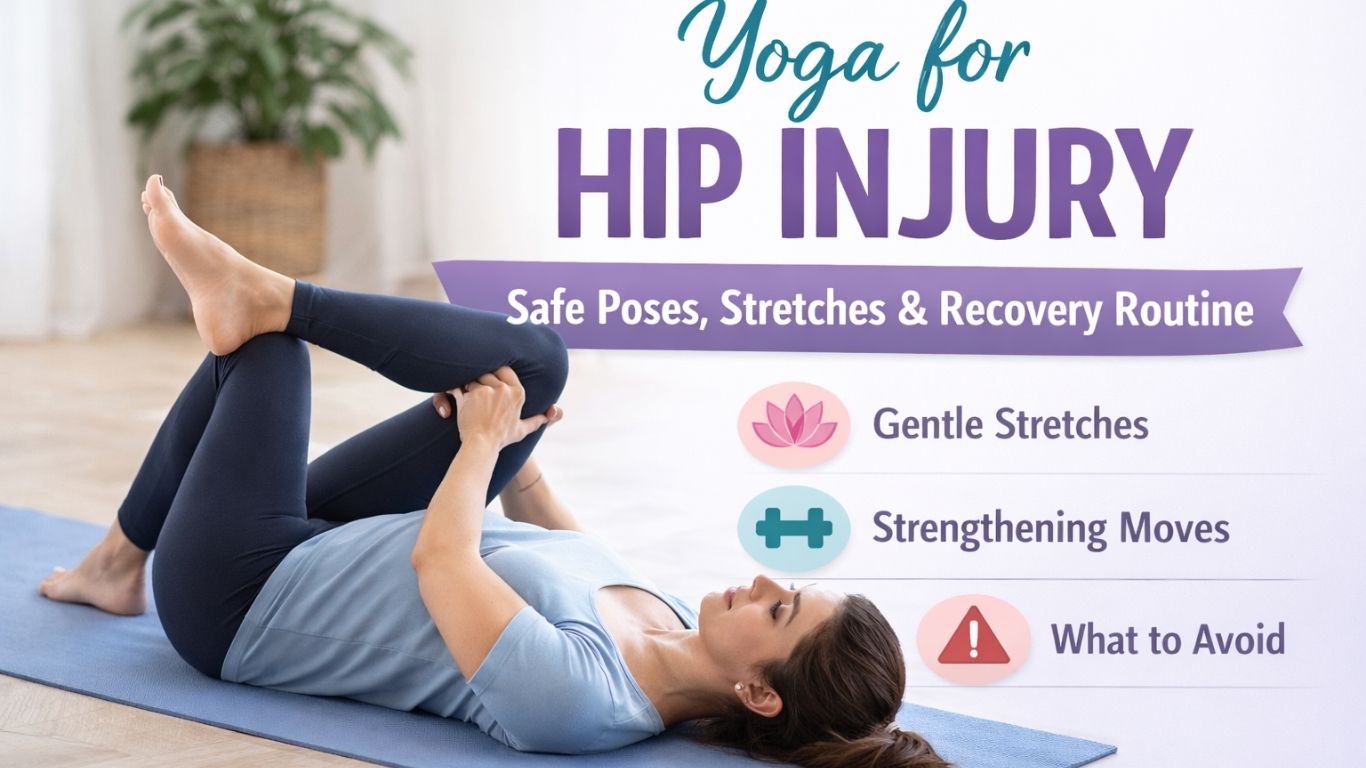
4. Reclined Figure-Four Stretch (Modified)
This is one of the best gentle stretches for piriformis and glute tightness.
How to do it:
- Lie on your back
- Cross ankle over opposite thigh
- Hold behind the thigh and pull gently
Why it helps:
- relieves piriformis tightness
- supports sciatica-related hip pain
Avoid: pulling aggressively.
5. Low Lunge (Modified Anjaneyasana)
This pose stretches the hip flexors safely when modified.
How to do it:
- Step one foot forward into a lunge
- Drop back, knee down
- Keep your hands on the blocks for support
- Hold 20–30 seconds
Why it helps:
- stretches hip flexors
- reduces tightness from long sitting
Tip: Keep the pelvis neutral. Avoid pushing forward too far.
6. Supine Knee-to-Chest Pose (Apanasana)
A gentle hip release pose that supports lower back and hip recovery.
How to do it:
- Lie on your back
- Pull one knee toward your chest
- Hold 20 seconds
- Switch sides
Why it helps:
- reduces hip compression
- releases tight glutes
7. Legs Up the Wall Pose (Viparita Karani)
A recovery pose that reduces hip and leg fatigue.
How to do it:
- Sit close to a wall
- Lift your legs against the wall
- Relax and breathe
Why it helps:
- improves circulation
- reduces inflammation and tension
Best 15-Minute Yoga Sequence for Hip Injury (Beginner-Friendly)
This sequence is gentle and designed for pain-sensitive hips.
Step 1: Cat-Cow (1–2 minutes)
Move slowly and match your breath to your movement.
Step 2: Supported Child’s Pose (2 minutes)
Use a pillow or a folded blanket.
Step 3: Low Lunge (Modified) (1 minute each side)
Keep the stretch gentle.
Step 4: Bridge Pose (5 rounds)
Hold each bridge for 10 seconds.
Step 5: Reclined Figure-Four Stretch (1 minute each side)
Keep it comfortable and stable.
Step 6: Knee-to-Chest Stretch (30 seconds each side)
This routine improves mobility and strengthens the hips without pushing the injury.
How Often Should You Practice Yoga for Hip Injury?
A safe schedule is:
- 3–5 times per week
- 15–30 minutes per session
- low intensity, high consistency
If your pain increases after yoga and stays for more than 24 hours, reduce intensity.
When to See a Doctor Instead of Doing Yoga
Yoga is not safe if you have:
- sudden hip swelling
- severe pain while walking
- Hip pain after a fall
- suspected fracture
- Sharp groin pain with clicking
- pain that gets worse every week
These symptoms may indicate a labral tear, fracture, or joint damage.
Final Thoughts
A hip injury does not mean you must stop all movement. The right yoga practice can improve hip stability, reduce tightness, and help you move with less pain.
The key is to practice yoga in an injury-friendly way:
- Choose supportive poses
- avoid deep rotation
- strengthen glutes and core
- use props
- never force flexibility
If you stay consistent and patient, yoga can become a safe part of your hip healing journey.