Yoga for Home Office Workers: Reduce Back Pain with a Simple Daily Routine
Working from home sounds comfortable—until your lower back starts hurting every time you stand up. If you spend long hours sitting in a chair, leaning toward your laptop, or working from your bed or couch, back pain becomes almost unavoidable.
The problem is not just sitting. The real issue is how long you sit without movement, and how your posture slowly collapses during the day. You don’t need expensive equipment or long gym sessions. A short daily yoga routine can help reduce back pain and improve your mobility.
Home Office Work Is Destroying Your Back
If you’re a home office worker, your daily routine probably looks like this:
- Sit for hours without standing
- Hunch shoulders toward the screen
- Tight hips from long sitting
- Weak core muscles
- Stiff lower back
Over time, your spine takes the pressure.
Research shows that adults who sit for long hours are more likely to report low back pain. In fact, several workplace studies highlight that prolonged sitting increases spinal compression, especially in the lumbar region (lower back).
A major reason is simple: when you sit, your hip flexors shorten, your glutes become inactive, and your core stops supporting your spine properly. That imbalance leads to pain, stiffness, and fatigue.
And if you ignore it, the pain doesn’t stay small.
Back Pain Isn’t Just Pain—It’s a Productivity Killer
Back pain is not only uncomfortable. It affects your entire day.
You may notice:
- Trouble focusing during work hours
- Constant stiffness in the morning
- Pain when bending or standing
- Reduced energy after sitting
- Poor sleep due to discomfort
According to the World Health Organization (WHO), low back pain is one of the leading causes of disability worldwide. That means millions of people struggle daily—not because they are injured, but because their lifestyle slowly breaks their movement system.
And home office work can make it worse because there’s no natural movement like commuting, walking between departments, or even standing up for meetings.
Many people also use chairs that are not ergonomic. Some work from couches or beds. That puts the spine into a rounded position, increasing strain on spinal discs.
Real Data from a Case Study
A widely referenced case study published in the International Journal of Yoga examined yoga’s impact on people suffering from chronic low back pain. In this study, participants who followed a structured yoga program showed significant improvements in pain levels and functional movement compared to those who did not.
Another well-known research project, including yoga-based intervention for back pain patients, reported improved flexibility and reduced disability scores after consistent yoga practice over several weeks.
This proves one key thing:
Yoga is not just stretching—it’s corrective movement.
Yoga Can Reduce Back Pain by Fixing the Root Cause
Yoga helps home office workers because it targets the exact muscles that sitting weakens:
- Tight hips
- Stiff hamstrings
- Weak lower back stabilizers
- Poor spinal alignment
- Shallow breathing due to a slouched posture
A daily yoga routine improves mobility and strengthens the body without putting pressure on the joints.
Here’s a simple yoga flow designed specifically for home office workers.
Best Yoga Routine for Home Office Workers (10–15 Minutes)
1. Cat-Cow Pose (1 minute)
Why it works: Mobilizes the spine and reduces stiffness.
How to do it:
- Come onto hands and knees
- Inhale, lift chest and tailbone (Cow)
- Exhale, round spine, and tuck chin (Cat)
This movement improves spinal fluid motion and relaxes tension in the back.
2. Child’s Pose (1 minute)
Why it works: Stretches the lower back and decompresses the spine.
How to do it:
- Sit with your hips back toward your heels
- Stretch arms forward
- Breathe deeply
This is one of the easiest poses to reduce back tightness after long sitting.
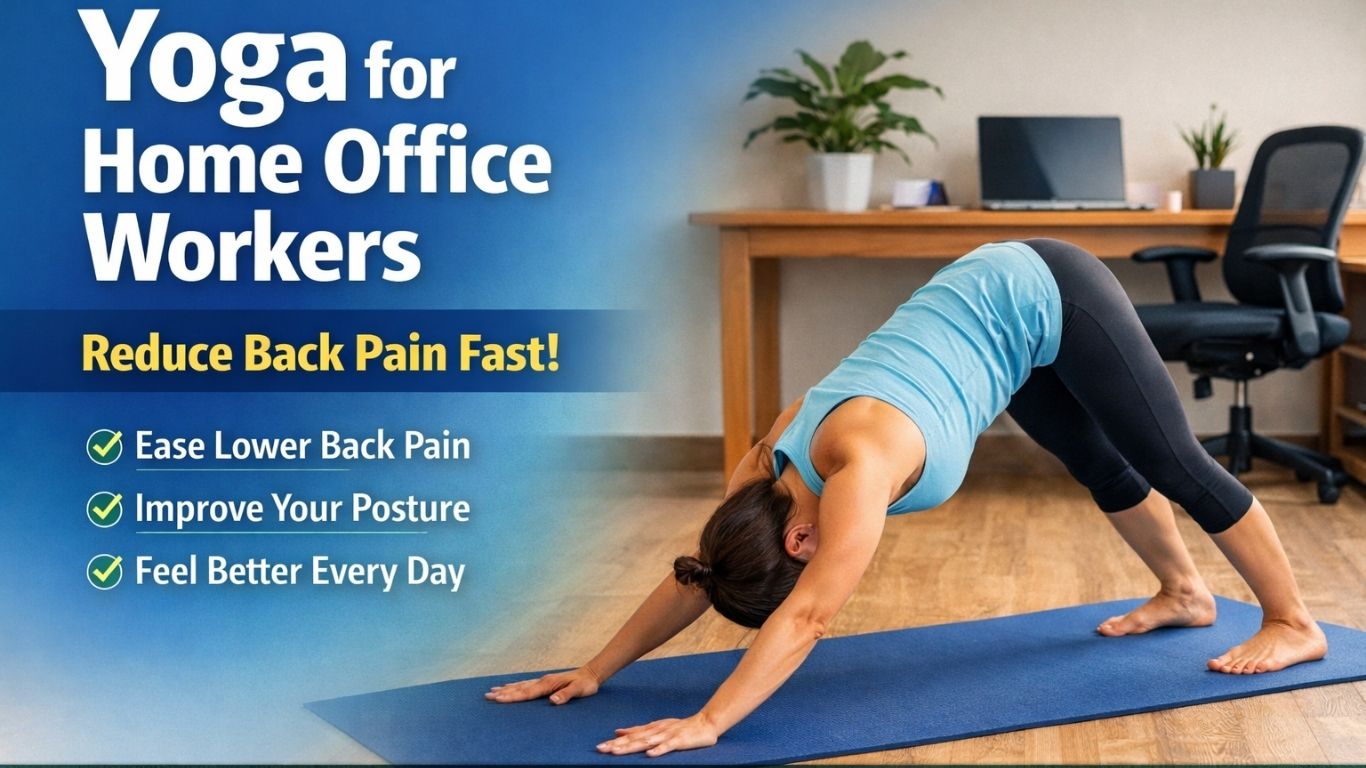
3. Downward-Facing Dog (30–45 seconds)
Why it works: Opens hamstrings and lengthens the spine.
How to do it:
- Lift your hips up
- Press your hands into the floor
- Keep knees slightly bent if needed
Tight hamstrings often pull the pelvis, increasing lower back pressure.
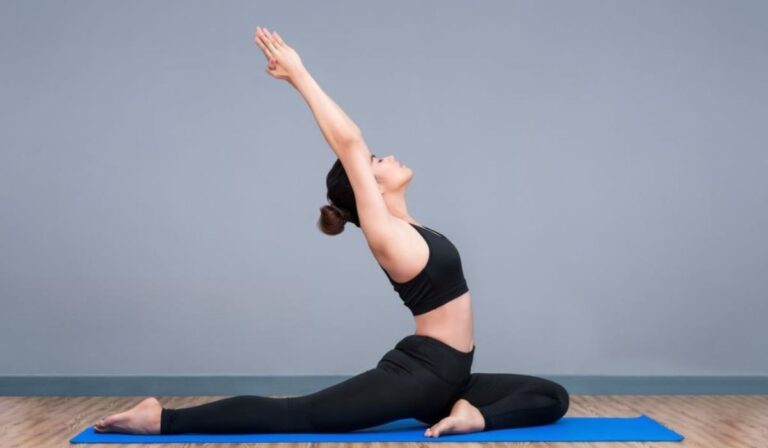
4. Low Lunge (30 seconds each side)
Why it works: Stretches hip flexors, which get tight from sitting.
How to do it:
- Step one foot forward
- Drop back, knee down
- Push hips forward slightly
Hip flexor tightness is one of the biggest hidden causes of back pain in desk workers.
5. Sphinx Pose (45 seconds)
Why it works: Strengthens the lower back and improves posture.
How to do it:
- Lie on your stomach
- Support the upper body on the elbows
- Keep shoulders relaxed
This pose helps counter the “rounded spine” posture caused by laptop work.
6. Supine Twist (30 seconds each side)
Why it works: Releases spinal tension and improves rotation.
How to do it:
- Lie on your back
- Drop knees to one side
- Keep shoulders grounded
Twists relax the back muscles and reduce stiffness after sitting.
7. Bridge Pose (10 reps or 30 seconds hold)
Why it works: Activates glutes and strengthens the core.
How to do it:
- Lie on your back, knees bent
- Lift hips upward
- Squeeze glutes
Weak glutes mean the lower back has to do more work than it should.
8. Legs Up the Wall (2 minutes)
Why it works: Reduces spinal pressure and relaxes the nervous system.
How to do it:
- Place your legs up against a wall
- Lie flat and breathe slowly
This pose is excellent for people who feel heavy back pressure after long hours.
How Often Should You Do Yoga for Back Pain?
For best results:
- 5 days a week
- 10 to 15 minutes per session
- Combine yoga with short breaks during work
Even standing up every 30–60 minutes improves circulation and reduces spine load.
A simple goal is:
1 yoga session daily
3–5 short walking breaks during work hours
Extra Tips to Reduce Back Pain While Working from Home
Yoga works faster when you fix your daily habits:
- Keep your laptop screen at eye level
- Use a cushion for lower back support
- Keep feet flat on the floor
- Don’t work from bed regularly
- Stretch your hips during lunch breaks
Final Thoughts
If you’re a home office worker, back pain doesn’t mean your body is weak. It means your body is asking for movement.
Yoga is one of the most effective tools because it improves flexibility, strengthens weak muscles, and resets posture. Studies and real case evidence show that structured yoga programs can reduce chronic low back pain and improve daily function.