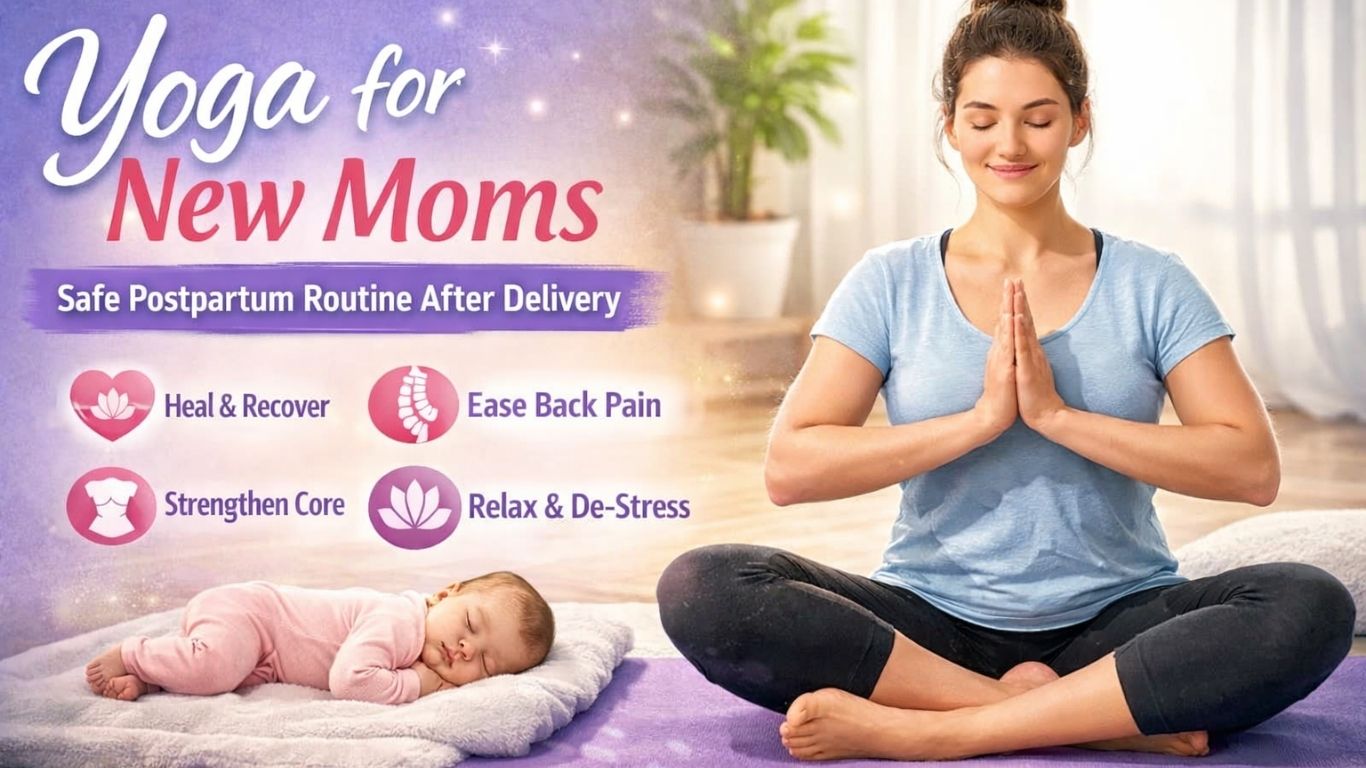
Yoga for New Moms: A Safe After-Delivery Routine to Heal, Strengthen, and Feel Like Yourself Again
Bringing a baby into the world is powerful—but postpartum recovery is no joke. Your body has gone through major physical changes, your sleep is disrupted, and your hormones are shifting fast. Many new moms feel tired, stiff, emotionally overwhelmed, and disconnected from their own bodies.
That’s where postpartum yoga can help.
A gentle yoga routine after delivery can support healing, improve circulation, reduce back pain, ease stress, and rebuild strength safely—without pushing your body too hard.
In this article, you’ll learn a safe yoga routine for new moms that you can do at home, even if you only have 10–20 minutes.
Is Yoga Safe After Delivery?
Yes—yoga can be safe after delivery, but timing matters.
General postpartum yoga timeline
- Vaginal delivery: Gentle yoga may be safe after 2–6 weeks
- C-section delivery: usually safer after 6–10 weeks, with doctor approval
- Pelvic floor recovery or complications: wait longer if needed
Always check with your doctor before starting postpartum exercise—especially if you had:
- C-section
- heavy bleeding
- high blood pressure
- pelvic pain
- diastasis recti (ab separation)
- prolapse symptoms
Benefits of Postpartum Yoga for New Moms
Postpartum yoga is not about “getting your body back.” It’s about helping your body recover and giving your mind relief.
Key benefits include:
- Strengthens pelvic floor and deep core
- Reduces lower back pain from feeding and carrying the baby
- Improves posture and shoulder tension
- Supports emotional balance and reduces anxiety
- Enhances blood circulation and healing
- Helps you sleep better (even with baby interruptions)
Postpartum Yoga Safety Tips
Before you start, follow these postpartum yoga rules:
1. Start slow and stay gentle
Your ligaments may still be loose due to pregnancy hormones.
2. Avoid intense core work early on
Skip:
- crunches
- full planks
- boat pose
- strong twists
3. Watch for diastasis recti
If you notice a “bulge” in your belly during movement, stop and modify.
4. Stop if you feel pain or pressure
Yoga should feel supportive—not painful.
5. Breathe naturally
Avoid breath-holding. Slow breathing is key to healing.
Safe Yoga After Delivery Routine for New Moms
This routine is beginner-friendly and designed for postpartum recovery. You can do it on a yoga mat or a soft carpet.

Best time: morning or evening
Frequency: 3–5 days per week
1. Diaphragmatic Breathing
Why it helps: supports core healing and calms your nervous system.
How to do it:
- Sit comfortably or lie on your back
- Place one hand on your chest and one on your belly
- Inhale through the nose and let your belly rise
- Exhale slowly through the mouth
Repeat 8–10 deep breaths.
2. Pelvic Floor Breathing
Why it helps: strengthens pelvic muscles gently.
Steps:
- Inhale and relax the pelvic muscles
- Exhale and gently lift pelvic floor (like stopping urine flow)
- Hold 2 seconds
- Release fully
Repeat 8–12 times.
Don’t over-squeeze. Gentle engagement is enough.
3. Cat-Cow Stretch
Why it helps: relieves back stiffness and improves spinal mobility.
Steps:
- Come on, hands and knees
- Inhale, lift chest and tailbone (Cow Pose)
- Exhale, round spin,e and tuck chin (Cat Pose)
Repeat 8–10 rounds slowly.
4. Child’s Pose
Why it helps: relaxes the hips, lower back, and calms stress.
Steps:
- Kneel and sit back on your heels
- Stretch arms forward
- Rest your forehead down
If your belly feels sensitive, widen your knees for comfort.
5. Supported Bridge Pose
Why it helps: strengthens glutes and supports core stability.
Steps:
- Lie on your back, knees bent, feet hip-width apart
- Press your feet into the floor
- Lift hips gently
- Hold for 5–8 breaths
Optional: Place a pillow under your hips for support.
Avoid if it causes abdominal strain.
6. Supine Knee-to-Chest Stretch
Why it helps: releases lower back tension from carrying a baby.
Steps:
- Lie on your back
- Pull one knee toward your chest
- Keep the other leg bent or extended
Hold 30–45 seconds on each side.
7. Reclining Butterfly Pose
Why it helps: opens hips and encourages relaxation.
Steps:
- Lie down
- Bring the soles of the feet together
- Let knees fall outward
- Place pillows under knees if needed
Breathe deeply for 8–10 breaths.
8. Gentle Supine Twist
Why it helps: reduces back stiffness and improves spinal comfort.
Steps:
- Lie on your back
- Drop both knees to one side
- Keep shoulders relaxed
Twist gently, not deeply.
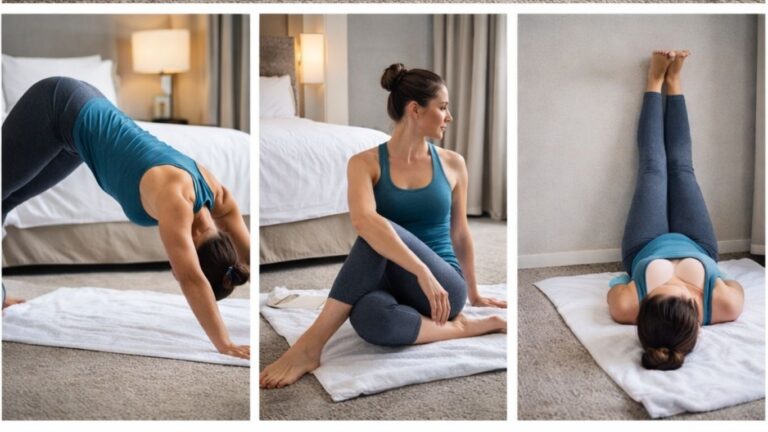
9. Legs Up the Wall
Why it helps: reduces swelling, improves circulation, calms anxiety.
Steps:
- Sit close to a wall
- Swing legs upward
- Rest arms by your sides
- Close your eyes and breathe slowly
This is one of the best poses for postpartum fatigue.
Optional 5-Minute Postpartum Yoga Routine
If you have very little time, do this quick routine:
1 minute deep breathing
1 minute Cat-Cow
1 minute Child’s Pose
2 minutes Legs Up the Wall
Even this small routine can reduce stress and body pain.
Common Postpartum Problems Yoga Can Help With
Lower back pain
Yoga improves posture and releases tight muscles.
Shoulder and neck tension
Feeding and holding a baby strains the upper body. Gentle stretching helps.
Stress and postpartum anxiety
Breathing exercises and restorative poses calm the nervous system.
Weak core and pelvic floor
Gentle yoga supports gradual strengthening safely.
What to Avoid in Postpartum Yoga
To stay safe, avoid these poses and movements early on:
Strong abdominal exercises
Deep backbends
Intense twisting
Full planks or push-ups
Fast flows like power yoga
Hot yoga (can worsen dehydration)
Best Time to Do Yoga as a New Mom
The best time is when you can actually relax.
Good options include:
- after the baby sleeps
- early morning before the day starts
- evening to calm your mind
- after feeding the baby (wait 30–45 minutes)
Even 10 minutes counts.
Can You Do Yoga While Breastfeeding?
Yes, postpartum yoga is generally safe while breastfeeding.
Tips:
- Wear a supportive bra
- Avoid poses that compress the chest
- Drink extra water
- Stop if you feel dizzy or weak
Signs You Should Stop Yoga and Rest
Stop your routine and consult a doctor if you experience:
- increased bleeding
- pelvic heaviness or pressure
- Sharp abdominal pain
- dizziness or fainting
- pain near the C-section incision
- urinary leakage that worsens
Your recovery should feel gradual and supported.
Final Thoughts
Yoga for new moms is not about rushing weight loss or “bouncing back.” It’s about rebuilding strength slowly, improving posture, supporting pelvic healing, and calming your nervous system during one of the most demanding phases of life.
Even a few minutes of gentle stretching and breathing can help you feel more stable, relaxed, and connected to your body again.
Start slow. Be consistent. And remember—healing is progress.
FAQ
Can I do yoga 2 weeks after delivery?
Only gentle breathing and restorative stretches may be safe, but always confirm with your doctor.
Is yoga safe after a C-section?
Yes, but you should wait until your doctor clears you (often 6–10 weeks) and avoid core strain.
How many times a week should postpartum moms do yoga?
3–5 times a week is ideal, but even 2 times weekly helps.