Yoga for Newbies Over 60: Easy Beginner Class to Improve Strength, Balance, and Flexibility
Starting yoga after 60 is one of the smartest things you can do for your health. You don’t need to be flexible. You don’t need athletic experience. You don’t even need a perfect body.
You just need the right approach.
Many beginners over 60 avoid yoga because they think it’s only for young people who can twist into difficult poses. The truth is the opposite. Yoga can be adjusted for every age and every fitness level, and it’s especially helpful for older adults who want to improve mobility, balance, posture, and stress levels.
This guide is a simple, realistic beginner yoga class for newbies over 60, including safe poses, modifications, and a gentle routine you can follow at home.
Is Yoga Safe for Beginners Over 60?
Yes, yoga is generally safe for people over 60 when practiced correctly.
In fact, yoga is one of the best low-impact exercises for older adults because it improves flexibility and strength without putting pressure on the joints.
However, if you have medical conditions such as osteoporosis, arthritis, high blood pressure, or recent surgery, it’s smart to talk with your doctor first. Most yoga poses can be modified, but safety should always come first.
Benefits of Yoga for Older Adults
Yoga is not just stretching. It trains the body and mind together.
1. Improves Balance and Reduces Fall Risk
Balance naturally decreases with age. Yoga strengthens stabilizing muscles and improves coordination, which helps prevent falls.
2. Builds Strength Without Heavy Weights
Yoga uses body weight to strengthen legs, hips, arms, and core. This supports daily movements like standing up, walking, and climbing stairs.
3. Increases Flexibility and Joint Mobility
Gentle stretching keeps joints moving smoothly and reduces stiffness.
4. Helps With Back Pain and Posture
Many older adults develop rounded shoulders and back discomfort. Yoga improves spinal alignment and strengthens postural muscles.
5. Reduces Stress and Improves Sleep
Breathing exercises and slow movements calm the nervous system, making it easier to sleep and manage anxiety.
What Beginners Over 60 Should Know Before Starting Yoga
Here are a few important beginner tips:
- Start slow and don’t rush progress
- Use a chair, wall, or yoga blocks for support
- Avoid pushing into pain
- Focus on steady breathing
- Practice on a soft surface or yoga mat
- Wear comfortable clothes
Yoga should feel supportive, not exhausting.
Easy Beginner Yoga Class for Newbies Over 60 (20 Minutes)
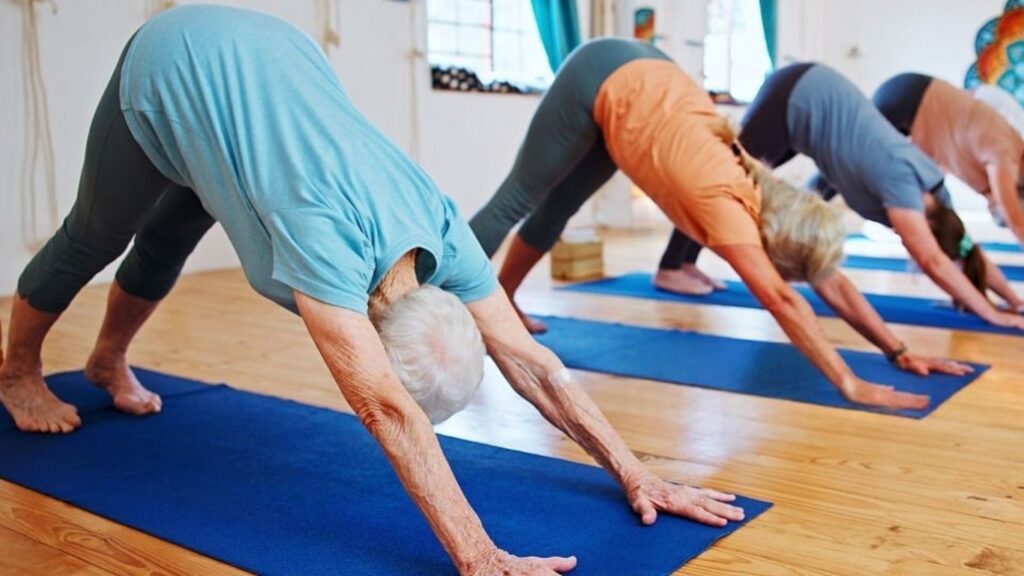
This routine is gentle and beginner-friendly. You can do it at home with a chair nearby for balance.
1. Seated Breathing (2 Minutes)
Sit tall on a chair.
- Inhale through the nose for 4 seconds
- Exhale slowly for 6 seconds
- Relax shoulders
Benefit: calms the mind and prepares the body.
2. Seated Neck Stretch (1 Minute)
- Drop the right ear toward the right shoulder
- Hold 15 seconds
- Switch sides
Benefit: relieves neck stiffness and tension.
3. Seated Shoulder Rolls (1 Minute)
- Roll your shoulders forward 10 times
- Roll your shoulders backward 10 times
Benefit: improves shoulder mobility and posture.
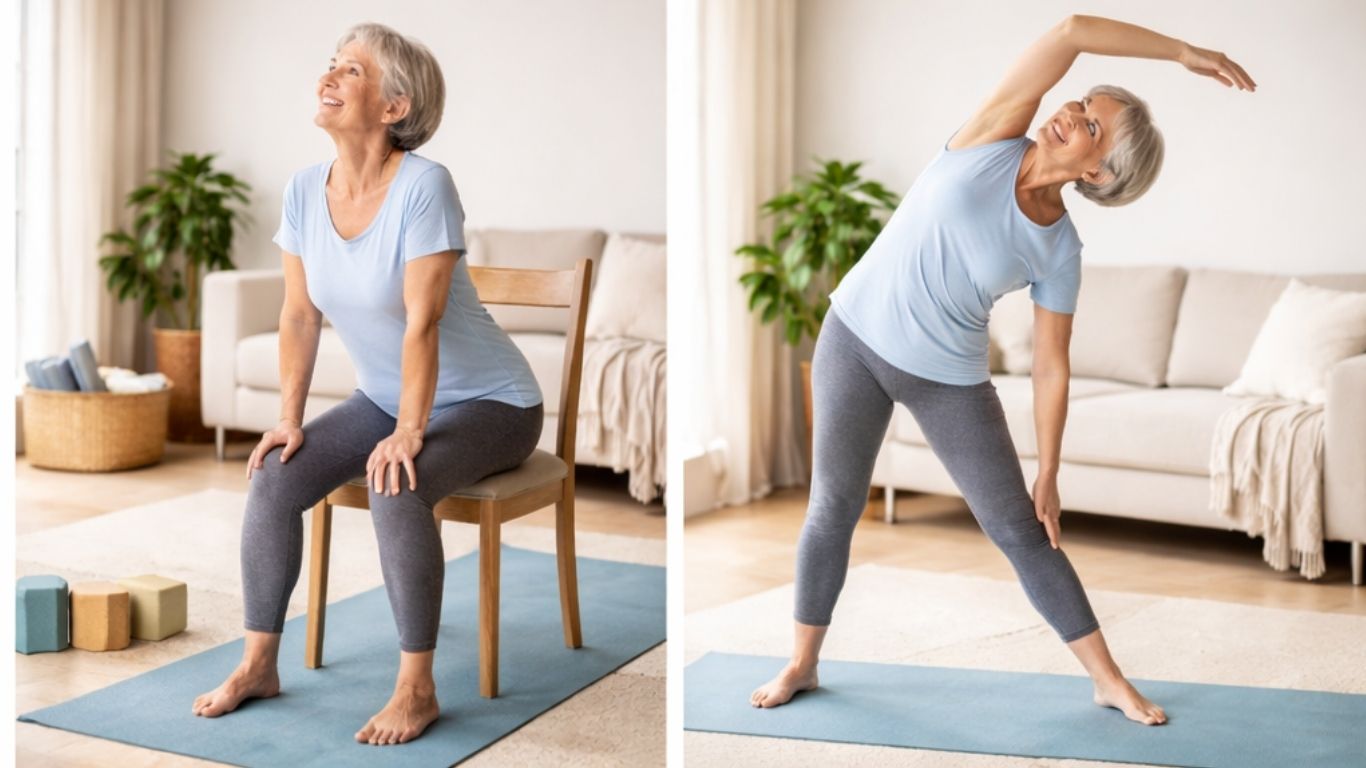
4. Seated Cat-Cow (2 Minutes)
Sit on the chair.
- Inhale: lift chest and look slightly up
- Exhale: round back and tuck chin
Repeat slowly.
Benefit: improves spinal flexibility and reduces back stiffness.
5. Chair Supported Forward Fold (1 Minute)
- Sit on the chair
- Spread feet hip-width
- Slowly bend forward and relax your arms
Benefit: stretches the lower back gently.
6. Chair Supported Standing Mountain Pose (2 Minutes)
Stand tall behind the chair.
- Feet hip-width apart
- Hold the chair lightly
- Lift chest, relax shoulders
- Breathe deeply
Benefit: improves posture and balance.
7. Chair Supported Heel Raises (1 Minute)
Hold the chair.
- Rise on toes
- Slowly lower down
- Repeat 10 times
Benefit: strengthens ankles and improves balance.
8. Chair Supported Side Stretch (1 Minute Each Side)
- Stand tall
- Lift your right arm and stretch gently to the left
- Switch sides
Benefit: opens ribs and improves breathing.
9. Supported Warrior I (1 Minute Each Side)
Hold the chair for support.
- Step one foot back
- Bend the front knee slightly
- Keep chest lifted
- Hold and breathe
Benefit: strengthens legs and improves stability.
10. Standing Hip Opener (Gentle) (1 Minute Each Side)
Hold the chair for balance.
- Lift right knee slightly
- Open it outward gently
- Lower slowly
- Switch sides
Benefit: improves hip mobility without strain.
11. Legs Up the Wall (3–5 Minutes)
Lie down near a wall and place your legs up.
If you can’t get to the floor, you can do a seated version by placing your feet on another chair.
Benefit: reduces swelling, improves circulation, and relaxes the body.
Best Yoga Poses for Beginners Over 60
These poses are safe and effective:
- Mountain Pose
- Chair Pose (modified)
- Cat-Cow
- Child’s Pose (with support)
- Seated Forward Fold
- Legs Up the Wall
- Gentle Bridge Pose
- Standing Side Stretch
These poses focus on balance, flexibility, and joint comfort.
Poses Older Beginners Should Avoid (Or Modify)
Some poses can be risky if done without proper guidance:
- deep backbends
- headstands or inversions
- fast sun salutations
- deep twisting poses
- deep squats if knees hurt
- poses that cause dizziness
If a pose feels unstable, skip it and use support.
How Often Should Beginners Over 60 Do Yoga?
A realistic schedule is:
- 3 days per week for beginners
- 15–25 minutes per session
- Increase slowly as your body adapts
Consistency matters more than intensity.
Final Thoughts
Yoga is one of the best exercises for beginners over 60 because it strengthens the body while protecting the joints. You don’t need flexibility or experience. You only need a safe beginner routine and patience.
If you practice a few times per week, you’ll likely notice:
- better balance
- less stiffness
- improved posture
- reduced stress
- stronger legs and hips
Start small, stay consistent, and let yoga support your health for the long run.