
Yoga for Plantar Fasciitis: Gentle Foot Stretches to Reduce Heel Pain
If you wake up in the morning and feel a sharp pain in your heel when you take your first steps, you’re not alone. That “knife-like” pain is one of the most common signs of plantar fasciitis—a foot condition that can make walking, standing, and even daily chores uncomfortable.
The good news is that many people improve with consistent stretching, strengthening, and better foot mobility. One of the easiest ways to start is with gentle yoga foot stretches.
Yoga won’t magically fix plantar fasciitis overnight, but it can help reduce tightness in the feet and calves, improve circulation, and support long-term healing.
In this article, you’ll learn beginner-friendly yoga stretches that target plantar fasciitis pain safely.
What Is Plantar Fasciitis?
Plantar fasciitis happens when the plantar fascia, a thick band of tissue that runs along the bottom of your foot, becomes irritated or inflamed.
This band supports your arch and absorbs shock when you walk. But when it becomes overworked or tight, it can lead to heel pain.
Common Symptoms
- Sharp pain in the heel (especially morning pain)
- Pain after long sitting or resting
- Pain after standing for long periods
- Tight calves and stiff foot arches
What Causes Plantar Fasciitis?
Plantar fasciitis often develops due to repeated stress on the feet.
Common causes include:
- Tight calf muscles and Achilles tendon
- Flat feet or high arches
- Standing for long hours
- Running on hard surfaces
- Wearing unsupportive shoes
- Sudden increase in walking or exercise
Yoga helps because it works on the whole chain: feet, calves, hamstrings, and posture.
Can Yoga Help Plantar Fasciitis?
Yes, yoga can support plantar fasciitis recovery by:
- Stretching the plantar fascia gently
- Reducing calf tightness
- Improving ankle flexibility
- Strengthening foot muscles
- Improving balance and alignment
- Reducing inflammation triggers caused by tension
The key is to avoid aggressive movements. Plantar fasciitis responds best to slow stretching and daily consistency.
Gentle Yoga Foot Stretches for Plantar Fasciitis (10–15 Minutes)
This routine is beginner-friendly and safe for most people. You can do it in the morning, evening, or after a long time standing.
What You Need:
- Yoga mat
- Wall or chair support
- Towel (optional)
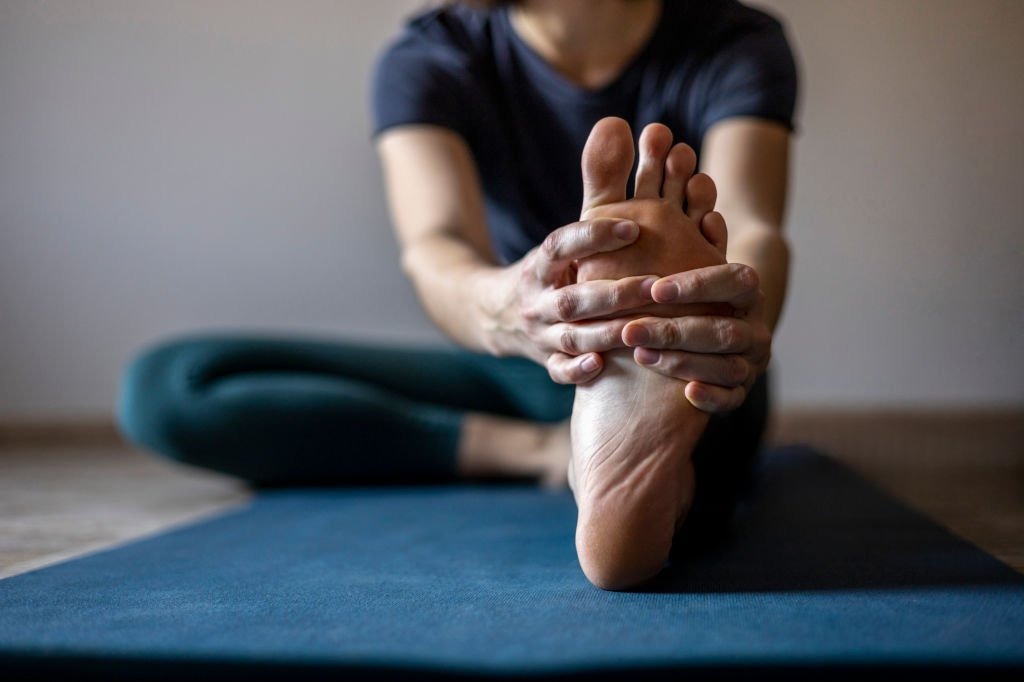
1. Toe Stretch – 1 Minute
Why it helps: Stretches the plantar fascia directly.
How to do it:
- Sit on the floor or a chair
- Cross one ankle over the opposite knee
- Pull your toes gently back toward your shin
- Hold for 30 seconds
- Switch feet
You should feel a stretch along the arch of the foot.
2. Ankle Circles – 1 Minute
Why it helps: Improves blood flow and loosens foot stiffness.
How to do it:
- Lift one foot slightly off the ground
- Rotate your ankle slowly clockwise 10 times
- Rotate counterclockwise 10 times
- Switch sides
Keep the movement slow and controlled.
3. Downward-Facing Dog – 30 Seconds
Why it helps: Stretches calves and the back of the legs.
How to do it:
- Start on hands and knees
- Lift hips upward
- Keep knees slightly bent if needed
- Press heels gently toward the floor (don’t force)
If heels don’t touch the floor, that’s fine.
4. Wall Calf Stretch – 30 Seconds Each Side
Why it helps: Tight calves are a major trigger for plantar fasciitis.
How to do it:
- Stand facing a wall
- Place your hands on the wall
- Step one foot back
- Keep the back leg straight and heel down
- Hold 30 seconds
- Switch sides
This is one of the best stretches for heel pain relief.
5. Chair or Wall Heel Raises – 10 Reps
Why it helps: Strengthens calf muscles and supports foot stability.
How to do it:
- Stand with hands on a wall or chair
- Lift heels slowly
- Hold 2 seconds
- Lower down slowly
Repeat 10 times.
This strengthens the foot chain without impact.
6. Garland Pose: 30 Seconds
Why it helps: Improves ankle mobility and stretches the foot arch.
How to do it:
- Stand with feet slightly wider than hips
- Squat down slowly
- Keep heels on the floor (use support if needed)
- Hold onto a chair or wall if balance is difficult
If squatting hurts, skip it.
7. Seated Forward Fold: 1 Minute
Why it helps: Stretches hamstrings and calves, reducing pull on the feet.
How to do it:
- Sit with legs straight
- Flex your feet gently
- Reach toward toes
- Keep spine long, don’t force the stretch
Hold for 1 minute.
8. Reclining Hand-to-Big-Toe Pose: 30 Seconds Each Side
Why it helps: Targets calves without stressing the foot.
How to do it:
- Lie on your back
- Loop a towel around one foot
- Pull the leg upward gently
- Keep foot flexed
- Hold 30 seconds
- Switch sides
This is excellent for tight calves and Achilles tension.
9. Child’s Pose: 30 Seconds
Why it helps: Stretches the sole gently.
How to do it:
- Kneel on the mat
- Tuck your toes under
- Sit hips back toward your heels
- Keep your hands forward
Hold for 30 seconds.
If it feels too intense, untuck toes.
10. Legs Up the Wall – 2 Minutes
Why it helps: Reduces swelling and relaxes tired feet.
How to do it:
- Lie down with legs resting against a wall
- Relax your arms and breathe slowly
- Stay for 2 minutes
This is especially helpful after standing all day.
Best Time to Do Yoga for Plantar Fasciitis
Morning Routine
Morning stretches are helpful because the plantar fascia tightens overnight.
Best poses in the morning:
- Toe stretch
- Wall calf stretch
- Ankle circles
Evening Routine
Evening yoga helps reduce foot tension after walking or standing.
Best poses at night:
- Downward dog (modified)
- Reclining hamstring stretch
- Legs up the wall
What to Avoid in Yoga with Plantar Fasciitis
Some poses can make plantar fasciitis worse if done aggressively.
Avoid:
- Jumping movements
- High-impact flows
- Deep lunges with heavy foot pressure
- Running or intense cardio barefoot
- Holding Downward Dog too long early on
- Standing poses that cause sharp heel pain
If pain increases, stop and choose gentler stretches.
How Long Does It Take to See Results?
Most people feel improvement in 2–6 weeks with consistent stretching and proper footwear. Severe cases may take longer.
The key is daily routine, not intensity. Small steps done consistently are more effective than hard stretching once a week.
Final Thoughts
Plantar fasciitis can feel frustrating because it affects every step you take. But with the right approach, the foot can heal.
A gentle yoga routine can help you stretch the plantar fascia, loosen tight calves, improve ankle movement, and reduce daily pain. The best part is that these stretches are easy, safe, and beginner-friendly.
Start slowly, listen to your body, and stay consistent. Your feet carry you every day—give them the care they deserve.