
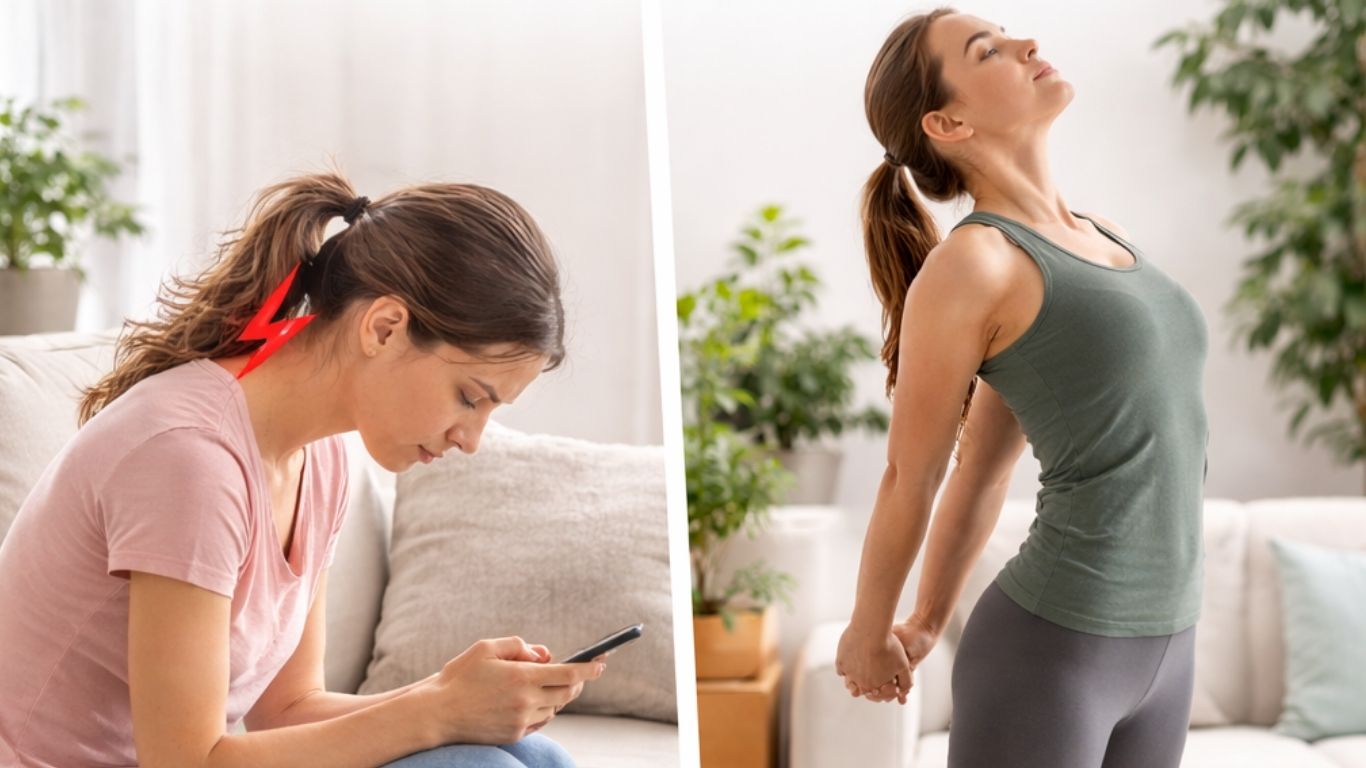
Yoga for Poor Posture Due to Mobile Use (Fix “Text Neck” Naturally)
Hours spent looking down at a phone can quietly damage posture. Rounded shoulders, a forward head, neck stiffness, and upper-back pain are now common—even among young people. This pattern is often called “text neck.”
The good news? Yoga for poor posture due to mobile use can gently reverse these habits by strengthening weak muscles, releasing tight areas, and retraining body awareness.
You don’t need equipment or long sessions—just consistent, mindful movement.
Why Mobile Use Hurts Posture
When the head drops forward, the neck and upper back carry extra load. Over time, this leads to:
- Tight chest and neck muscles
- Weak upper-back and postural muscles
- Shoulder rounding and slouching
- Headaches and fatigue
Yoga addresses the cause (muscle imbalance + awareness), not just the symptoms.
How Yoga Corrects “Text Neck”
Yoga helps posture in three key ways:
- Strengthens the upper back, shoulders, and deep neck muscles
- Stretches the tight chest, neck, and shoulder tissues
- Re-educates posture through alignment and breathing
With regular practice, the body naturally learns to stack head, shoulders, and spine again.
Best Yoga Poses for Poor Posture from Mobile Use
1) Mountain Pose (Posture Reset)
Stand tall, feet hip-width. Gently lift the chest, relax the shoulders, lengthen the neck.
Why it helps:
Builds posture awareness and correct alignment.
Hold: 30–60 seconds
2) Neck Release (Gentle)
Sit or stand tall. Tilt the head to one side, then forward. Keep movements slow.
Why it helps:
Releases neck tension caused by looking down.
Hold: 15–20 seconds per side
3) Chest Opener (Hands Behind Back)
Interlace fingers behind you, gently lift your hands, and open your chest.
Why it helps:
Counteracts rounded shoulders and tight chest muscles.
Hold: 20–30 seconds
4) Cat–Cow (Spinal Mobility)
On hands and knees: inhale, lift chest; exhale, round the back.
Why it helps:
Improves spinal flexibility and posture control.
Repeat: 6–8 slow rounds
5) Cobra Pose (Upper-Back Strength)
Lie prone, hands under shoulders. Gently lift the chest without forcing.
Why it helps:
Strengthens the back muscles that support upright posture.
Hold: 15–30 seconds
6) Child’s Pose (Release)
Sit back on heels, arms forward or by sides.
Why it helps:
Relaxes the neck and shoulders after strengthening work.
Hold: 1 minute
Breathing Tip That Improves Posture
Shallow chest breathing pulls shoulders forward.
Practice slow nasal breathing, expanding the ribs on the inhale and softening the shoulders on the exhale. This naturally supports better alignment.
How Often Should You Practice?
- 10–15 minutes daily is ideal
- Take posture breaks every 30–45 minutes of phone use
- Consistency matters more than intensity
Small daily corrections beat long, irregular sessions.
Daily Habits to Support Better Posture
- Hold your phone at eye level (not your lap)
- Relax your shoulders before unlocking your screen
- Take micro-breaks: stand, roll shoulders, breathe
- Sleep with neck in neutral alignment
Yoga works best when paired with mindful phone habits.
Common Mistakes to Avoid
- Forcing stretches aggressively
- Ignoring pain signals
- Practicing once a week only
- Looking at the phone immediately after yoga
Move gently. Let alignment improve gradually.
Final Thoughts
Poor posture from mobile use doesn’t have to be permanent. Yoga for poor posture due to mobile use offers a simple, natural way to undo “text neck,” reduce pain, and restore upright alignment. A few mindful minutes each day can bring lasting change—without gadgets or complex routines.