Yoga for Runners: Post-Run Recovery Stretches
Running is great for your heart, stamina, and mental health—but it can also leave your muscles tight, sore, and stiff. If you don’t recover properly after a run, small issues like tight calves or hip pain can slowly turn into injuries like shin splints, IT band syndrome, or knee discomfort.
That’s where yoga helps.
Yoga for runners focuses on stretching tight running muscles, improving mobility, and calming the nervous system after intense movement. In this article, you’ll learn the best post-run yoga stretches to speed up recovery, reduce soreness, and improve flexibility.
Why Runners Need Post-Run Yoga Recovery
Running mainly targets the lower body muscles, especially:
- Calves
- Hamstrings
- Quads
- Hip flexors
- Glutes
- Lower back
After a run, these muscles often become shortened and tight due to repetitive motion. Yoga stretches help by:
- Improving blood circulation
- Releasing tight muscle fibers
- Reducing delayed onset muscle soreness (DOMS)
- Preventing stiffness the next day
- Supporting joint health and posture
- Improving breathing and relaxation
Even 10 minutes of yoga after a run can make a noticeable difference.
Best Time to Do Yoga After Running
The best time to do post-run yoga is within 30–60 minutes after your run, once your heart rate has slowed down and your body is warm.
You can do it in two ways:
- Immediately after running (gentle stretching and relaxation)
- Later in the evening (deep stretching and muscle recovery)
Avoid very intense yoga right after a hard run. Your muscles need gentle recovery, not heavy strain.
How Long Should Post-Run Yoga Take?
You don’t need a full 1-hour yoga class.
Here’s what works best:
- 5–10 minutes for short recovery
- 15–20 minutes for deeper muscle release
- 30 minutes for full-body mobility and relaxation
Consistency matters more than long sessions.
5 Best Yoga Poses for Runners Post-Run Recovery
Below are the best yoga stretches specifically designed for runners. These poses target the areas that usually get tight after running.
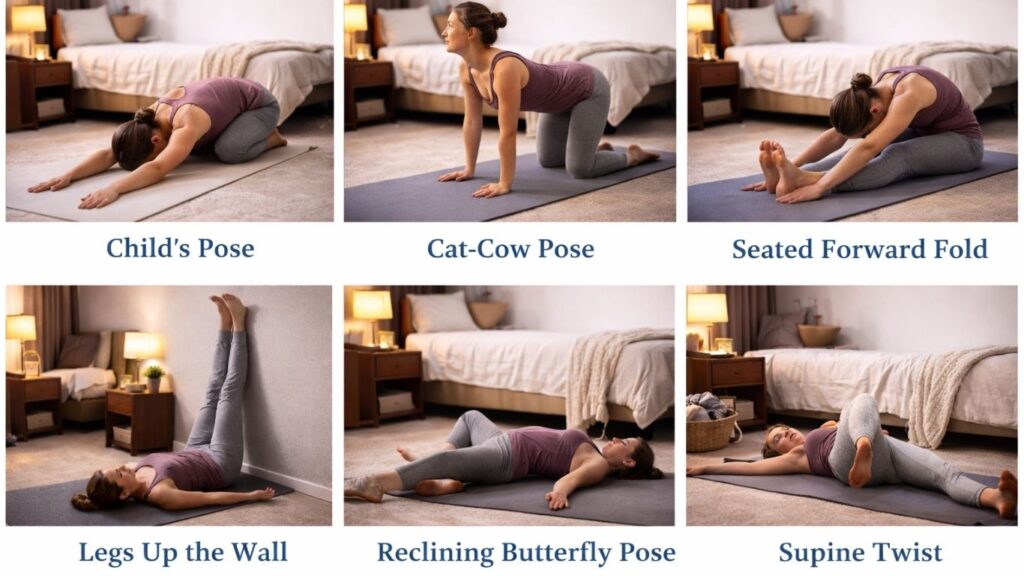
1. Child’s Pose
Best for: lower back, hips, relaxation
Child’s Pose helps your spine decompress and calms your breathing after cardio.
How to try it:
- Kneel on the floor.
- Sit back on your heels.
- Stretch your arms forward.
- Rest your forehead on the mat.
- Breathe deeply for 30–60 seconds.
Tip: Spread knees wide for a deeper hip stretch.
2. Downward-Facing Dog
Best for: calves, hamstrings, shoulders
This is one of the best post-run poses for releasing tight calves and hamstrings.
Try it:
- Start on hands and knees.
- Lift hips upward.
- Press heels toward the floor.
- Keep your spine long.
- Hold for 30–45 seconds.
Runner’s modification: Bend one knee at a time to stretch each calf.
3. Low Lunge
Best for: hip flexors, quads
Running tightens hip flexors quickly, and this pose directly opens them.
How to do it:
- Step right foot forward.
- Drop the left knee down.
- Sink hips forward.
- Raise arms if comfortable.
- Hold 30 seconds on each side.
Tip: Keep your core engaged to protect the lower back.
4. Half Split Pose
Best for: hamstrings, calves
This is a deep hamstring stretch that helps reduce stiffness after long runs.
How to try:
- From low lunge, shift hips back.
- Straighten the front leg.
- Flex your front foot.
- Fold forward slightly.
- Hold for 30–45 seconds.
Avoid bouncing. Stay still and breathe.
5. Reclined Hamstring Stretch
Best for: hamstrings, gentle recovery
This is safer than standing hamstring stretches because it protects the back.
How to do it:
- Lie on your back.
- Lift one leg upward.
- Hold behind the thigh or use a yoga strap.
- Keep the other leg straight or bent.
- Hold 30–60 seconds per side.
Best Post-Run Yoga Routine (10-Minute Sequence)
If you want a simple flow, try this quick post-run yoga sequence:
Child’s Pose – 45 sec
Downward Dog – 45 sec
Low Lunge (right) – 30 sec
Half Split (right) – 30 sec
Low Lunge (left) – 30 sec
This routine targets every major muscle group runners need to recover.
Common Mistakes Runners Make While Stretching
Many runners stretch incorrectly, which can increase soreness.
Avoid these mistakes:
1. Stretching Too Aggressively
Post-run muscles are sensitive. Don’t force deep stretches.
2. Holding Your Breath
Breathing deeply is what helps muscles release.
3. Skipping Hip Flexor Stretching
Most runners stretch hamstrings but ignore hip flexors, leading to poor posture and lower back pain.
4. Stretching Cold Muscles
Always stretch after the run, not before. Before running, a dynamic warm-up is better.
Yoga Benefits for Runners
Yoga improves runner performance by supporting:
- Flexibility (less stiffness)
- Mobility (better stride mechanics)
- Balance and stability (injury prevention)
- Breath control (better endurance)
- Posture alignment (reduced lower back strain)
- Mental recovery (lower stress levels)
Over time, runners who practice yoga regularly often report fewer aches and better recovery between runs.
Best Breathing Technique After a Run
Breathing is a major part of yoga recovery.
Try this simple breathing method:
4-Second Breathing
- Inhale through the nose for 4 seconds
- Hold for 2 seconds
- Exhale slowly for 6 seconds
- Repeat 5–8 rounds
This helps lower the heart rate and relax muscles.
Post-Run Yoga Tips for Faster Recovery
To maximize your recovery:
- Drink water after your run
- Eat protein + carbs within 60 minutes
- Stretch gently, not aggressively
- Use a yoga strap if needed
- Focus more on hips, calves, and hamstrings
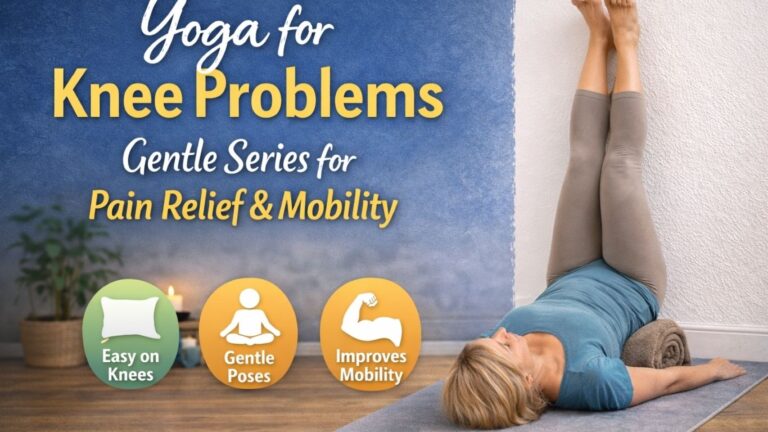
- Finish with Legs Up the Wall or deep breathing
Recovery isn’t optional—it’s part of training.
When Runners Should Avoid Yoga Stretches
Yoga is helpful, but you should avoid stretching if:
- You feel sharp pain (not muscle tightness)
- You have swelling in joints
- You suspect a tear or serious strain
- Your knee pain increases in deep bends
If pain continues for more than a few days, consult a sports physiotherapist.
Final Thoughts
Running builds endurance, but recovery builds strength and long-term performance. Adding yoga after your runs helps release tight muscles, prevent injuries, and improve flexibility without adding extra strain.
Even 10 minutes of post-run yoga can reduce soreness and keep your legs feeling fresh for your next run.
If you want better running performance, fewer injuries, and smoother recovery, yoga is one of the smartest habits you can add.