

Yoga for Shift-Work Nurses: Quick Recovery Flow
Shift-work nurses give everything — physically, mentally, emotionally. Long hours on your feet. Overnight rotations. Missed meals. Interrupted sleep. Tight shoulders. Heavy legs.
When your body runs on caffeine and adrenaline, recovery often gets ignored.
This quick yoga recovery flow is designed specifically for shift-work nurses who need something simple, effective, and realistic — no long sessions, no complicated routines, just 15–20 minutes to reset your nervous system and release physical tension.
Why Nurses Need Targeted Recovery
Research from the Centers for Disease Control and Prevention shows that shift work disrupts circadian rhythm, which can impact sleep, mood, metabolism, and cardiovascular health.
Common challenges nurses report:
- Lower back pain
- Neck and shoulder tension
- Swollen feet and calves
- Mental exhaustion
- Difficulty falling asleep after night shift
Yoga directly supports:
- Parasympathetic nervous system activation
- Muscle recovery
- Lymphatic circulation
- Stress hormone regulation
You don’t need an hour. You need intentional movement.
15–20 Minute Quick Recovery Flow
This sequence can be done:
- After a night shift
- Before bed
- During a long break
- On days off for active recovery
1. Legs Up the Wall (5 Minutes)

Why nurses need it:
Long hours standing cause blood pooling in the lower legs.
How to do it:
Sit beside a wall. Swing legs up. Rest arms by your side. Close your eyes.
Benefits:
- Reduces swelling
- Calms nervous system
- Relieves lower back pressure
This is the fastest way to shift from “hospital mode” to recovery mode.
2. Cat–Cow (2–3 Minutes)

Why nurses need it:
Charting, bending, lifting patients → spinal compression.
How to do it:
Inhale, drop belly and lift chest.
Exhale, round spine and tuck chin.
Benefits:
- Restores spinal mobility
- Relieves back stiffness
- Improves circulation
Move slowly. Match breath to movement.
3. Low Lunge Hip Release (2 Minutes Each Side)

Why nurses need it:
Standing and fast walking tighten hip flexors.
How to do it:
Step one foot forward. Back knee down. Gently press hips forward.
Benefits:
- Releases tight hips
- Reduces lower back tension
- Improves posture
4. Standing Forward Fold (2 Minutes)

Why nurses need it:
Heavy shoulders and neck tension build up during shifts.
How to do it:
Fold from hips. Let head hang. Slight bend in knees.
Benefits:
- Decompresses spine
- Releases neck tension
- Improves blood flow to brain
Take slow breaths here.
5. Supine Spinal Twist (2 Minutes Each Side)
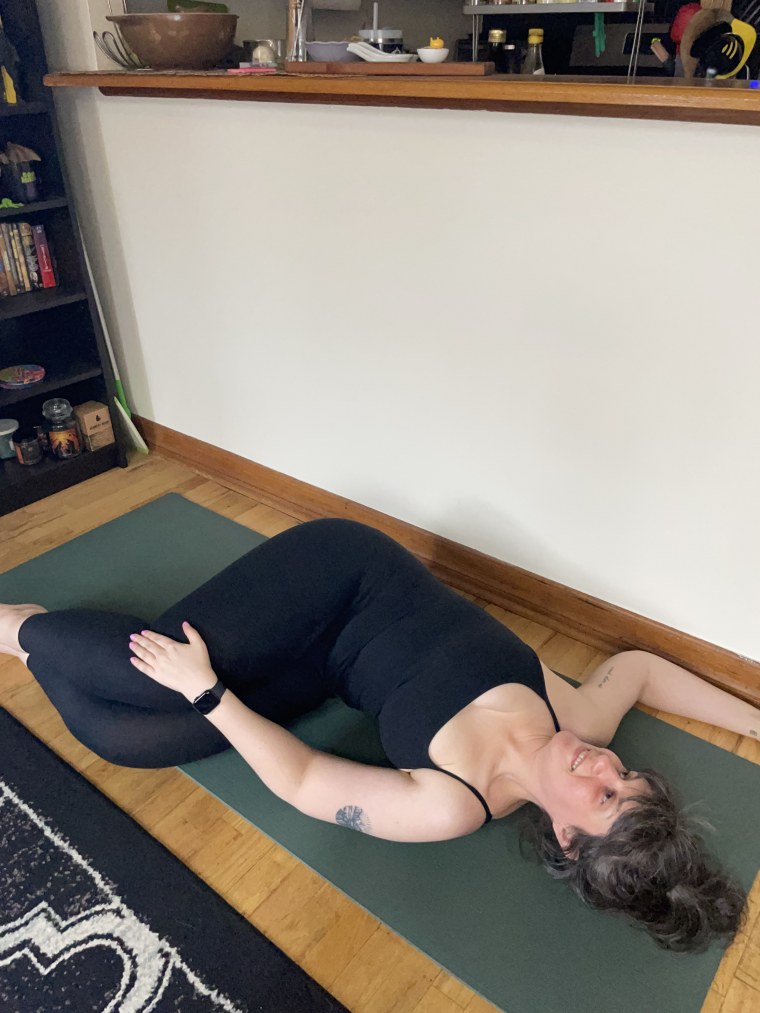
Why nurses need it:
Rotational relief for back after lifting and turning patients.
How to do it:
Lie down. Drop knees to one side. Extend opposite arm.
Benefits:
- Relieves back tightness
- Massages abdominal organs
- Encourages relaxation
6. Savasana with Deep Breathing (5 Minutes)

Place one hand on chest, one on belly.
Inhale for 4 counts.
Exhale for 6 counts.
Longer exhales activate recovery mode.
Optional 5-Minute “On-Shift Reset”
If you only have 5 minutes during break:
- Seated Neck Rolls
- Shoulder Shrugs
- Forward Fold
- 1-minute deep breathing
Small resets prevent long-term burnout.
How This Flow Supports Shift Work Physiology
Shift work disrupts melatonin production and sleep cycles. According to the National Sleep Foundation, irregular schedules can reduce sleep quality and increase fatigue-related stress.
This yoga flow:
- Lowers cortisol
- Improves circulation
- Reduces muscle stiffness
- Helps transition into sleep
It supports both physical and nervous system recovery.
Practical Tips for Busy Nurses
- Keep a yoga mat in your car or locker
- Use dim lighting after night shift
- Avoid intense flows before sleep
- Stay hydrated before stretching
- Consistency matters more than duration
Even 10 minutes daily creates noticeable difference.
Final Thoughts
Nurses care for everyone else. Recovery is not selfish — it is necessary.
This quick recovery yoga flow is simple, realistic, and designed around your demanding schedule. No studio required. No equipment required. Just space, breath, and intention.
Your body carries the weight of every shift. Give it 15 minutes to reset.