Yoga for Sleep Improvement (Insomnia): A Natural Way to Rest Better
Insomnia doesn’t always come from a medical condition. For many people, it’s caused by stress, overthinking, screen time, and an overactive nervous system. Lying in bed while the mind keeps racing is exhausting—and frustrating. This is where yoga for sleep improvement becomes a powerful, natural solution.
Yoga helps the body slow down, release tension, and prepare the mind for deep rest—without medication or complicated routines.
How Yoga Helps Improve Sleep Naturally
Sleep problems are often linked to a stressed nervous system. Yoga works by activating the parasympathetic nervous system, also known as the “rest and digest” state.
Regular yoga practice helps by:
- Reducing stress hormones like cortisol
- Relaxing tight muscles
- Slowing heart rate and breathing
- Calming racing thoughts
This creates the right conditions for natural sleep.
Why Yoga Is Effective for Insomnia
Unlike intense workouts, yoga does not overstimulate the body. Gentle movements and breathing tell the brain that it’s safe to relax.
People who practice yoga for insomnia often notice:
- Falling a sleep faster
- Fewer night-time awakenings
- Better sleep quality
- Feeling refreshed in the morning
The key is choosing slow, calming poses, especially in the evening.
Best Yoga Poses for Sleep Improvement
1. Child’s Pose (Balasana)
This resting pose gently stretches the back and hips while calming the mind.
Why it helps:
Releases physical and mental tension.
Hold: 1–2 minutes
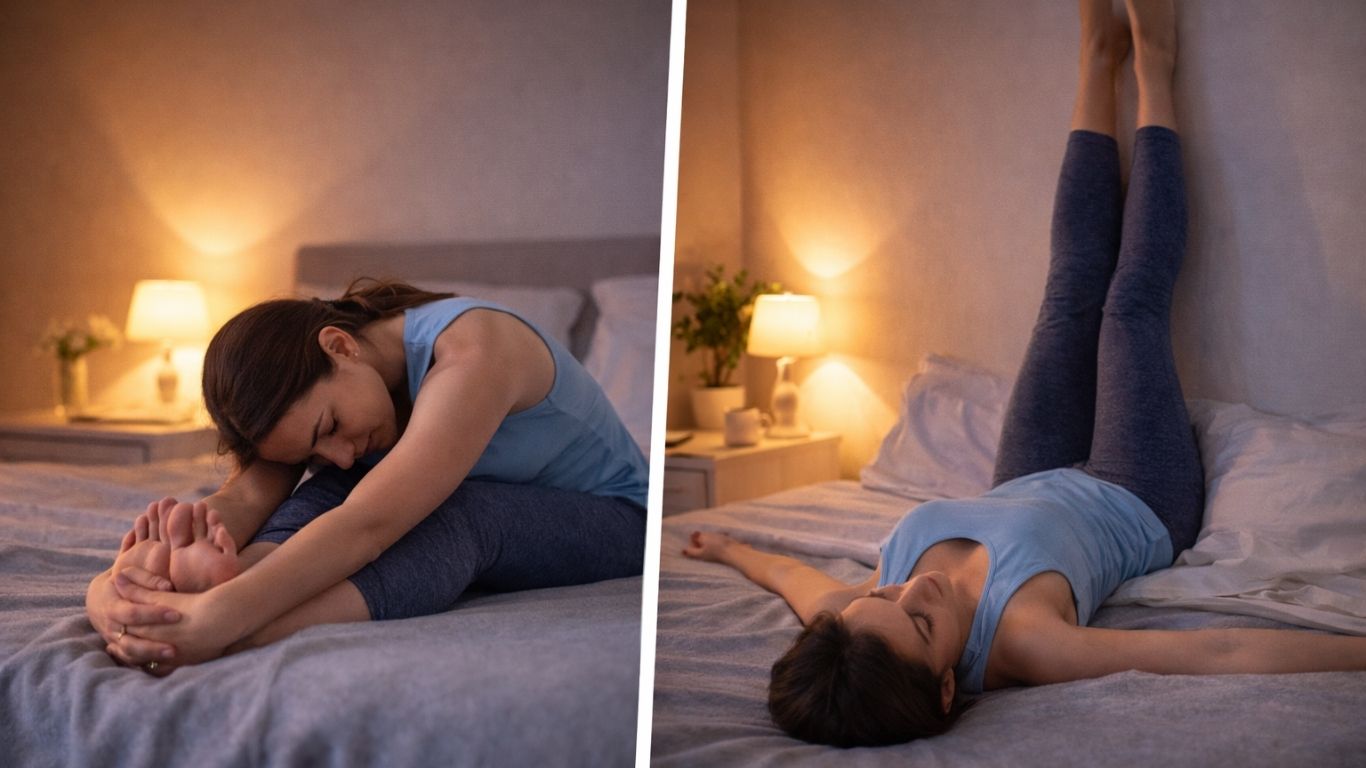
2. Seated Forward Fold
A gentle forward bend that encourages relaxation.
Why it helps:
Soothes the nervous system and reduces anxiety.
Hold: 30–60 seconds
3. Reclining Bound Angle Pose
Lie on your back with knees bent and feet together.
Why it helps:
Relaxes the hips and promotes deep calm.
Hold: 2–3 minutes
4. Legs Up the Wall Pose
Lie down and rest your legs vertically against a wall.
Why it helps:
Improves circulation and signals the body to rest.
Hold: 2–5 minutes
5. Supine Spinal Twist
A gentle twist done lying on the back.
Why it helps:
Releases spinal tension and calms the mind.
Hold: 30–60 seconds per side
Breathing Technique for Better Sleep
Slow breathing is one of the most effective tools for insomnia.
Simple breathing practice:
- Inhale through the nose for 4 seconds
- Exhale through the nose for 6 seconds
- Repeat for 2–3 minutes
This slows the nervous system and prepares the body for sleep.
When to Practice Yoga for Insomnia
The best time is 30–60 minutes before bedtime.
Avoid strong or fast-paced yoga at night.
Keep lights low, movements slow, and breathing gentle.
Common Mistakes to Avoid
- Practicing intense yoga late at night
- Rushing through poses
- Using screens right after yoga
- Holding the breath
Yoga for sleep should feel calming, not energizing.
How Often Should You Practice?
For best results:
- Practice daily or at least 4–5 nights a week
- Keep sessions short (10–20 minutes)
- Be consistent rather than intense
Sleep improvement usually happens gradually.
Final Thoughts
Yoga for sleep improvement offers a gentle, natural approach to managing insomnia. It doesn’t force sleep—it creates the right environment for sleep to happen on its own.
If stress, tension, or overthinking keep you awake at night, a calm yoga routine before bed may be exactly what your body and mind need to rest deeply again.