Yoga for Stress Relief for Busy Professionals
If you’re a busy professional, stress is not an occasional problem. It becomes part of the routine.
Deadlines, meetings, screen time, traffic, emails, long sitting hours, and poor sleep slowly build pressure in the body and mind. Over time, this stress doesn’t just stay in your head—it shows up as tight shoulders, neck pain, headaches, anxiety, digestive issues, and burnout.
The good news is that you don’t need an hour-long workout to feel better.
A short, smart yoga routine can reduce stress, calm your nervous system, and reset your mood in as little as 10 minutes. Yoga works because it combines breathing, movement, and relaxation—three things that directly fight stress hormones.
This guide will show you how yoga helps with stress, the best poses for busy professionals, and quick routines you can do at home or even at the office.
Why Busy Professionals Feel Stressed All the Time
Modern work life triggers constant stress through:
- nonstop notifications
- multitasking and mental overload
- sitting for 8–12 hours daily
- poor posture and tight muscles
- caffeine dependency
- lack of movement
- irregular sleep schedules
When your body stays in “fight-or-flight mode” for too long, stress becomes chronic. Your nervous system stays active even when you are resting, making it harder to relax or sleep.
Yoga helps because it activates the parasympathetic nervous system, also known as the rest-and-digest system.
How Yoga Reduces Stress
Yoga is not just stretching. It’s a full-body reset.
1. Yoga Lowers Cortisol
Cortisol is the main stress hormone. High cortisol levels can increase anxiety, belly fat, sleep issues, and fatigue. Yoga encourages relaxation responses that lower cortisol over time.
2. Yoga Improves Breathing
Stress makes breathing shallow. Breathing tells the brain that danger is near. Yoga trains deeper breathing, which signals safety to the brain.
3. Yoga Releases Physical Tension
Most stress is stored physically in the shoulders, neck, jaw, hips, and lower back. Yoga helps release these areas.
4. Yoga Improves Sleep Quality
A calmer nervous system makes falling asleep easier and reduces nighttime overthinking.
Best Yoga Poses for Stress Relief (Perfect for Busy Professionals)
These poses are simple, beginner-friendly, and effective.
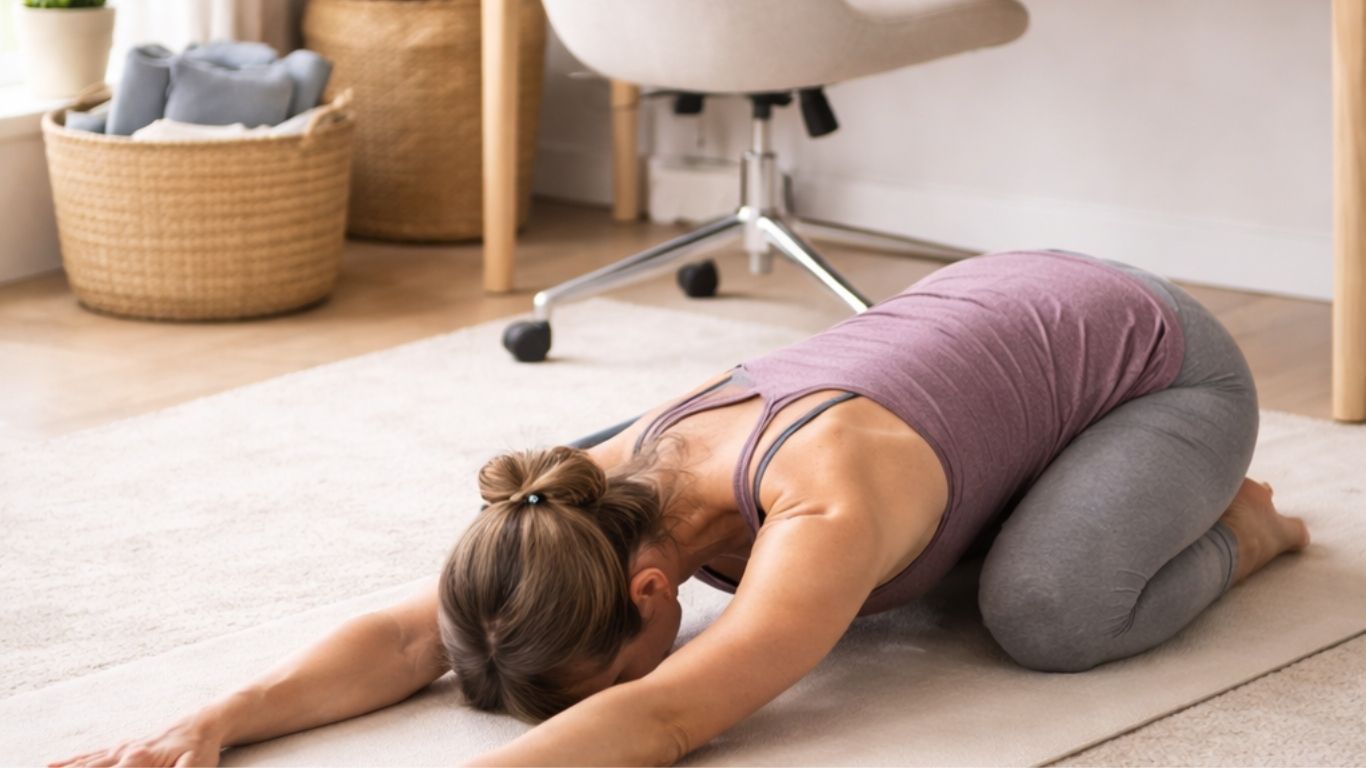
1. Child’s Poses
This pose relaxes the spine and slows your breathing naturally.
How to do it:
- Kneel on the floor
- Sit back on heels
- Stretch arms forward
- Rest your forehead down
- Breathe slowly for 1–2 minutes
Stress benefit: calms the nervous system quickly.
2. Cat-Cow Pose
It loosens the spine and releases back tension from sitting.
How to do it:
- Come to hands and knees
- Inhale: lift chest and tailbone
- Exhale: round back and tuck chin
- Repeat 8–10 rounds
Stress benefit: improves breathing and mobility.
3. Standing Forward Fold
Forward folds calm the brain and stretch the back body.
How to do it:
- Stand tall
- Fold forward gently
- Bend knees slightly
- Let the head hang
- Hold 30–45 seconds
Stress benefit: relaxes the mind and reduces tension.
4. Seated Forward Fold
This pose stretches the spine and helps calm mental noise.
How to do it:
- Sit with legs extended
- Keep knees slightly bent
- Fold forward gently
- Hold 30–60 seconds
Stress benefit: encourages deep relaxation.
5. Legs Up the Wall
This is one of the best yoga poses for stress and fatigue.
How to do it:
- Lie down near a wall
- Put your legs up the wall
- Relax arms and shoulders
- Stay 3–5 minutes
Stress benefit: reduces swelling, fatigue, and anxiety.
10-Minute Yoga Routine for Stress Relief (Busy Schedule Friendly)
This routine is designed for professionals who don’t have time but need fast relief.
Minute 1: Deep Breathing
- Inhale 4 seconds
- exhale 6 seconds
- repeat slowly
Minute 2–3: Cat-Cow
- 8–10 slow rounds
Minute 4: Child’s Pose
- hold and breathe
Minute 5: Standing Forward Fold
- knees slightly bent
Minute 6–7: Low Lunge (Both Sides)
- 30 seconds each side
Minute 8: Seated Twist
- 20 seconds each side
Minute 9: Legs Up the Wall
- relax legs and hips
Minute 10: Savasana
- lie down and breathe
This routine works best after work or before bed.
Best Time to Practice Yoga for Stress Relief
The best times are:
Morning (For Mental Clarity)
Helps you start calm and focused.
Lunch Break (For Reset)
Prevents burnout and afternoon fatigue.
After Work (For Recovery)
Releases tension stored during the day.
Before Bed (For Better Sleep)
Reduces overthinking and supports deeper sleep.
Common Mistakes Busy Professionals Make With Yoga
1. Treating Yoga Like a Workout Competition
Yoga is about calming the body, not pushing harder.
2. Skipping Breathing
Breathing is the most powerful part of stress-relief yoga.
3. Only Stretching the Back
Stress also lives in the hips, shoulders, and jaw.
4. Quitting Too Soon
Yoga works best when practiced consistently, even for short sessions.
Final Thoughts
Busy professionals often wait until stress becomes unbearable before doing something about it. But stress is easier to manage when you handle it daily, in small doses.
A short yoga routine helps you:
- Relax your nervous system
- reduce tension in your shoulders and back
- improve sleep quality
- feel calmer and more focused
- prevent burnout
You don’t need 60 minutes.
You just need 10 minutes of consistency.
If you practice yoga regularly, even a few times per week, you will feel a real difference in both body and mindset.