Yoga for Tinnitus Relief: Gentle Ear & Neck Flow to Calm Your Nervous System
Tinnitus can feel frustrating, exhausting, and sometimes even scary. That ringing, buzzing, or humming sound in your ears may come and go—or stay constant. And when it gets louder at night or during stress, it can affect your focus, sleep, and peace of mind.
While yoga cannot “cure” tinnitus, it can powerfully support your body by reducing tension, improving blood circulation, and calming the nervous system. Many tinnitus sufferers notice that their symptoms worsen when they are stressed, sleep-deprived, or experiencing tightness in the neck and jaw.
That’s why a gentle yoga flow focusing on the neck, shoulders, jaw, and ear area may help you feel relief.
This article will guide you through a beginner-friendly yoga routine designed to relax the muscles around the head and neck, improve posture, and promote calm breathing.
Can Yoga Help with Tinnitus?
Tinnitus often becomes stronger when your nervous system is overstimulated. Stress can increase muscle tension, raise blood pressure, and trigger more awareness of the ringing sound.
Yoga helps relieve tinnitus mainly by:
- Relaxing tight neck and shoulder muscles
- Improving posture and spinal alignment
- Supporting blood flow near the head and ears
- Reducing anxiety and stress response
- Encouraging deep breathing and calm focus
Many people with tinnitus also experience stiffness in the upper back, tight jaw muscles, and forward head posture (especially desk workers). This tension can make tinnitus feel louder.
Yoga targets these areas gently.
Important Note Before You Start
Tinnitus can have many causes, including:
- Earwax buildup
- Hearing loss
- Sinus issues
- High blood pressure
- Neck tension
- TMJ (jaw tension)
- Certain medications
If tinnitus is sudden, severe, or comes with dizziness, hearing loss, or ear pain, consult a doctor immediately.
Yoga is a supportive practice, not a replacement for medical treatment.
Gentle Yoga Flow for Tinnitus Relief (10–15 Minutes)
1. Seated Breathing Reset (2 Minutes)
Why it helps: Calms the nervous system and reduces stress awareness.
How to do it:
- Sit comfortably with your spine tall
- Relax your shoulders
- Close your eyes
- Inhale slowly through your nose (4 seconds)
- Exhale slowly through your nose (6 seconds)
Repeat for 2 minutes.
Tip: If tinnitus feels loud, don’t fight it. Just observe it without judgment. This reduces mental stress.
2. Shoulder Rolls (1 Minute)
Why it helps: Releases upper back and shoulder tension that may affect neck circulation.
How to do it:
- Sit tall
- Roll your shoulders up, back, and down slowly
- Do 10 rolls
- Reverse direction for 10 rolls
Keep breathing slowly.
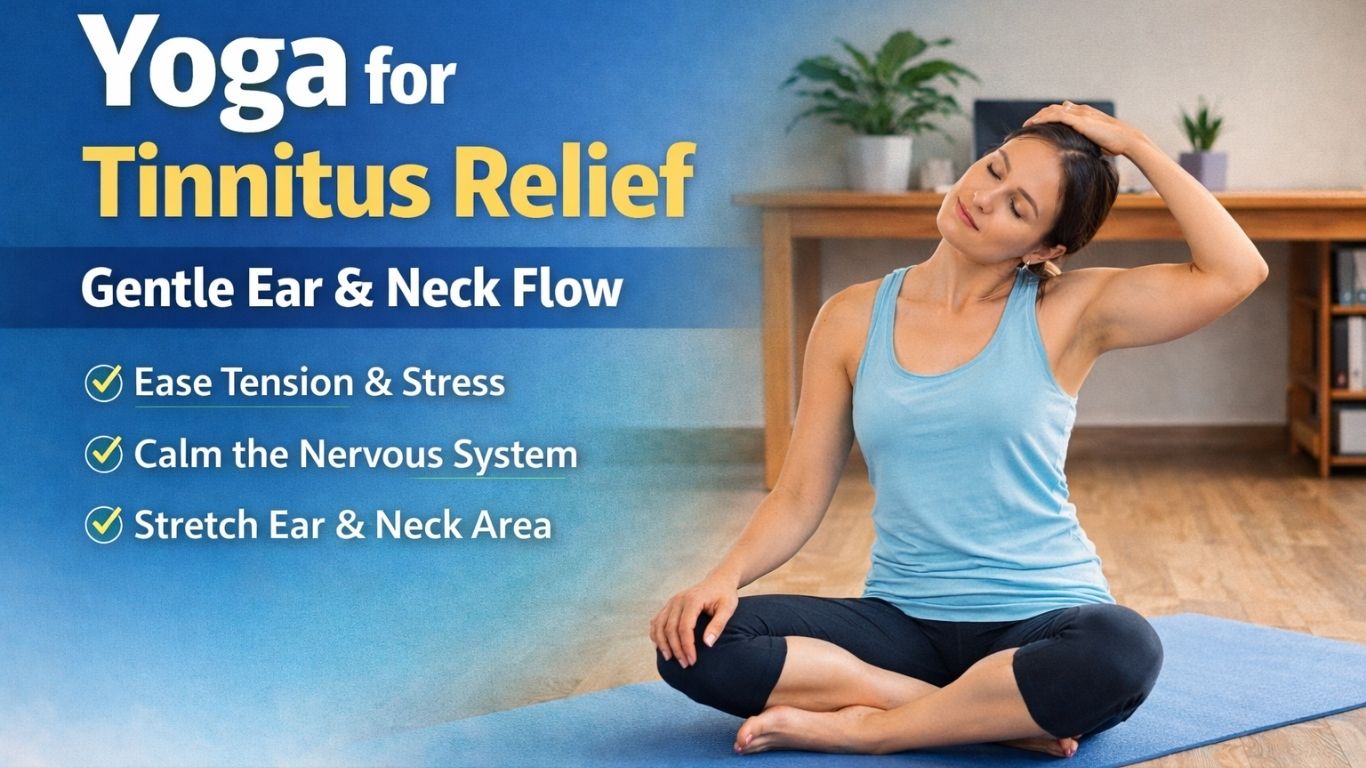
3. Neck Side Stretch (30 Seconds Each Side)
Why it helps: Loosens the neck muscles around the ear.
How to do it:
- Drop the right ear toward the right shoulder
- Keep shoulders relaxed
- Place your right hand gently on your head (optional)
- Hold 30 seconds
- Switch sides
Do not pull hard. Gentle is enough.
4. Chin Tucks (10 Reps)
Why it helps: Improves posture and reduces forward head strain, common in tinnitus sufferers.
How to do it:
- Sit tall
- Slowly tuck your chin slightly inward
- Imagine making a “double chin.”
- Hold 2 seconds
- Release
Repeat 10 times.
This strengthens deep neck muscles and reduces strain at the base of the skull.
5. Ear Massage + Jaw Release (1 Minute)
Why it helps: Relaxes muscles near the ear and reduces tension around TMJ.
How to do it:
- Rub your palms together to warm them
- Gently massage the outer ear in circles
- Move to the area behind the ears
- Massage the jaw hinge area (near the ears)
Then open and close your mouth slowly 5 times.
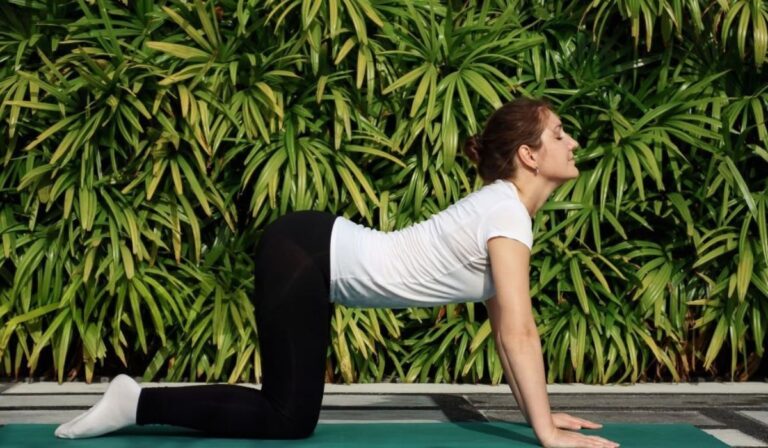
6. Cat-Cow Stretch (1 Minute)
Why it helps: Releases spinal tension and improves circulation from the spine to the neck.
How to do it:
- Come to hands and knees
- Inhale, lift chest and tailbone (Cow Pose)
- Exhale, round your spine (Cat Pose)
- Move slowly with breath
Repeat for 8–10 rounds.
Best Breathing Technique for Tinnitus Relief
Breathing can change how your brain reacts to tinnitus.
Try This Simple Pattern:
- Inhale through nose: 4 seconds
- Exhale through nose: 6–8 seconds
- Repeat for 2–5 minutes
Longer exhalation signals safety to your nervous system, which may reduce tinnitus awareness.
Daily Habits That Can Make Tinnitus Better
Yoga works best when combined with supportive habits:
Fix Your Desk Posture
- Screen at eye level
- Shoulders relaxed
- Neck not leaning forward
- Feet flat on the floor
Forward head posture increases neck tension and may worsen symptoms.
Reduce Jaw Clenching
Many people clench their jaw during stress.
Practice:
- Relax your tongue
- Keep teeth slightly apart
- Massage your jaw daily
Stay Hydrated
Dehydration can increase headaches and tension, making tinnitus feel worse.
Improve Sleep Routine
Poor sleep increases nervous system stress.
Yoga Nidra, or Legs Up the Wall, before bed, can help.
When to Practice This Tinnitus Yoga Flow
For best results:
Morning: to reduce neck tightness for the day
Evening: to calm the nervous system before sleep
During tinnitus flare-ups: to reduce anxiety response
Even 10 minutes daily can help your body feel lighter.
What Results to Expect
Yoga is not a quick cure, but many people experience:
- Less neck stiffness within a few days
- Improved relaxation and sleep in 1–2 weeks
- Reduced stress response to tinnitus in 2–4 weeks
- Better posture and shoulder mobility over time
The main benefit is that tinnitus feels less “powerful” when your nervous system becomes calmer.
Final Thoughts
Tinnitus is not just an ear issue—it’s often connected to stress, tension, posture, and nervous system overload. This gentle ear and neck yoga flow is designed to help you feel more control, calmer, and less trapped by the ringing. You may not silence tinnitus completely, but you can reduce the tension that feeds it. Start small. Stay consistent.
And most importantly—breathe slowly.
Your nervous system listens to your breath more than your thoughts.