Yoga Nidra for Deep Sleep and Relaxation
If your mind feels busy at night and your body feels tired but still won’t fall asleep, you’re not alone. Many people struggle with sleep, not because they lack rest, but because their nervous system stays “switched on” even after the day ends.
That’s where Yoga Nidra comes in.
Yoga Nidra is a simple guided relaxation practice that helps your body rest deeply while your mind slowly becomes calm. The best part? You don’t need flexibility, yoga experience, or long training. You simply lie down, listen, and relax.
In this beginner-friendly guide, you’ll learn what Yoga Nidra is, how it helps sleep, and how to practice it safely at home.
What Is Yoga Nidra?
Yoga Nidra means “yogic sleep.” It is a guided meditation practice done while lying down, usually in Savasana.
But don’t confuse it with regular meditation.
In Yoga Nidra, you are not trying to control your thoughts. You are guided through stages of deep relaxation where your body and mind enter a state between waking and sleeping.
Many people describe it as:
- “Half asleep but aware.”
- “Deep rest without effort”
- “A reset for the brain”
This is why Yoga Nidra is often recommended for:
- Sleep problems
- Anxiety
- Stress and burnout
- Mental fatigue
- Emotional tension
Why Yoga Nidra Helps Deep Sleep
The reason Yoga Nidra works is simple:
It activates the parasympathetic nervous system, also called the “rest and digest” system.
Most sleep issues happen when your body stays in stress mode, also known as the sympathetic nervous system.
When you practice Yoga Nidra, your breathing slows down, muscles release tension, and your brain starts shifting toward slower brainwave patterns (similar to early sleep stages).
Benefits of Yoga Nidra for Sleep and Relaxation
Yoga Nidra can help:
- Calm racing thoughts at bedtime
- Reduce stress hormones
- Improve sleep quality
- Relax tight muscles
- Support emotional balance
- Improve focus the next day
Many beginners notice they fall asleep faster after just a few sessions.
Who Should Practice Yoga Nidra?
Yoga Nidra is ideal for:
- Beginners in yoga
- People with insomnia or light sleep
- Office workers with stress
- Students with anxiety
- Anyone who feels mentally exhausted
It is also great for people who don’t enjoy intense workouts but still want a powerful wellness practice.
Yoga Nidra vs Normal Sleep: What’s the Difference?
Yoga Nidra is not exactly sleep, but it feels close.
In Yoga Nidra:
- Your body becomes deeply relaxed
- Your mind stays gently aware
- You may drift into light sleep (which is okay)
Some yoga teachers say that 30 minutes of Yoga Nidra can feel like hours of rest, because it relaxes the nervous system in a way that normal rest sometimes doesn’t.
Even if you fall asleep during Yoga Nidra, your body still benefits.
How to Do Yoga Nidra for Deep Sleep

You can practice Yoga Nidra at night before bed, or during the day if you feel stressed.
Step 1: Set Up a Comfortable Space
Choose a quiet room where you won’t be disturbed.
You’ll need:
- A yoga mat or bed
- A pillow under your head
- A folded blanket under your knees (optional)
- A light blanket over your body
Your body temperature drops during deep relaxation, so staying warm is important.
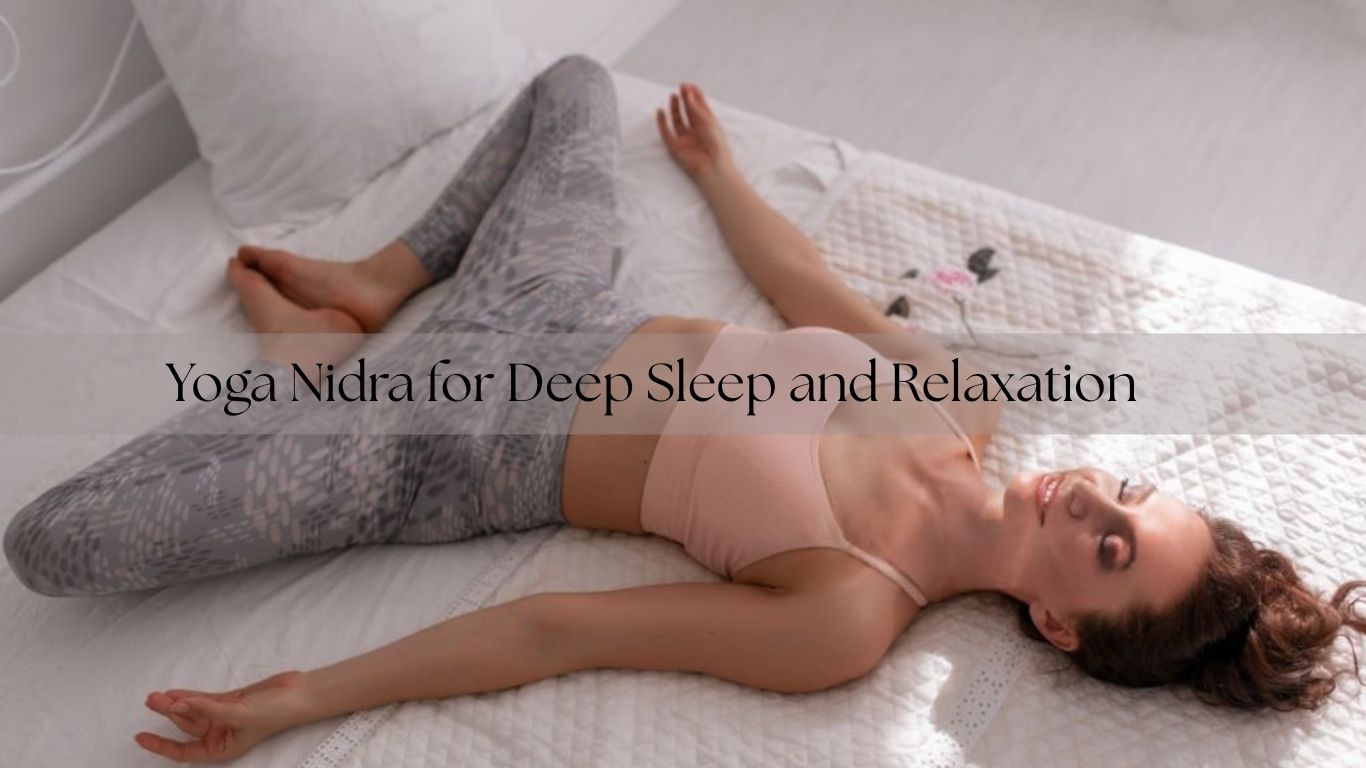
Step 2: Lie Down in Savasana
Lie on your back with:
- Legs relaxed and slightly apart
- Arms resting beside your body
- Palms facing upward
Close your eyes gently.
Try not to move too much during the session.
Step 3: Set an Intention
In Yoga Nidra, you silently choose a short positive intention, called a Sankalpa.
Examples:
- “I sleep peacefully.”
- “My mind is calm.”
- “I am safe and relaxed.”
- “I let go of stress.”
Repeat it in your mind once or twice.
This step trains your brain to feel safe and steady.
Step 4: Body Scan Relaxation
Now you slowly bring awareness to different parts of your body.
A guided Yoga Nidra audio will often say:
- “Relax your toes… relax your feet… relax your calves…”
This body scan helps release tension you don’t even realize you’re holding.
Even if your mind drifts, just return to the voice.
Step 5: Breath Awareness
Next, you focus on natural breathing.
You don’t force the breath.
You simply observe:
- the air entering your nose
- the rise of your chest
- the fall of your belly
This part is powerful because it slows your heart rate naturally.
Step 6: Visualization
Many Yoga Nidra sessions include calming imagery such as:
- walking on a beach
- watching a sunset
- floating on water
- sitting under a tree
This helps the mind detach from daily worries.
Step 7: Return Slowly
At the end, you are guided back to waking awareness.
You may:
- wiggle your fingers
- move your toes
- stretch gently
- roll to one side
Then slowly sit up.
This slow return is important because your body is in a deep rest state.
Best Time to Practice Yoga Nidra for Sleep
For Deep Sleep:
Best time: 15–30 minutes before bedtime
For Stress Relief:
Best time: after work or midday
For Beginners:
Start with 10 to 20 minutes, then slowly increase.
How Often Should Beginners Practice Yoga Nidra?
For best results:
- 3 to 5 times per week
- Or daily, if you struggle with sleep
Even a short session can improve relaxation.
Consistency matters more than long sessions.
Beginner-Friendly Yoga Nidra Routine (10 Minutes)
If you’re new, follow this simple pattern:
- Lie down comfortably (1 minute)
- Slow breathing (2 minutes)
- Body scan from toes to head (5 minutes)
- Positive intention (1 minute)
- Quiet stillness (1 minute)
You can use a guided recording or follow your own steps.
Common Problems Beginners Face
1. “I fall asleep too quickly.”
That’s normal. Your body may be exhausted. Over time, you will stay more aware.
2. “My thoughts won’t stop.”
Don’t fight your thoughts. Just keep returning to the voice or your breathing.
3. “My back hurts while lying down.”
Place a pillow under your knees or lie on a soft bed.
4. “I feel restless.”
Use a blanket, adjust your posture, and start with shorter sessions.
Yoga Nidra for Anxiety and Stress Relief
Yoga Nidra is not just for sleep.
It also helps reduce anxiety because it teaches the nervous system to relax without effort. Many people notice after a few sessions:
- fewer panic-like feelings
- less emotional tension
- better control over stress reactions
- calmer mood during the day
If you often overthink at night, Yoga Nidra is one of the best practices you can try.
Safety Tips for Yoga Nidra Beginners
Yoga Nidra is safe for most people, but keep these tips in mind:
- Avoid practicing right after a heavy meal
- Keep your body warm
- Use a soft surface to protect your spine
- If you feel emotional discomfort, stop and breathe slowly
- People with severe trauma or PTSD should practice with a trained teacher
Yoga Nidra can release stored emotions, so go gently.
Final Thoughts
If you want better sleep, you don’t always need supplements or complicated routines.
Sometimes, your body just needs one thing:
deep nervous system rest.
Yoga Nidra gives you that rest in the simplest way possible.
You lie down. You breathe. You listen.
And slowly, your mind stops fighting the night.
If you practice Yoga Nidra consistently, even for 10 minutes a day, you may notice:
- better sleep
- reduced stress
- calmer mornings
- more energy without burnout
Tonight, instead of scrolling on your phone, try Yoga Nidra.
Let your body rest.
Let your mind reset.
And let sleep come naturally.