
Yoga Poses to Relieve Sciatica Pain
Gentle movements that ease nerve pain and help you move without fear
Sciatica pain doesn’t arrive quietly.
It shoots.
It burns.
It makes sitting, standing, and even sleeping uncomfortable.
Many people feel:
- Sharp pain starting in the lower back
- Tingling or numbness down one leg
- Pain that worsens after sitting too long
- Fear of movement because pain might increase
This pain isn’t weakness.
It’s irritation of the sciatic nerve, often caused by tight muscles, poor posture, or prolonged sitting.
Yoga can help — if done carefully and correctly.
Why Sciatica Pain Gets Worse Over Time
Sciatica pain often increases because movement becomes limited.
When pain appears, people stop moving.
Muscles tighten.
Blood flow reduces.
The nerve stays irritated.
Common contributors include:
- Tight hips and hamstrings
- Weak core muscles
- Long hours of sitting
- Poor spinal alignment
Yoga works by:
- Releasing muscle tension around the nerve
- Improving circulation
- Supporting posture and spinal stability
The goal is relief, not forceful stretching.
Important Safety Note Before You Start
Sciatica pain needs a gentle approach.
Avoid:
- Deep forward bends with force
- Sudden twisting movements
- Fast-paced flows
Move slowly.
Stop if pain sharpens or shoots down the leg.
Comfort comes first.
Child’s Pose (Balasana)
This is often the safest starting point.
It gently stretches the lower back and hips without pressure.
Why it helps:
- Relaxes spinal muscles
- Reduces nerve compression
- Calms pain-related tension
How to practice:
Kneel.
Sit back on your heels.
Fold forward and rest.
Stay for 30–60 seconds.
Breathe deeply.
Knee-to-Chest Pose (Pawanmuktasana)
This pose helps release pressure in the lower back.
It is especially helpful after long sitting hours.
Benefits for sciatica:
- Reduces lower back stiffness
- Relaxes hip muscles
- Improves circulation around the nerve
Lie on your back.
Bring one knee at a time toward your chest.
Hold gently for 20–30 seconds.
Supine Spinal Twist (Supta Matsyendrasana)
Twisting while lying down is safer for sciatica pain.
It decompresses the spine without load.
Why it works:
- Reduces nerve tension
- Improves spinal mobility
- Relieves hip tightness
Drop bent knees to one side.
Keep shoulders relaxed.
Hold for 30 seconds, then switch sides.
Reclining Figure-Four Stretch
Tight hips often worsen sciatica pain.
This pose gently stretches the piriformis muscle, a common contributor to nerve irritation.
How it helps:
- Reduces pressure on the sciatic nerve
- Improves hip mobility
- Eases leg pain
Lie on your back.
Cross one ankle over the opposite knee.
Pull legs in slowly.
Hold without strain.
Cat–Cow Pose
Sciatica pain often limits spinal movement.
This pose restores mobility safely.
Benefits:
- Improves spinal flexibility
- Reduces stiffness
- Enhances blood flow
Move slowly with breath.
Repeat 8–10 times.
Avoid forcing the movement.
Legs Up the Wall (Viparita Karani)
This pose supports recovery and relaxation.
It reduces pressure on the lower back and legs.
Helpful for:
- Leg pain
- Nerve irritation
- Sleep discomfort
Rest for 2–5 minutes.
Let gravity assist healing.
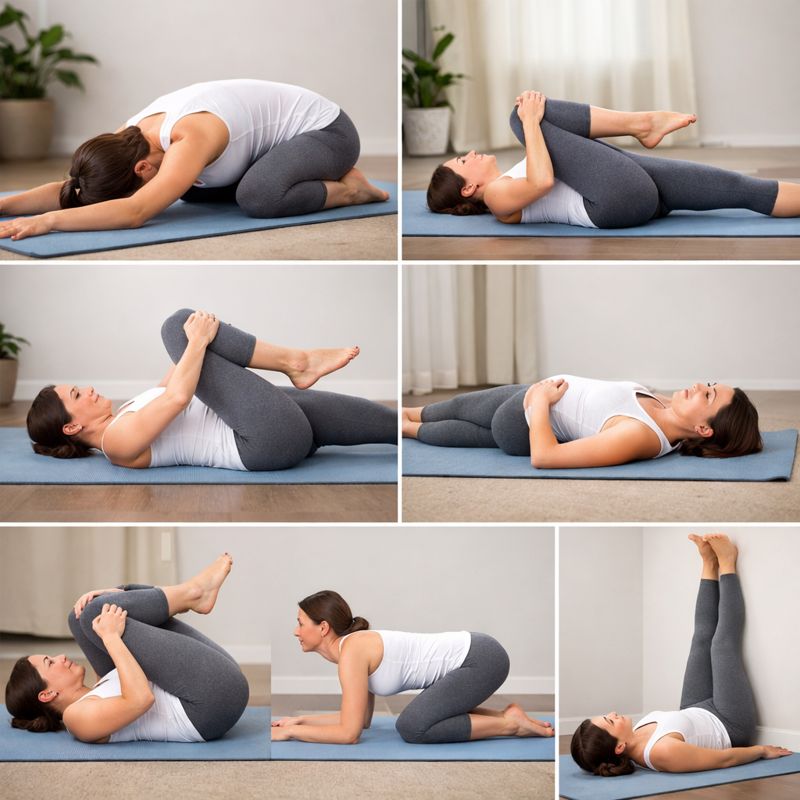
Simple Sciatica Yoga Routine (15 Minutes)
Consistency matters more than intensity.
Try this routine:
- Child’s Pose – 3 minutes
- Knee-to-Chest – 3 minutes
- Cat–Cow – 3 minutes
- Supine Twist – 3 minutes
- Legs Up the Wall – 3 minutes
Practice daily or at least 5 times a week.
Practical Tips to Support Pain Relief
Yoga works best when combined with daily habits:
- Avoid long sitting without breaks
- Use proper lumbar support
- Sleep on a firm surface
- Apply heat before practice
- Move gently throughout the day
Small changes protect the nerve.
Final Thoughts
Sciatica pain can feel limiting, but it doesn’t have to control your life.
With the right yoga poses, you can:
- Reduce nerve irritation
- Improve mobility
- Feel more confident moving again
Go slow.
Stay consistent.
Let healing happen naturally.