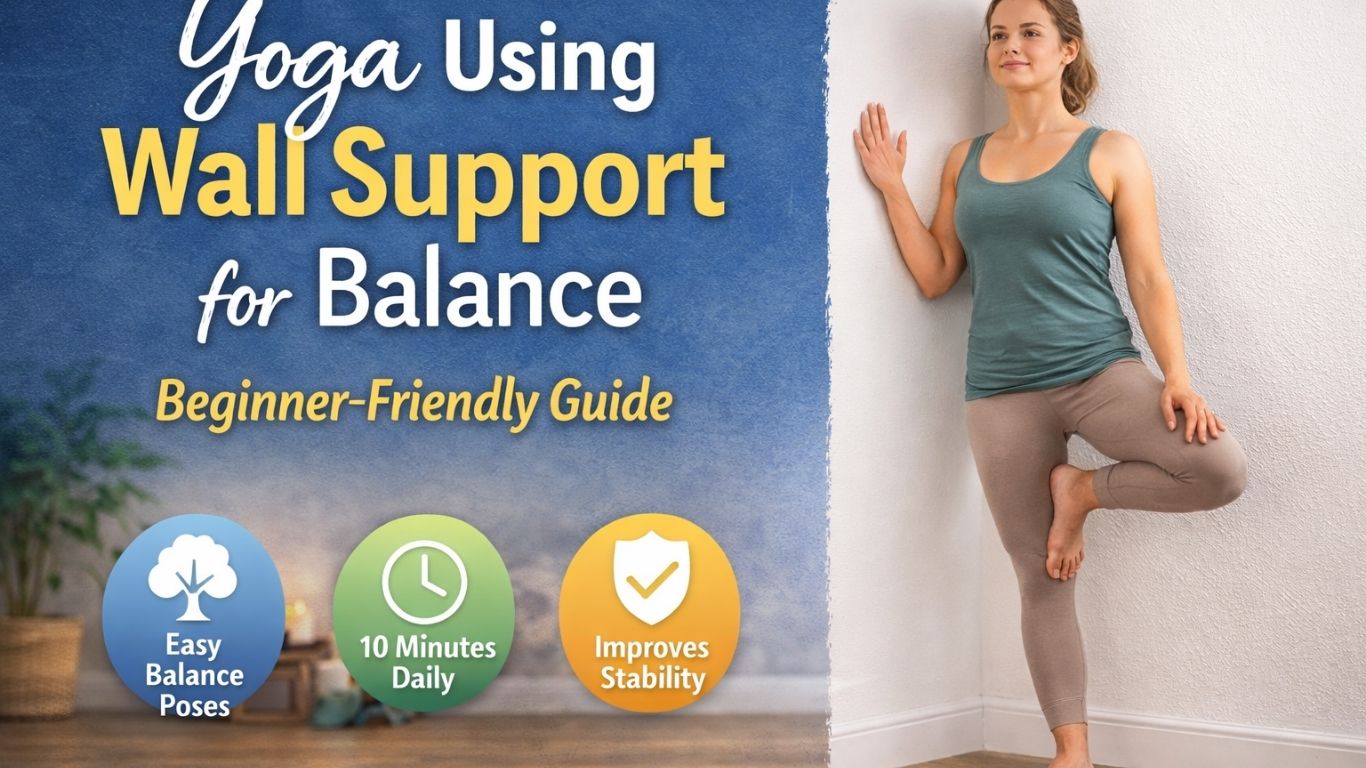
Yoga Using Wall Support for Balance
Balance is one of the hardest parts of yoga for beginners. One moment you feel stable, and the next moment you’re wobbling, losing focus, or stepping out of the pose.
That’s completely normal.
The best way to build balance safely is by using wall support. A wall gives you stability, confidence, and proper alignment, so you can learn the pose without fear of falling.
In this article, you’ll learn the best wall-supported yoga poses for balance, how to do them correctly, and a simple beginner routine you can follow at home.
Why Beginners Should Use a Wall in Yoga
Many beginners think wall support means they are “not doing yoga properly.” That’s not true.
Using a wall is actually one of the smartest ways to practice because it helps you:
- improve posture and alignment
- build leg and core strength
- avoid falling or twisting the ankle
- gain confidence in balance poses
- train your body slowly and safely
A wall acts like a yoga partner that never moves.
Who Can Benefit From Wall-Supported Yoga?
Wall support yoga is perfect for:
- beginners with weak balance
- people recovering from injury
- older adults
- Anyone with knee or ankle weakness
- people who feel dizzy in standing poses
- those who want a safer home yoga practice
If you’re learning yoga alone at home, wall support is one of the best tools you can use.
How to Use a Wall for Yoga Balance
Before starting, follow these simple tips:
Stand Barefoot
Shoes reduce grip and stability. Bare feet give better control.
Keep a Small Distance
Don’t press your whole body against the wall. Stay about 6–12 inches away unless the pose requires full contact.
Use Fingertip Support First
Instead of leaning heavily, start with fingertips touching the wall. This trains balance naturally.
Focus on One Point
Choose a spot on the wall and keep your eyes there. This is called Drishti, and it improves stability.
Best Yoga Poses Using Wall Support for Balance
Below are the most effective beginner-friendly wall yoga poses for balance improvement.
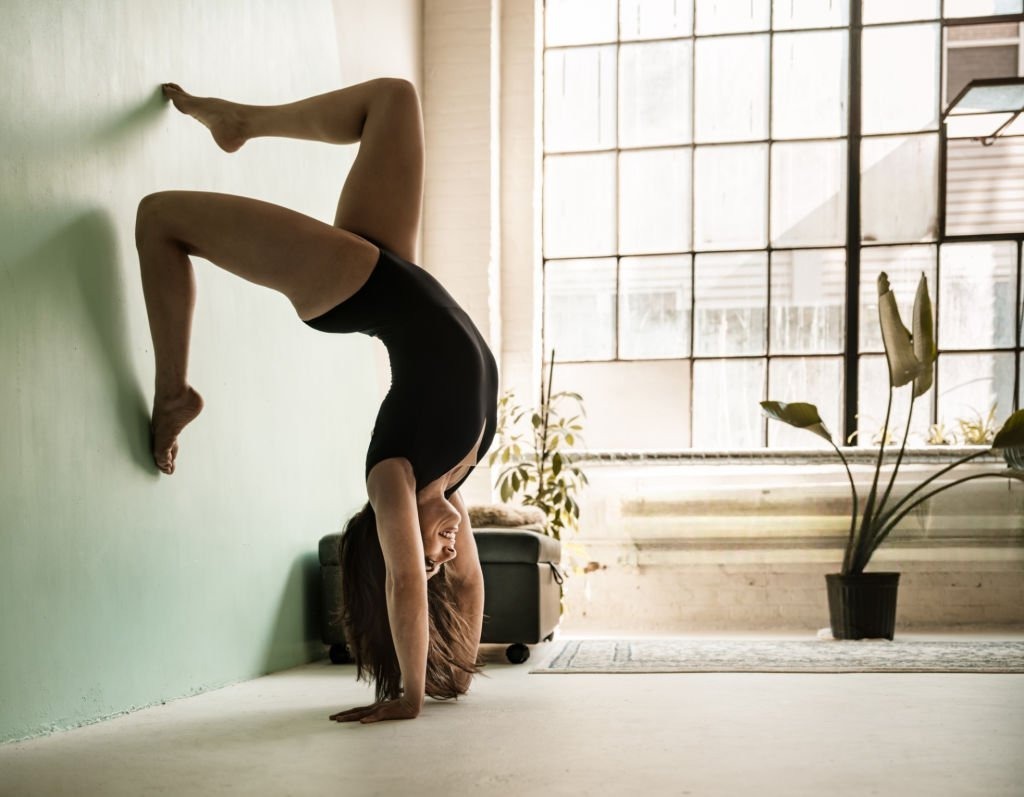
1. Mountain Pose with Wall Support
This pose looks simple, but it trains posture and balance.
How to Do It
- Stand with your back against the wall
- Keep heels 2–3 inches away
- Press your shoulders and head gently back
- Engage your core and stand tall
- Breathe slowly for 30 seconds
Why It Helps
It teaches body alignment and builds a balance foundation.
2. Chair Pose Using Wall Support
Chair Pose strengthens the legs and improves stability.
How to Do It
- Stand with your back against the wall
- Slide down slowly, like sitting on an invisible chair
- Keep knees over ankles
- Hold for 20–30 seconds
- Breathe slowly
Beginner Tip
Don’t go too low. Start small and build strength.
3. Tree Pose with Wall Support
Tree Pose is one of the best yoga poses for balance for beginners.
How to Do It
- Stand beside a wall
- Place your right hand on the wall
- Lift your left foot and place it on your ankle or calf
- Keep your hips facing forward
- Hold for 20–40 seconds
- Switch sides
Why It Helps
Tree Pose trains ankle strength and improves focus.
4. Warrior III Prep with Wall Support
Warrior III is difficult, but wall support makes it beginner-friendly.
How to Do It
- Face the wall and place both hands on it
- Step one foot back slightly
- Lean forward slowly
- Lift your back leg straight behind you
- Keep your spine long
- Hold for 15–20 seconds
Common Mistake
Don’t twist your hips. Keep them square.
5. Standing Leg Lift with Wall Support
This is a simple balance exercise that strengthens your core and hips.
How to Do It
- Stand sideways near the wall
- Hold the wall lightly
- Lift your outside leg forward slowly
- Hold 3 seconds
- Lower slowly
- Repeat 8–10 times on each side
Why It Helps
This improves balance and hip stability.
6. Side Leg Raise Using Wall Support
This pose is excellent for glutes and balance control.
How to Do It
- Stand tall near the wall
- Place one hand on the wall
- Lift the outside leg to the side
- Keep toes facing forward
- Lower slowly
- Repeat 10 times
Bonus Benefit
Strong glutes = better balance.
7. Heel Raises Using Wall Support
Heel raises train ankle stability and calf strength.
How to Do It
- Stand facing the wall
- Place both hands on the wall
- Lift heels slowly
- Hold 2 seconds
- Lower down slowly
- Repeat 12–15 times
Why It Helps
Most balance comes from ankle control, and this strengthens it.
8. Wall Downward Dog
Downward Dog can feel intense. The wall makes it easier and safer.
How to Do It
- Stand facing the wall
- Place palms on the wall at shoulder height
- Step back until your arms are straight
- Push hips back
- Keep spine long
- Hold for 30 seconds
Why It Helps
It improves posture and stretches the back without pressure on the wrists.
9. Wall-Supported Standing Forward Fold
This is calming and improves balance without strain.
How do It
- Stand with hands on the wall
- Slowly fold forward while keeping your hands supported
- Keep knees slightly bent
- Hold for 20–30 seconds
Benefit
It reduces stiffness and relaxes your nervous system.
How Often Should Beginners Practice Wall Yoga for Balance?
For the best results:
- 3–5 days per week
- only 10–15 minutes per session
Within 2 weeks, most beginners notice:
- less wobbling
- stronger ankles
- improved posture
- better confidence in standing poses
Consistency matters more than long workouts.
Common Beginner Mistakes in Wall-Supported Yoga
Wall support is helpful, but many beginners still make mistakes.
Leaning Too Much on the Wall
The wall is for balance support, not full body weight.
Try to touch the wall lightly with your fingers instead of pushing hard.
Locking the Knees
Locked knees reduce balance control.
Keep a small bend in the knees for stability.
Not Engaging the Core
Balance is not only legs—it’s also your core.
Even in simple poses, tighten your belly slightly.
Looking Down
If you keep looking down, your balance becomes weaker.
Focus your eyes on one steady point.
Safety Tips for Wall Yoga Practice
Wall yoga is safe, but follow these rules:
- Use a non-slippery surface
- Avoid practicing near sharp furniture
- Stop if you feel dizzy
- Do not force deep stretches
- Use a yoga mat for better grip
If you have severe joint pain or vertigo, talk to a doctor before starting.
Final Thoughts
If you’re a beginner, balance poses can feel frustrating. But that doesn’t mean you’re weak or failing. Balance takes time, practice, and patience.
Using a wall is one of the best ways to build stability without fear.
Start with simple wall-supported poses like Tree Pose, Chair Pose, and Wall Downward Dog. In a few weeks, you’ll feel stronger, steadier, and more confident in your yoga practice.
FAQs:
Is wall yoga good for beginners?
Yes, wall yoga is perfect for beginners because it helps with alignment and prevents falls.
How long should I practice wall yoga daily?
Even 10 minutes a day is enough to improve balance and strength.
Can wall yoga improve balance fast?
Yes. Most beginners notice improvement within 1–2 weeks of consistent practice.
Which pose is best for balance beginners?
Tree Pose with wall support is one of the best poses for beginners to improve balance.