
Mindful Breathing Without Meditation Music: A Simple Way to Calm Your Mind Naturally
Many people believe that meditation or mindful breathing requires relaxing background music, special apps, or guided audio. But the truth is simple: mindful breathing works even better in silence.
Practicing mindful breathing without meditation music allows you to focus on the most important element of mindfulness—your breath. Without external sounds, your attention naturally shifts inward, helping your body and mind relax more deeply and naturally.
What Is Mindful Breathing?
Mindful breathing is a simple practice where you pay full attention to your breathing. You observe each inhale and exhale without trying to control it.
Instead of thinking about the past or worrying about the future, your mind stays focused on the present moment.
The basic idea is simple:
- Notice the air entering your nose
- Feel your chest or belly rise
- Observe the air leaving your body
When your mind wanders (which is normal), you gently bring your attention back to your breath.
This simple act trains the brain to become calmer and more focused.
Why Practice Mindful Breathing Without Meditation Music?
Many beginners start meditation with calming music. While music can help relaxation, it can also become a distraction or dependency.
Practicing mindful breathing without meditation music offers several advantages.
1. Stronger Focus
When there is no music, your brain has fewer external stimuli. This allows you to focus fully on your breathing rhythm.
Over time, this improves mental clarity and concentration.
2. More Natural Mindfulness
Mindfulness is about being present in real life. In daily situations—work, walking, or resting—there is usually no background music.
Silent breathing practice prepares your mind to stay calm in real-world environments.
3. Easier to Practice Anywhere
You can practice mindful breathing without music:
- At your desk
- In a waiting room
- During a break at work
- Before sleeping
- While traveling
No headphones or devices are needed.
4. Better Awareness of Your Body
Without music, you become more aware of subtle sensations:
- heartbeat
- breathing rhythm
- muscle tension
- emotional shifts
This awareness helps regulate stress naturally.
Step-by-Step Guide to Mindful Breathing Without Meditation Music
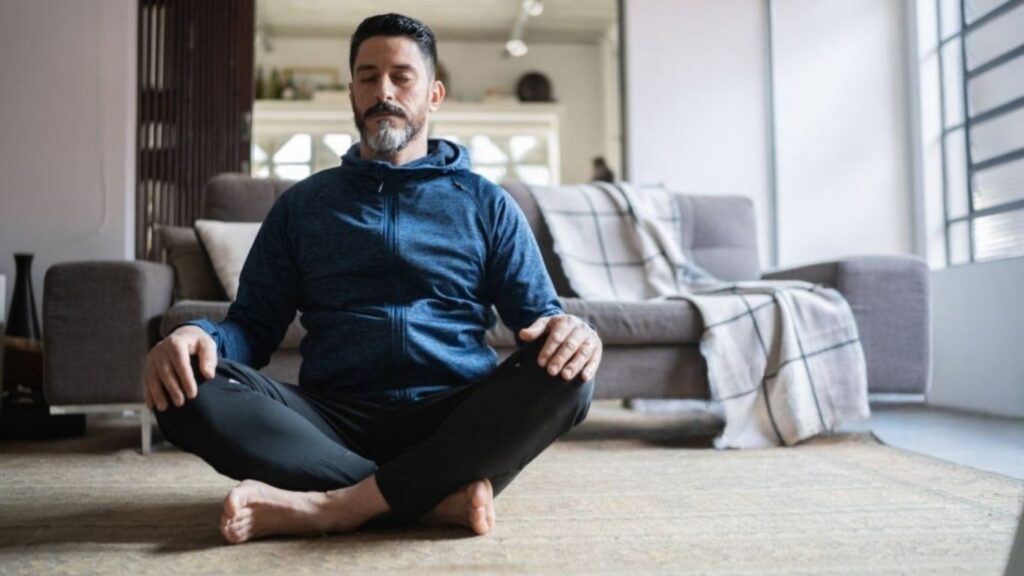
You do not need special equipment or a quiet meditation room. Follow these simple steps.
1. Find a Comfortable Position
Sit in a chair, on the floor, or even stand if needed.
Keep your back straight but relaxed.
Rest your hands on your lap or knees.
2. Close Your Eyes or Soften Your Gaze
Closing your eyes can help reduce distractions. If you prefer, keep your eyes slightly open and focus on a neutral point.
3. Take One Deep Breath
Start with one slow inhale through your nose.
Then exhale gently through your mouth.
After this, allow your breathing to return to its natural rhythm.
4. Observe Your Breath
Bring your attention to one simple sensation:
- air moving through your nose
- chest rising and falling
- belly expanding and relaxing
Choose one point and stay with it.
5. Notice When Your Mind Wanders
Your mind will think about tasks, plans, or memories. This is normal.
When you notice this, simply return your attention to your breath.
No judgment is needed.
6. Continue for 3–10 Minutes
Beginners can start with 3 minutes.
Over time, you may extend the practice to 10 or 15 minutes.
A Simple 3-Minute Silent Breathing Practice
This quick exercise works well during a busy day.
Minute 1: Awareness
Notice how you feel physically and mentally.
Are your shoulders tense? Is your mind busy?
Simply observe.
Minute 2: Focus on Breath
Bring full attention to your breathing.
Feel each inhale and exhale.
Minute 3: Expand Awareness
Keep breathing calmly and notice the space around you.
Allow your body to relax.
After three minutes, continue your day.
Many people feel noticeably calmer after this short practice.
Common Challenges
Beginners often face a few common difficulties.
Restless Thoughts
Your mind may feel very active at first.
Solution: Accept the thoughts and gently return to your breath.
Feeling Bored
Without music or guidance, the practice may feel too simple.
Solution: Focus on the subtle sensations of breathing. Small details keep the mind engaged.
Difficulty Staying Still
Some people feel uncomfortable sitting quietly.
Solution: Try mindful breathing while walking slowly or standing.
When to Practice Mindful Breathing
You can practice mindful breathing without meditation music many times during the day.
Helpful moments include:
- early morning to start the day calmly
- before an important meeting
- during a work break
- after a stressful conversation
- before going to sleep
Even two minutes of breathing awareness can reset your mental state.
Long-Term Benefits of Silent Mindful Breathing
With regular practice, mindful breathing can lead to noticeable improvements in mental and physical well-being.
Many practitioners report:
- reduced stress levels
- better emotional control
- improved focus
- deeper sleep
- greater self-awareness
Scientific studies on mindfulness also show that breathing-based practices can help regulate the nervous system and lower stress responses.
The key is consistency, not duration.
Practicing a few minutes every day can be more effective than occasional long sessions.
Final Thoughts
You do not need music, apps, or guided audio to experience the benefits of mindfulness.
Practicing mindful breathing without meditation music allows you to connect directly with the present moment. The silence becomes part of the practice, helping your mind settle naturally.
Start small. Take a few quiet breaths. Notice the rhythm of your body.
Over time, this simple habit can become one of the most effective tools for managing stress and improving focus in daily life.